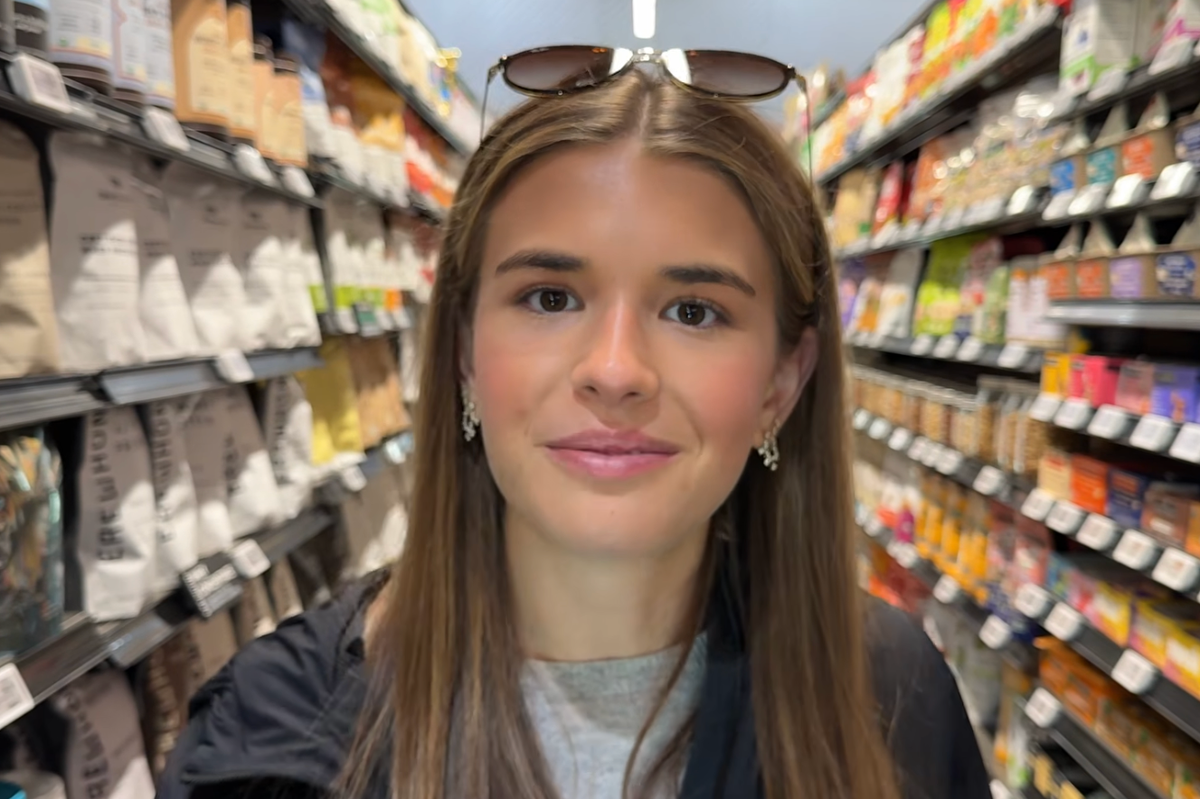
When Kai Trump posted a video from an Erewhon market, she wasn't just buying a snack. She was participating in a highly curated ritual of modern American tribalism. The backlash was immediate and fierce, centering on the perceived tone-deafness of a high-profile political figure’s granddaughter indulging in ultra-luxury groceries while the average voter struggles with the price of a dozen eggs. However, the outrage misses the mechanical reality of how wealth and optics function in a fragmented media environment. This isn't just about a smoothie. It is about the widening chasm between symbolic consumption and the economic anxiety defining the 2020s.
The "let them eat cake" comparison is an easy shortcut for critics, but it oversimplifies the modern influencer economy. Marie Antoinette didn't have a TikTok account. In the 18th century, royal excess was shielded by palace walls until it was too late. Today, excess is the product. For a younger generation of political scions, visibility is a form of currency that requires constant feeding. By documenting a trip to a store where a bottle of oxygenated water can cost more than a minimum-wage hourly pay, the message isn't "I am better than you." To the creator, the message is "I am part of the elite aesthetic."
The Erewhon Industrial Complex
Erewhon has transcended its origins as a health food store to become a landmark of social stratification. It serves as a stage. The layout, the lighting, and the branding of its specific products are designed for the lens as much as the palate. When someone like Kai Trump enters that space, they are stepping into a pre-made narrative of aspiration.
The grocery chain operates on a high-margin model that relies on exclusivity. It targets a specific demographic that views spending $18 to $25 on a "celebrity smoothie" as a justifiable investment in their personal brand. This isn't about nutrition. You can get the same macronutrients at a fraction of the price elsewhere. This is about the social signaling of health. In a country where metabolic disease is closely tied to poverty, the ability to perform "wellness" through expensive, hyper-processed organic goods is the ultimate status symbol.
Critics argue that the optics are disastrous for a family brand built on populist rhetoric. There is a fundamental friction between a political platform that decries "elites" and a lifestyle that celebrates the most concentrated pockets of elite consumerism in Los Angeles. But this friction is often ignored by the target audience of the content itself, who value the gloss of the lifestyle more than the consistency of the message.
The Economics of Aspiration vs. Reality
We have to look at the numbers to understand why this hit a nerve. The Consumer Price Index has tracked a significant rise in food costs over the last three years. While the rate of inflation has slowed, the cumulative effect on the American wallet is heavy. When a public figure showcases a lifestyle that treats a $100 grocery bag of three items as a casual errand, it highlights the decoupling of the American experience.
There are now two distinct economies operating in parallel.
- The Survival Economy: Focused on gasoline prices, rent-to-income ratios, and the rising cost of staple proteins.
- The Aesthetic Economy: Focused on curated experiences, luxury wellness, and digital clout.
The backlash occurs when these two worlds collide on a social media feed. For the person working two shifts, the video feels like a taunt. For the follower who views Kai Trump as a lifestyle icon, it is simply "content." This disconnect is where the political danger lies. Political movements are often built on the idea of shared struggle. If the lifestyle of the movement's prominent faces appears entirely insulated from that struggle, the populist bond begins to fray.
The Myth of the Relatable Influencer
The era of the "relatable" celebrity is dying. For a while, the goal of famous figures was to seem just like us—eating fast food or complaining about mundane problems. That mask is slipping. We are entering an era of blatant aspirationalism.
Kai Trump’s choice of Erewhon was likely not a calculated political move, but a reflex of her social circle. That is perhaps more telling than if it had been planned. It suggests a comfort level with extreme wealth that is so normalized it doesn't trigger a "PR alarm" before the post button is hit. The younger generation of political families is being raised in a world where the distinction between public service and private influence is non-existent.
This shift mirrors how luxury brands have changed their marketing. They no longer try to appeal to the middle class by being accessible; they appeal to the middle class by being intentionally out of reach. By posting from Erewhon, Kai Trump isn't trying to win over the swing voter in a rust-belt town. She is reinforcing her position within a digital elite that prizes "the best" regardless of the cost.
The Counter Argument of Personal Freedom
There is, of course, a valid argument that a teenager should be allowed to buy a smoothie without it becoming a national referendum on class warfare. Proponents of this view suggest that the scrutiny is disproportionate. They argue that private citizens, even those related to world leaders, should not have to perform "poverty theater" to satisfy the masses.
However, that argument ignores the reality of the attention economy. You cannot choose to be a public-facing influencer when it benefits your brand and then demand the privacy of a regular citizen when the optics turn sour. Visibility is a double-edged sword. If you use your platform to build a following, that following has the right to judge the values you project.
The Feedback Loop of Outrage
The media's role in this cannot be overlooked. Outrage drives clicks. Articles highlighting "the let them eat cake moment" are designed to trigger a specific emotional response that ensures high engagement. This creates a feedback loop where the original act—buying an expensive smoothie—is magnified until it carries the weight of a geopolitical event.
This cycle serves both sides. For the critics, it provides a clear example of hypocrisy to rally against. For the supporters, it offers an opportunity to defend their "team" against what they perceive as petty bullying from the left. In the end, the only real winner is the brand being featured. Erewhon receives millions of dollars in free earned media, further cementing its status as the place where the powerful and controversial congregate.
Moving Beyond the Smoothie
The real story isn't the price of the drink. The real story is the institutionalization of the wealth gap through social media. We are watching the formation of a new American aristocracy that is more visible, more unapologetic, and more disconnected from the daily realities of the average citizen than ever before.
If political movements want to maintain their populist credibility, they will eventually have to address the "Erewhon Problem." You cannot indefinitely sell a message of economic grievance while your most visible representatives are living in a way that is fundamentally inaccessible to the people you claim to represent. The smoothie is just a symptom. The disease is a lack of situational awareness that could, eventually, have real consequences at the ballot box.
Pay attention to how these "lifestyle" moments are integrated into broader political narratives. They are rarely accidental. They are the markers of a new class boundary, drawn in organic almond milk and sea moss.
Follow the money and the influence will follow. If you want to see where a political movement is actually headed, look at what its children are buying when they think no one is watching—or worse, when they know everyone is.