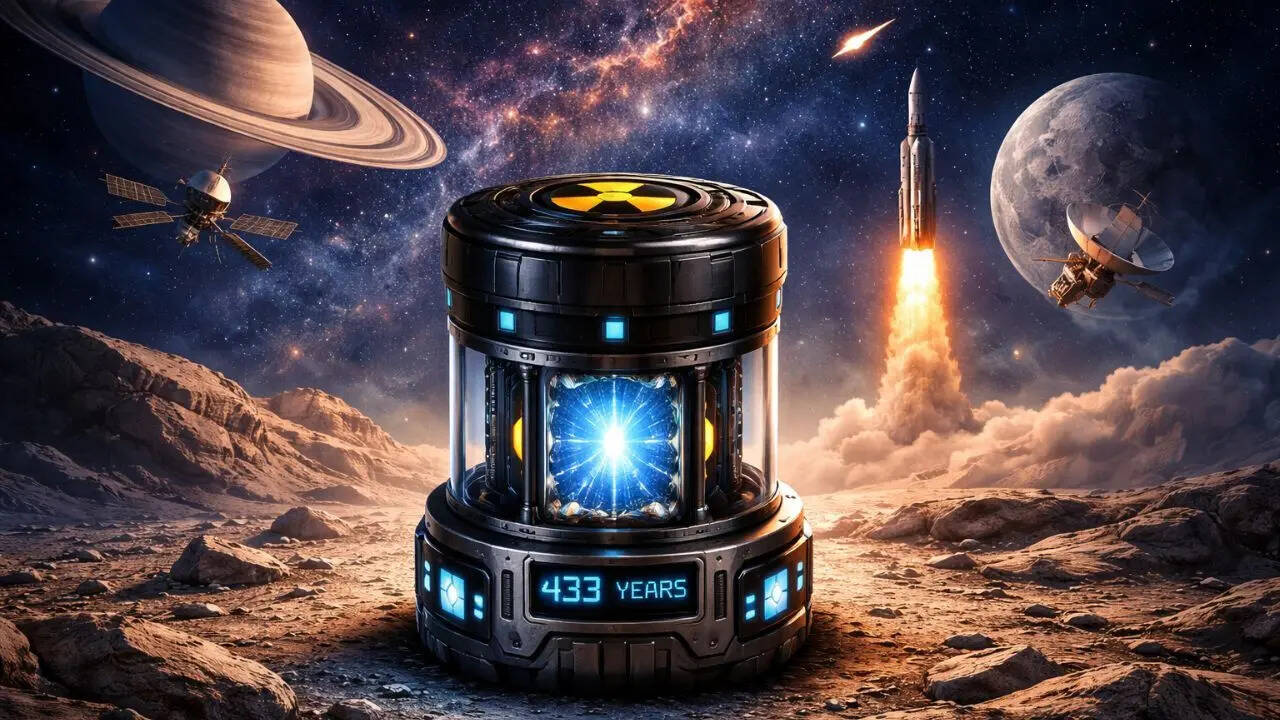
We’ve been stuck with the same battery problems for decades. Your phone dies in a day, your electric car needs a charger every few hundred miles, and satellites eventually turn into expensive space junk because they run out of juice. But a recent breakthrough from researchers at the City University of Hong Kong (CityU) has shifted the conversation entirely. They’ve developed a betavoltaic battery using americium-241 that could theoretically last for 433 years.
This isn't just another lab experiment that will disappear into a patent drawer. It’s a fundamental fix for the hardest part of exploring the solar system. When you're headed to the dark side of the moon or the icy moons of Jupiter, solar panels are useless. You need something that generates its own power without relying on the sun.
The end of the solar power obsession
Most people assume solar is the default for space. It’s clean and renewable. That works fine for the International Space Station or a satellite orbiting Earth. But once you move past Mars, the sun’s intensity drops off a cliff. By the time you get to Saturn, solar energy is about 1% of what we get on Earth.
NASA has traditionally used Radioisotope Thermoelectric Generators (RTGs) for these missions. Think of the Voyager probes or the Curiosity rover. Those use the heat from decaying plutonium-238 to make electricity. The problem? Plutonium-238 is incredibly expensive, rare, and difficult to handle.
The new CityU battery takes a different path. It doesn’t rely on heat. Instead, it uses a process called betavoltaics. This involves using a radioactive source that emits beta particles—basically high-energy electrons—which are then captured by a semiconductor to create a current. It’s direct. It’s efficient. And because americium-241 has a half-life of 432.2 years, the power supply stays stable for centuries.
Why americium is the secret sauce
You’ve probably got americium in your house right now. It’s the standard material used in smoke detectors. While plutonium is a nightmare to source, americium-241 is a byproduct of nuclear reactors. We have a lot of it.
The CityU team, led by Professor Zhiyuan Liu, solved the biggest hurdle in betavoltaics: radiation damage. Normally, the constant bombardment of particles destroys the semiconductor over time. It’s like trying to build a house while someone is constantly throwing rocks at the windows.
They used a specialized "converter" material—a crystal doped with rare-earth elements. Instead of the radiation breaking the material down, this crystal is designed to absorb the energy and convert it into light, which is then turned into electricity by a thin-film cell. This "indirect" conversion protects the sensitive parts of the battery. It means the battery doesn't degrade nearly as fast as previous versions.
Real world stats and the power gap
Let’s be real about the numbers. This isn't going to power your Tesla. The energy density of a nuclear battery is high, but the power output is very low. We’re talking about microwatts or milliwatts.
- CityU Battery Efficiency: Roughly 0.88% (sounds low, but it's massive for this tech).
- Power Output: Around 10 microwatts per cubic centimeter.
- Lifespan: 433 years to reach half-power.
Compare that to a standard AA battery. A double A gives you a lot of power right now, but it’s dead in a few months if you use it. The nuclear battery is a marathon runner that never sleeps. For a sensor sitting on a frozen planet, 10 microwatts is plenty to send a periodic ping back to Earth or keep a clock running.
Solving the heat problem in deep space
Space is cold. Extremely cold. Chemical batteries like lithium-ion hate the cold. They lose their ability to hold a charge, and eventually, the electrolytes freeze. On Mars, rovers have to spend a huge chunk of their limited energy just running heaters to keep their own batteries from dying.
Nuclear batteries are different. The decay process happens regardless of the outside temperature. Whether it’s -200 degrees or a scorching 100 degrees, the electrons keep flowing. This removes the need for complex thermal management systems. It makes the spacecraft lighter. It makes the mission cheaper.
What critics get wrong about safety
Whenever the word "nuclear" comes up, people panic. They imagine a glowing green leak or a mushroom cloud. That’s just not how this works.
Americium-241 emits alpha and beta radiation. These particles are easily blocked. A thin sheet of aluminum or even the battery casing itself is enough to stop the radiation from escaping. If you held this battery in your hand, you’d receive less radiation than you do from the granite countertops in a kitchen or a cross-country flight.
The real risk is launch failure. If a rocket explodes, you don't want radioactive material scattering in the atmosphere. That’s why these batteries are encased in multiple layers of carbon-composite and ceramic materials. They’re designed to survive a high-velocity impact and intense heat without cracking.
The immediate impact on 2026 and beyond
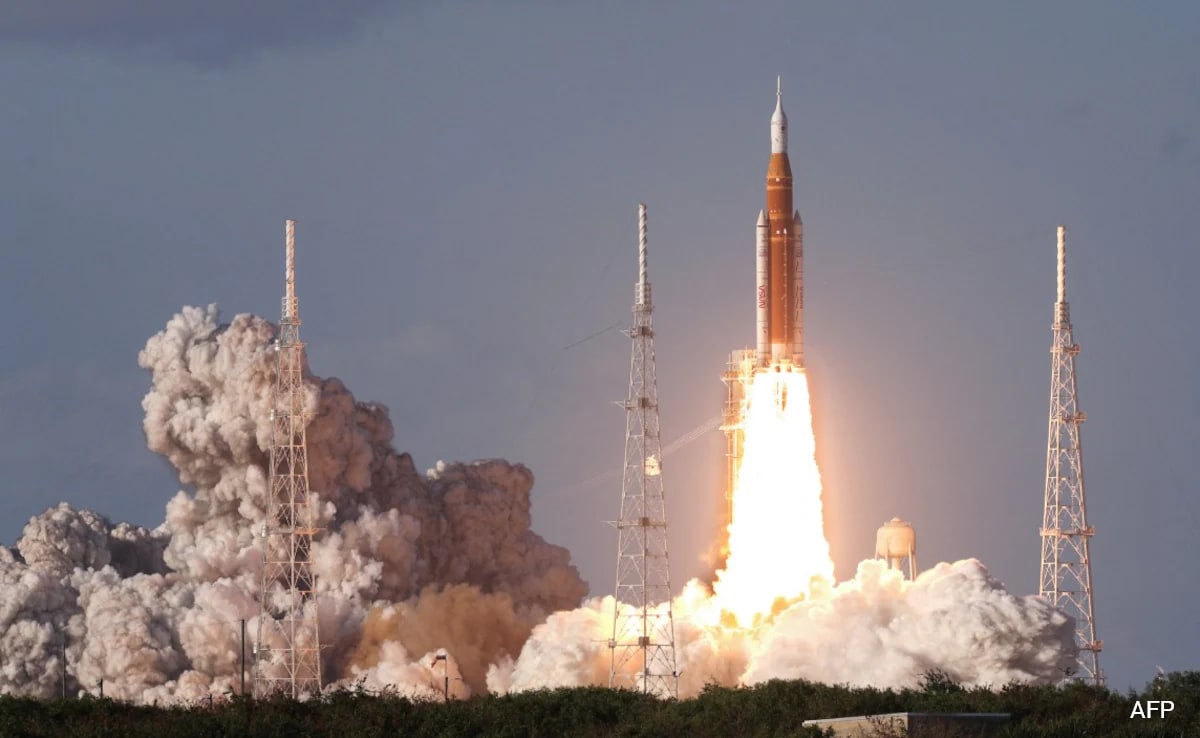
We’re seeing a shift in how space agencies plan for the next decade. The Artemis program aims to put a permanent base on the Moon. The lunar night lasts 14 Earth days. Solar power doesn't work in the dark. You can't just tell the astronauts to hold their breath and turn off the life support for two weeks.
Small, modular nuclear batteries provide the "trickle charge" needed to keep life support systems, communication arrays, and scientific instruments alive during those long lunar nights.
Beyond the moon, this tech is the only way we get to the "Ocean Worlds" like Europa or Enceladus. These moons are covered in miles of ice. To see what’s in the water underneath, we need probes that can operate for decades in total darkness. A battery that lasts 433 years isn't just a luxury there; it’s a requirement.
Beyond the stars
Space is the obvious playground, but the terrestrial uses are just as interesting. Think about pace-makers. Right now, if you have a pacemaker, you need surgery every 5 to 10 years to replace the battery. That sucks. A nuclear battery could make it a one-and-done procedure. You’d die of old age long before the battery hit its half-life.
We’re also looking at deep-sea sensors. The bottom of the ocean is just as hard to reach as deep space. Changing a battery at the bottom of the Mariana Trench is nearly impossible. These long-life cells could power seismic sensors for centuries, giving us better data on earthquakes and tsunamis without any maintenance.
Next steps for the technology
The tech is here, but the scale isn't. The next two years will be about moving from milliwatts to watts. Researchers are currently looking into stacking these cells in modular arrays to increase total output.
If you're following this space, watch for the first flight tests. Several startups and government agencies are competing to get the first "new gen" nuclear battery into a CubeSat. Once we prove it works in the vacuum of space, the floodgates open.
Stop looking for a battery that charges in five minutes. Start looking for the one that never needs to be charged at all. The 433-year battery is the closest we’ve ever come to a "set it and forget it" power source for the future of humanity. It’s time to stop worrying about the "nuclear" label and start using the physics we’ve already mastered.