The global energy market is currently operating under a delusion of de-escalation that the math simply does not support. While the Trump administration publicly predicts a swift conclusion to hostilities in Iran, the physical reality of oil transit and the destruction of infrastructure have effectively locked in a price floor. Brent crude will remain above $95 for at least the next eight weeks, regardless of diplomatic posturing or social media declarations.
This isn't just about a war premium. It is about the systemic failure of the world’s most critical maritime artery and a calculated move by Tehran to ensure economic pain outlasts military kinetic operations. Even if a ceasefire were signed tomorrow, the logistical wreckage in the Persian Gulf and the absolute freeze in maritime insurance have created a supply lag that cannot be bridged by headlines.
The Hormuz Mirage
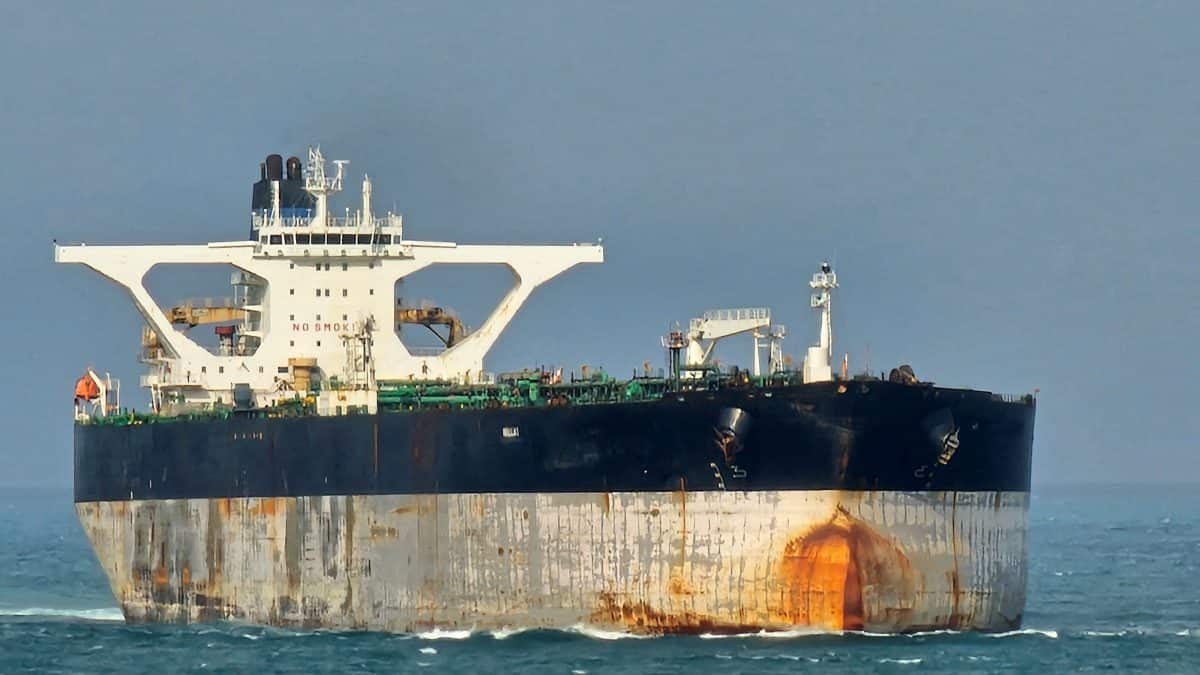
The primary driver of the current $95 floor is not the fear of future conflict, but the realized collapse of transit through the Strait of Hormuz. Roughly 20% of the world's total petroleum liquids—nearly 20 million barrels per day—ordinarily pass through this narrow gap. As of this week, commercial traffic has effectively halted.
Satellite imagery and maritime intelligence confirm that only a handful of vessels are attempting the crossing, often under "dark" conditions with transponders silenced. For the global economy, this is a heart attack. The administration’s suggestion that the war is "very complete" ignores the fact that tankers cannot simply resume their routes the moment the last missile is fired. Marine insurers have already revoked standard coverage for the region, and re-establishing those risk pools takes months of actuarial assessment, not days of political optimism.
The China Factor and the $12 Surcharge
While Washington focuses on the military theater, the real economic pressure is being exerted in the shadow markets of the East. Iran’s crude exports, which peaked near 1.6 million barrels per day earlier this year, were almost exclusively bound for China. With those barrels removed from the board, Beijing has been forced into a predatory bidding war for alternative supplies from West Africa and the North Sea.
This creates a "fungibility tax." Because oil is a global commodity, China’s desperate pivot to replace Iranian crude has added an estimated $10 to $12 to the price of every barrel of Brent worldwide. This is a structural increase that persists as long as Iranian fields are offline or blockaded. The Trump administration’s talk of "decimating" Iranian infrastructure for a decade may satisfy a political base, but for a global analyst, it reads as a permanent removal of supply that the remaining OPEC+ members are in no hurry to replace.
The Failure of the Strategic Reserve
The current volatility is exacerbated by a historic lack of foresight regarding the Strategic Petroleum Reserve (SPR). Entering the 2026 conflict, the U.S. failed to aggressively refill the reserve during the brief price dips of late 2025. This has left the White House with a remarkably thin deck of cards.
Current Mitigation Options
The administration is currently reviewing several "emergency" levers, but most are symbolic rather than transformative:
- Jones Act Waivers: Attempting to move domestic fuel on foreign-flagged ships to ease coastal bottlenecks.
- Strategic Reserve Releases: Discussions with G7 partners for a coordinated dump, though the volumes under discussion would barely cover three days of the Hormuz deficit.
- Escort Missions: Using the U.S. Navy to shepherd tankers, a move that insurers still view as high-risk given Iran’s proficiency with asymmetric drone swarms.
The Inflationary Aftershock
We are seeing the end of the "cheap energy" era that was promised during the 2024 campaign. Despite the "drill, baby, drill" rhetoric, domestic production has hit a wall of diminishing returns. The most accessible shale basins are pipeline-constrained, and new incremental supply is coming from deeper, more expensive plays like the Haynesville, where breakeven costs have nearly doubled.
The result is a brutal reality for the American consumer. Gasoline prices have jumped nearly 50 cents per gallon in a single week. For the average household, this $10 to $15 weekly increase at the pump effectively nullifies the benefits of the 2025 tax cuts. When you factor in the 28% surge in diesel prices, which powers the 18-wheelers delivering groceries, the "war premium" starts looking like a permanent cost-of-living adjustment.
The Russian Backdoor
Perhaps the most startling development in the administration’s strategy is the quiet consideration of easing sanctions on Russian oil. To prevent a $120 spike that would devastate the upcoming midterm elections, Washington is facing a geopolitical paradox: to defeat Iran, it may have to enrich Moscow.
By allowing more Russian crude to flow into the global market, the administration hopes to create a "relief valve" for the prices triggered by the Iranian blockade. It is a desperate move that highlights just how little control the U.S. actually has over the global price of a barrel when the Middle East goes dark.
The markets are currently trapped between the President's optimistic timelines and the cold reality of a fractured supply chain. Traders who are betting on a quick return to $70 oil are ignoring the physical state of the Gulf. Ships are staying away. Insurers are staying away. And as long as the screw of the global oil price is held in Tehran’s hands, the $95 floor isn't going anywhere.
Monitor the Baltic Exchange Dirty Tanker Index over the next 14 days; if those rates don't retreat by at least 15%, the $95 floor will likely become a $105 ceiling by May.