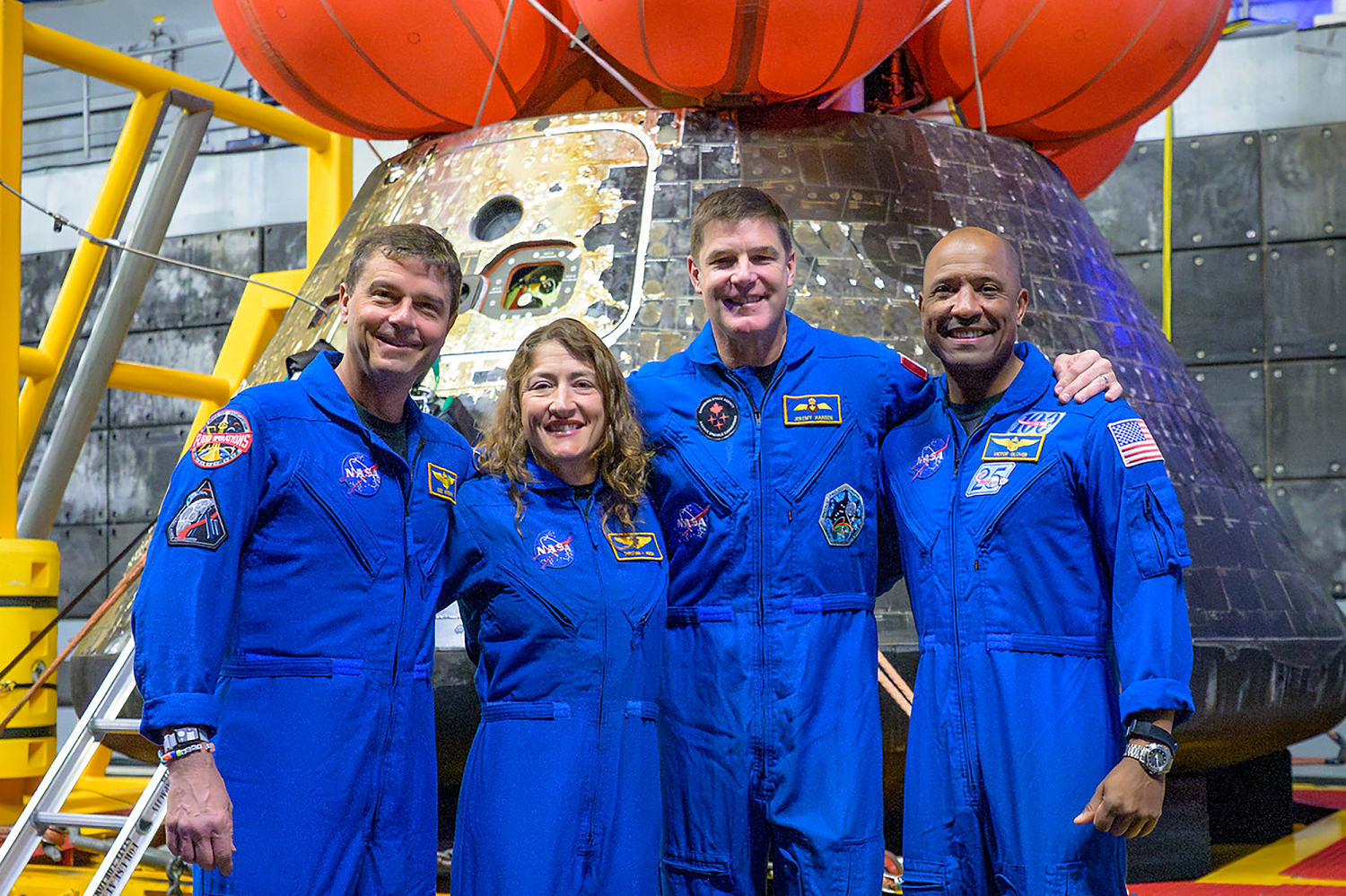
The completion of the Artemis II mission signifies a transition from theoretical deep-space habitation to a verified biological and mechanical baseline. While public discourse focuses on the emotional resonance of the crew’s return, the true output of this mission is the quantification of human-machine integration under high-stress, non-terrestrial conditions. The success of the mission rests not on "teamwork" in the abstract, but on a specific set of operational dependencies: physiological synchronization, psychological cohesion under extreme isolation, and the iterative refinement of the Orion spacecraft’s Life Support Systems (LSS).
The Triad of Mission Cohesion
The interpersonal "bond" reported by the crew is a functional requirement for mission survival, categorized into three distinct operational pillars. Without these, the cognitive load of a lunar flyby exceeds individual processing capacity.
- Distributed Cognitive Processing: In a four-person crew, information must be triaged instantly. The crew functions as a decentralized network where trust reduces the need for redundant verification, shaving critical seconds off response times during high-velocity maneuvers.
- Affective Buffering: Deep space environments introduce stressors—high-dose radiation exposure, microgravity-induced fluid shifts, and the "overview effect"—that can trigger acute stress responses. A high-cohesion unit acts as a collective shock absorber, maintaining executive function when individual psychological reserves are depleted.
- Cross-Functional Redundancy: The Artemis II crew was selected and trained to ensure that the loss or incapacitation of any single member does not result in mission failure. This requires a level of intimacy with one another's technical workflows that transcends standard professional collaboration.
Engineering the Human Component
The Orion spacecraft serves as a pressurized laboratory where the primary variable is the human occupant. Unlike the Apollo-era lunar modules, which were largely manual and cramped, Orion utilizes a glass cockpit and automated logic that shifts the crew's role from "pilot" to "systems manager."
Environmental Control and Life Support System (ECLSS) Validation
Artemis II provided the first long-duration test of the ECLSS with a full crew complement. The system must maintain a nitrogen-oxygen atmosphere while scrubbing carbon dioxide ($CO_2$) and managing humidity. The metabolic output of four astronauts—each generating approximately $2.5$ lb of $CO_2$ daily—creates a chemical load that the amine-based scrubbing system must neutralize. Failure in this cycle leads to hypercapnia, which impairs the very decision-making capabilities required to fix the system. The crew's reporting on the "bond" is, in technical terms, a reflection of their confidence in the vehicle's ability to maintain this homeostasis.
Radiation Mitigation Strategies
Beyond the protection of the Van Allen belts, the crew faced Galactic Cosmic Rays (GCRs) and Solar Particle Events (SPEs). The Orion capsule’s shielding is augmented by "shelter-in-place" protocols, where the crew uses onboard mass—water, food, and equipment—as a makeshift radiation vault. The psychological discipline required to remain in a confined, shielded area for the duration of a solar flare is a direct product of the social cohesion established during pre-launch training.
The Kinematics of the Lunar Flyby
The mission trajectory followed a Hybrid Free-Return Trajectory. This orbital mechanic ensures that if the service module's propulsion fails after the Trans-Lunar Injection (TLI) burn, the Moon’s gravity will naturally whip the spacecraft back toward Earth.
- Initial Elliptical Earth Orbit (IEEO): Used to test systems before committing to the lunar trajectory.
- Trans-Lunar Injection: The critical burn that accelerates the craft to approximately $25,000$ mph ($11.2$ km/s).
- Pericynthion: The point of closest approach to the lunar surface.
The "forever" bond described by the crew is forged at the moment of Pericynthion. At this juncture, they are the most isolated humans in history, separated from Earth by $230,000$ miles and dependent entirely on the physics of the return swing. The velocity delta required for Earth re-entry—hitting the atmosphere at Mach 32—requires a heat shield capable of withstanding $5,000$°F. The crew’s shared experience of this thermal stress is a foundational element of their post-mission synergy.
Communication Latency and Autonomy
One of the most significant shifts from Low Earth Orbit (LEO) operations to cislunar space is the introduction of signal delay. While LEO communications are near-instantaneous, lunar distances introduce a round-trip delay of approximately $2.6$ seconds.
This latency necessitates a move away from "Mission Control Centric" operations. The Artemis II crew had to demonstrate "on-board autonomy," making real-time adjustments to flight software and life support without waiting for terrestrial approval. The bond they describe is the social manifestation of this technical autonomy; they are a closed-loop system, making decisions in a vacuum where the ground can only offer retroactive advice.
Biological Synchronicity and Circadian Drift
Microgravity disrupts the human body’s internal clock. Without the 24-hour light/dark cycle of Earth, the crew must rely on high-intensity LED lighting protocols to regulate melatonin production and sleep-wake cycles.
Physiological Adaptations
- Fluid Redistribution: Fluids shift toward the head, increasing intracranial pressure and potentially affecting visual acuity (Spaceflight-Associated Neuro-ocular Syndrome).
- Muscular Atrophy: Even during a short flyby, the lack of gravitational load begins the process of bone demineralization.
- Microbiome Convergence: In a sealed environment, the skin and gut biomes of the four crew members begin to synchronize.
The crew’s statement of being "bonded forever" is not merely metaphorical; it is biological. They have shared an environment where their very bacteria have reached an equilibrium, and their physiological stress markers have spiked and subsided in unison.
The Economic and Geopolitical Multiplier
The Artemis II mission is the hardware validation phase of a larger economic strategy known as the Moon-to-Mars pipeline. The $100$ billion dollar investment in the Artemis program is not aimed at a singular "flags and footprints" event, but at establishing a permanent cislunar presence.
The crew functions as the "Alpha Test" for the Gateway station and future lunar base camps. Their feedback on the Orion’s internal volume—roughly $330$ cubic feet of habitable space—determines the ergonomic standards for the next thirty years of spacecraft design. If the crew reports that the social dynamics were strained by the layout, the architecture of the Artemis III and IV modules will be fundamentally altered.
Bottlenecks in Deep Space Habitation
Despite the success of Artemis II, several critical bottlenecks remain that "cohesion" alone cannot solve:
- Power Density: Current solar array technology provides sufficient power for transit but is insufficient for long-term lunar night survival (which lasts 14 Earth days).
- Cryogenic Fluid Management: Preventing the boil-off of liquid hydrogen and oxygen over months-long missions is a thermal management challenge yet to be fully solved for the scale of a Mars transit.
- Psychological Decay: While a 10-day flyby strengthens bonds, a 900-day Mars mission introduces the risk of "cabin fever" and social fracturing that no amount of pre-mission training can entirely mitigate.
Strategic Operational Forecast
The data harvested from the Artemis II return confirms that the human-machine interface is ready for the lunar surface. However, the move to Artemis III—the actual landing—requires a shift from "cohesion" to "specialization."
The next crew will face the added complexity of the Human Landing System (HLS) docking and surface operations in the lunar South Pole’s permanently shadowed regions. The strategic play for NASA and its partners is to codify the "Artemis II Cohesion Model" into a repeatable training framework. This involves moving beyond standard centrifuge and underwater training into high-fidelity "dark-side" simulations that replicate the total communication blackouts and extreme thermal gradients of the lunar farside.
Future missions must prioritize the development of "Cognitive Digital Twins"—AI models that monitor crew health and interpersonal tension in real-time, providing interventions before friction impacts mission safety. The "forever bond" is a valuable qualitative result, but the quantitative future of space exploration lies in the ability to manufacture that bond through rigorous environmental engineering and psychological selection.
The immediate priority for mission planners is the integration of the Artemis II debrief into the flight software of the HLS. The crew's experience with the Orion’s manual override systems will dictate the level of automation allowed during the high-stakes descent to the lunar surface. The goal is a seamless transition from the orbital "bond" to surface-level operational excellence, ensuring that the human element remains the strongest link in the mission chain.