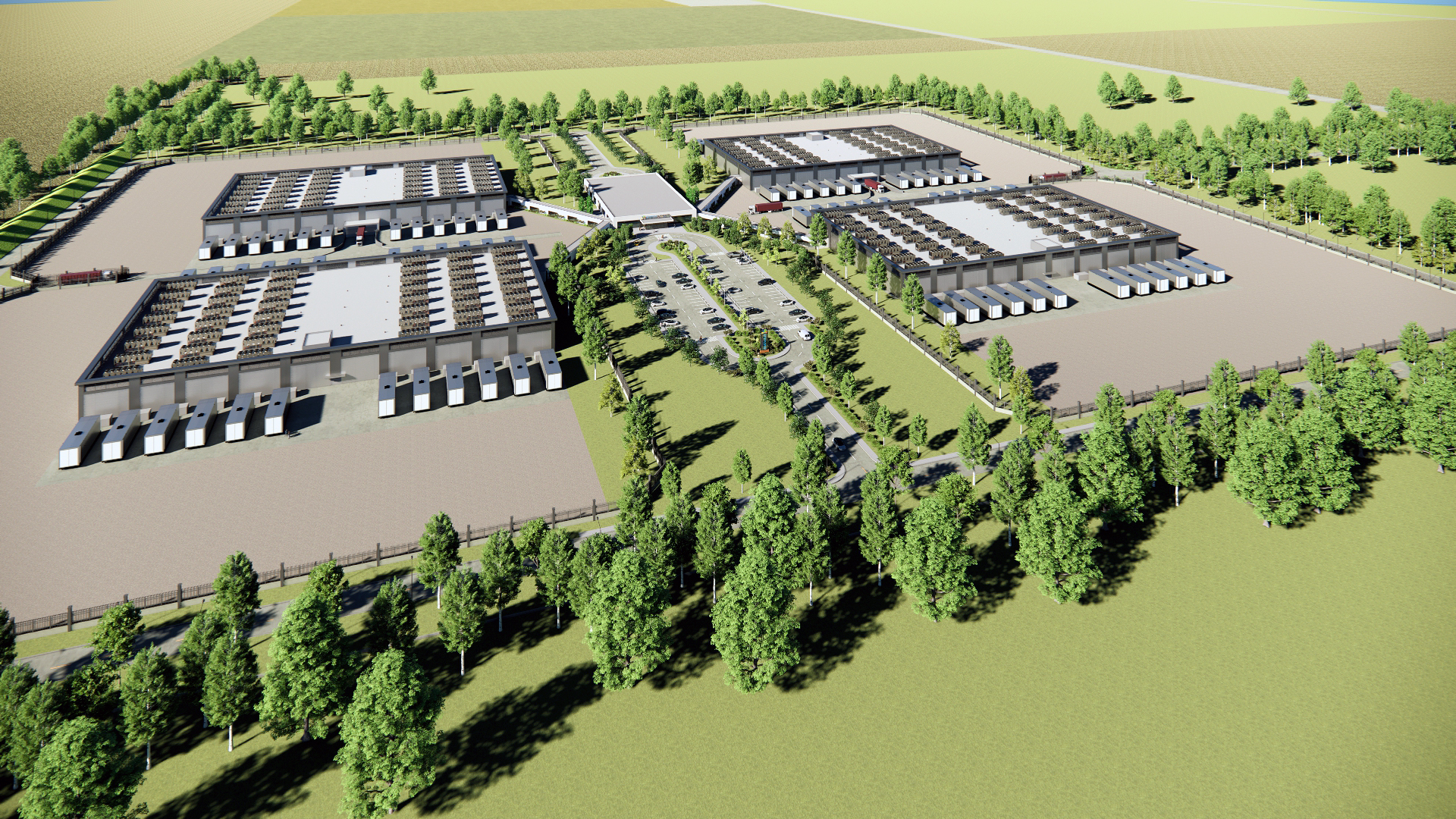
Bell Canada is eyeing Saskatchewan for a massive AI data centre. But they aren't exactly shouting it from the rooftops. Instead, they held a closed-door meeting with local landowners in the Lumsden area. It didn't go as smoothly as their PR team probably hoped.
When a multi-billion dollar telecom giant shows up in a rural community with non-disclosure agreements and vague promises, people get twitchy. I've seen this play out before. Tech companies want the land, the power, and the water, but they hate the public scrutiny that comes with it. Right now, the tension in Saskatchewan is thick. Farmers aren't just worried about their view; they're worried about their livelihoods and the literal ground beneath their feet.
Why Bell wants a piece of Saskatchewan
Saskatchewan has things AI needs. It has space. It has a relatively stable power grid. Most importantly, it's cold. If you're running thousands of high-end GPUs to train a large language model, heat is your enemy. Cooling those machines costs a fortune. In the Canadian prairies, nature does half the work for you.
Bell isn't doing this for the sake of local job creation. They're doing it because the demand for AI infrastructure is exploding. Every major player is racing to build "compute" capacity. If Bell doesn't build it, someone else will. But for the people living near Lumsden, the benefits are less clear.
The project is rumored to be massive. We're talking about a facility that could consume as much electricity as a small city. That puts a huge strain on SaskPower. If the grid needs upgrades to support a private data centre, who pays for that? Usually, it's the taxpayers or the ratepayers. Bell hasn't been transparent about the utility requirements yet, and that’s a red flag for anyone who pays a power bill in this province.
Landowners are tired of the secrecy
The meeting was private for a reason. Bell wanted to secure land options before the "not in my backyard" (NIMBY) crowd could organize. It’s a classic corporate move. You lock down the people you need, offer them a check, and hope the rest of the community doesn't notice until the shovels are in the ground.
But farmers talk.
Landowners at the meeting reported feeling pressured. They were asked to sign documents that restricted what they could say to their neighbors. That’s a terrible way to start a relationship with a community. In rural Saskatchewan, your word and your reputation matter more than a corporate logo. By keeping things quiet, Bell actually managed to make everyone more suspicious.
One big concern is water. These facilities often use millions of liters of water for evaporative cooling. In a region where drought is a constant threat and agricultural water rights are hard-fought, the idea of a tech giant gulping down the local supply is a non-starter. Bell hasn't provided a detailed water management plan. Until they do, the opposition is only going to get louder.
The AI data centre reality check
Everyone talks about "tech jobs" like they're a magic wand for the economy. Let’s be real. A data centre is basically a giant, high-tech warehouse full of humming boxes. Once it's built, it doesn't need a thousand people to run it. It needs a few dozen specialized technicians and some security guards.
The construction phase brings a temporary boost. You’ll see trucks, contractors, and local hotels filling up. But once the ribbon is cut? The economic impact drops off a cliff. The real value flows back to Bell’s headquarters and their shareholders. Saskatchewan provides the resources; Bell keeps the profit.
We also have to talk about land use. This isn't just "empty space." It's productive farmland. Once you pave over some of the best soil in the province for a data centre, that land is gone forever. You don't just "un-build" a massive concrete bunker filled with fiber optics and cooling pipes. The long-term loss of agricultural productivity is a high price to pay for a facility that could be obsolete in fifteen years as hardware changes.
What happens when the power runs out
Saskatchewan’s grid is already in a state of transition. We're trying to move away from coal while keeping the lights on. Adding a massive AI load complicates everything. If Bell wants to build this, they should be forced to bring their own power to the table.
- Small Modular Reactors (SMRs): There’s talk about using SMRs to power these sites.
- Renewable offsets: Bell might claim they'll use wind or solar, but AI needs base-load power. It can’t wait for the wind to blow.
- Battery storage: This is expensive and still unproven at the scale needed for a tier-4 data centre.
If the provincial government rolls out the red carpet without demanding massive infrastructure investments from Bell, they're failing the public. We shouldn't be subsidizing a telecom giant's AI ambitions through our utility rates.
Practical steps for affected landowners
If you’re a landowner in the Lumsden area or anywhere else Bell is sniffing around, don’t sign anything yet. Corporate lawyers are paid to protect the company, not you. You need your own representation.
Get a specialized land agent or a lawyer who understands industrial easements. These aren't standard utility lines. The impact on your property value and your ability to farm around the site is significant. Demand to see the environmental impact study, specifically regarding noise pollution and water table usage. Those cooling fans are loud. They run 24/7. It sounds like a jet engine that never takes off.
Talk to your neighbors. Bell wants to deal with you one-on-one because it’s easier to pick people off that way. A unified group of landowners has way more leverage. If they want your land for their billion-dollar AI play, make them pay for it—and make them guarantee your water and your power prices won't suffer.
Don't let the "innovation" talk distract you. This is a real estate and resource play. Treat it like one. Bell needs Saskatchewan more than Saskatchewan needs this specific data centre. Use that to your advantage. Keep the pressure on local MLAs to demand a public forum. Closed-door meetings are for people with something to hide. If this project is actually good for the province, Bell should be able to defend it in the light of day.