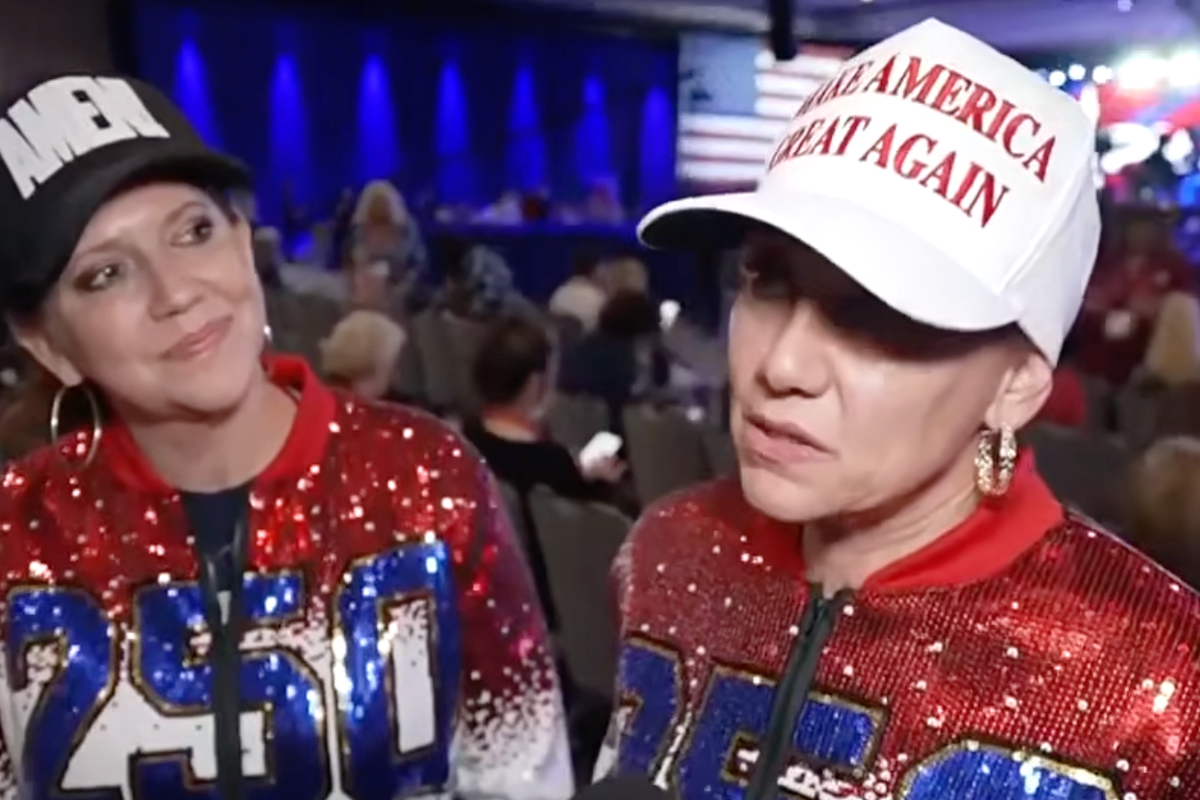
The carpet in the Gaylord National Resort is a dizzying pattern of swirls, designed to mask the wear and tear of thousands of boots, heels, and oxfords. At CPAC, the air usually smells like expensive espresso and a very specific brand of defiance. But walk through the corridors long enough, past the glitter of the media booths and the roar of the main stage, and you find a different energy. You find the mothers.
They aren't just voters. They are the tactical commanders of the American household. They carry purses filled with snacks and pocket-sized Constitutions, their eyes sharp with a protective instinct that predates any political party. When the conversation turns to the possibility of war in Iran, the atmosphere shifts. It stops being about geopolitical chess and starts being about the dinner table.
There is a name that hangs in the air this year: Barron.
He is no longer the shy child glimpsed behind a podium in 2016. He is a young man, a literal giant of a teenager, standing at the precipice of adulthood. For the women gathered in these hallways, he represents something more than a former First Son. He is a litmus test for the sincerity of a movement.
"If my grandson has to go, he should go too."
The woman speaking is wearing a rhinestone-encrusted hat and a look of absolute conviction. She isn't saying it out of spite. It’s a deeper, more visceral logic. In the gold-leafed world of high-stakes politics, there is a recurring fear that the people who make the decisions never have to live with the consequences. The "Moms for America" types aren't asking for Barron Trump to be a sacrificial lamb; they are asking for the restoration of a lost American ideal: the leader who shares the risk.
Consider the hypothetical weight of a deployment order. It is easy to move pins on a map when the pins don't have faces. But when those pins represent the sons of the wealthy and the sons of the working class alike, the hand that moves them tends to tremble. That tremble is what these women are looking for. They want to know that the commander-in-chief sees his own blood in the uniform of the private.
The logic is ancient. It’s the code of the warrior-king, updated for a 24-hour news cycle. If the United States finds itself pulled into a conflict with Iran—a prospect that feels increasingly like a slow-motion car crash—the question of who serves becomes the ultimate equalizer.
One mother, leaning against a velvet rope, explains it through the lens of her own son's service. He’s in the Reserves, a young man who likes working on trucks and thinks about his future in terms of mortgage rates and fishing trips. To her, Barron Trump is the bridge between the two Americas.
"We're tired of the 'Forever Wars' where the elites stay home," she says. Her voice is low, steady. "If the cause is big enough to send our boys to the desert, it’s big enough for a billionaire’s son. That’s how you know it’s real."
This isn't just about fairness. It's about the erosion of trust. Over the last two decades, a chasm has opened between the people who fight and the people who flag-wave. By suggesting—or even demanding—that the youngest Trump brother take up a rifle if the drums of war beat for Iran, these women are attempting to stitch that chasm shut. They are demanding a skin-in-the-game philosophy that has been missing from the halls of power for a generation.
The statistics are a cold shower. The vast majority of those who serve in the modern volunteer force come from families where service is a tradition, often from the same handful of zip codes. It has become a family business for some and a foreign concept for others. When the "MAGA Moms" nod in agreement that Barron should serve, they are rebelling against that divide. They are asserting that there should be no such thing as a "protected class" when the survival of the nation—or its foreign policy interests—is on the line.
But there is a haunting quality to this consensus.
To hear a mother speak so casually about the potential combat service of a child—any child—is to realize how high the temperature has risen. The talk of Iran isn't academic here. It’s a looming shadow. They speak of drone strikes and naval blockades with the same familiarity they might use to discuss grocery prices. It’s a survivalist mindset born from a feeling of constant siege.
Imagine a kitchen in Ohio. The light is dim. A woman sits at the table, scrolling through headlines about escalating tensions in the Middle East. She thinks about her son, who is twenty and thinks he’s invincible. Then she looks at a photo of the Trump family. In her mind, she is looking for a reflection. She wants to see a mother who is just as worried as she is. She wants to see a father who knows that his decisions could end with a knock on his own front door.
That is the emotional core of the CPAC consensus. It isn't an attack on Barron Trump. It is a desperate, clawing hunger for accountability.
The critics will say this is performance. They’ll argue that it’s easy to say "send him" when you know the odds are slim. But that misses the point of the storytelling happening in these hotel ballrooms. These women are crafting a narrative where the leader isn't a king, but a fellow citizen. They are using Barron as a symbol to demand that the weight of the crown includes the weight of the rucksack.
Is it fair to put that on a teenager? Probably not. But fairness is a luxury that feels increasingly scarce in the political arena. In the eyes of the women at CPAC, the world is a dangerous place, and the only way to navigate it is through a shared sacrifice that ignores tax brackets.
The conversation usually ends the same way. A nod. A sigh. A readjustment of a lanyard. They move on to the next panel, the next speaker, the next battle in the culture war. But the sentiment lingers like the smell of gunpowder after a salute.
They aren't just voting for a platform. They are looking for a blood oath. They want to believe that if the sky turns dark and the orders are signed, the boots hitting the tarmac will belong to the children of the palace just as surely as they belong to the children of the plains.
In a world of shifting allegiances and digital smoke and mirrors, they have decided that the only truth left is the one written in the service of a son.
The swirls on the carpet continue their dizzying dance, under the feet of women who are waiting to see if the people they follow are willing to lose what they are willing to lose.
They are waiting for the hand that moves the pins to finally start to shake.