The brutal stabbing of two dogs at Woodlawn Memorial Park in Compton—resulting in the death of a three-year-old German Shepherd named Blue—is not merely an isolated act of cruelty. It is the predictable outcome of a systemic failure in urban land management and public safety. When a grieving owner takes his personal protection animals to a historic cemetery, only to have them butchered by an intruder, the narrative isn't just about a "heartbroken owner." It is about the collapse of the thin line between sacred public spaces and the unchecked violence that spills over when those spaces are abandoned by local authorities.
Benny Solis, the owner of Blue and the surviving dog, Shadow, was visiting the cemetery to pay respects. This wasn't a casual stroll. In neighborhoods where the social fabric has frayed, a trip to a graveyard often requires the presence of protection. The tragedy unfolded when a man emerged from the shadows of the monuments, wielding a knife with surgical intent. Blue died on the grass. Shadow was left with deep lacerations. But the real story lies in how a historic site, meant for the peaceful repose of the dead, became a hunting ground for the deranged.
The Illusion of Security in Post-Industrial Corridors
Cemeteries in the Los Angeles basin, particularly those in the Gateway Cities like Compton, are facing a crisis of identity. These are sprawling, multi-acre properties that are expensive to maintain and even harder to secure. Woodlawn Memorial Park, which holds the remains of Civil War veterans and local pioneers, has become a microcosm of the larger urban decay. The perimeter is porous. The lighting is inadequate.
For the families of those buried there, the expectation of a safe environment is a legal and moral right. However, the reality is that many of these locations have become magnets for transient activity and criminal opportunism. When security is "outsourced" or reduced to a single patrol car circling once every four hours, the space effectively belongs to whoever is willing to use force.
The incident involving Blue and Shadow highlights a disturbing trend. Property owners and municipal managers are increasingly relying on the "passive deterrent" model. They assume that the inherent somberness of a cemetery will prevent crime. It doesn't. Criminals do not respect the sanctity of the grave, and they certainly don't fear a locked gate that is easily hopped.
Why Protection Dogs Are Becoming Essential Gear
In many parts of Southern California, a large breed dog is no longer a luxury or a hobby. It is a piece of safety equipment. Solis brought his dogs because he understood the environment. The irony is that the very animals meant to provide a layer of security were targeted precisely because they represented the only barrier between a civilian and a predator.
This reflects a broader shift in how residents navigate the city. We are seeing an increase in "defensive living," where every outing is calculated based on risk. When a man cannot visit a cemetery without his dogs being slaughtered, the social contract hasn't just been nudged; it has been shredded.
The Failure of Municipal Oversight
Compton has struggled with budget deficits and a rotating door of administrative leadership for years. This volatility has a direct impact on how land use and public safety are handled. Woodlawn, while a private or non-profit entity depending on its current corporate structure, exists within a regulatory framework that is supposed to ensure public access is safe.
The investigation into the stabbing has been slow, a fact that surprises no one familiar with the caseload of local law enforcement. But the silence from city hall is deafening. There has been no push for emergency lighting ordinances, no increase in patrols for the "green lungs" of the city, and no accountability for the security lapses that allowed an armed individual to linger in a graveyard.
- The Funding Gap: Maintaining a 40-acre cemetery requires a workforce that most modern funeral conglomerates are unwilling to pay for.
- The Liability Shield: Corporations often use complex ownership structures to insulate themselves from lawsuits when crimes occur on their property.
- The Homelessness Intersection: Many historic cemeteries have become de facto encampments, creating a volatile mix of grieving families and desperate individuals living among the headstones.
The Anatomy of the Attack
Witness accounts and the physical evidence on the scene suggest this wasn't a defensive act by the perpetrator. To kill a German Shepherd with a blade requires significant strength and a specific level of aggression. This was a targeted strike. The attacker didn't run when he saw the dogs; he engaged them.
This suggests a level of desensitization to violence that is becoming more common in urban centers. When the "street" moves into the "sanctuary," the rules of engagement change. The attacker likely saw the dogs as a challenge to his perceived territory within the cemetery walls. By killing Blue, he was asserting dominance over a space that is legally owned by a corporation but functionally controlled by the most violent person present.
The Psychology of Abandoned Spaces
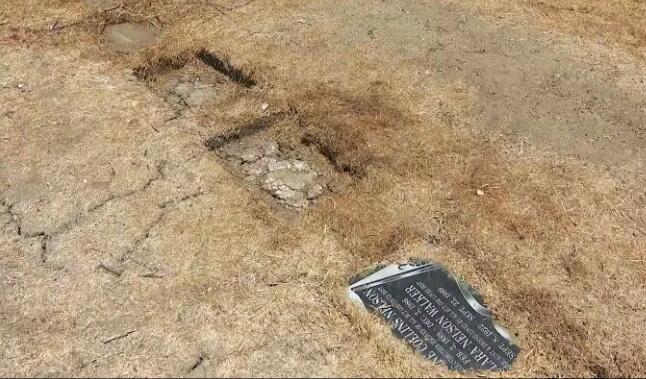
Urban planners often talk about the "Broken Windows Theory," but in the context of Woodlawn, we should call it the "Toppled Headstone Theory." When a site looks neglected—overgrown grass, cracked markers, trash in the corners—it sends a signal that no one is watching. This lack of "eyes on the street" (or in this case, eyes on the graves) invites the very type of person who would carry a knife into a memorial park.
If the management of Woodlawn had invested in visible, active security rather than relying on the "honor system" of a cemetery, Blue would likely still be alive. Instead, the burden of security was placed entirely on the visitor. Benny Solis did exactly what he was supposed to do to protect himself, and he paid for it with the life of his companion.
The Economic Reality of Cemetery Management
We have to look at the money. Most historic cemeteries rely on "perpetual care funds" established decades ago. With inflation and the rising cost of labor, these funds are often insufficient to cover anything beyond basic mowing. Security is the first line item to be cut.
Large death-care corporations frequently buy these historic sites, extract the remaining value from unsold plots, and then "starve" the maintenance budget to maximize profit margins. This corporate neglect has a body count. When security is viewed as an "unnecessary expense" rather than a core service, tragedies like the Woodlawn stabbing become inevitable.
Reclaiming the Sacred
If we want to stop the violence at Woodlawn and similar sites, we have to stop treating them as passive relics. They must be active, integrated parts of the community that are defended with the same vigor as a school or a courthouse.
- Mandatory Security Minimums: Local governments must pass ordinances requiring high-acreage public sites to maintain a minimum level of active security during all hours of operation.
- Infrastructure Upgrades: High-intensity LED lighting and monitored camera systems must be non-negotiable for properties of this size.
- Community Enforcement: Neighbors and local groups need to be empowered to report activity without fearing that their reports will disappear into a police department's "low priority" pile.
The death of Blue is a warning. Today, it was a protection dog. Tomorrow, it will be a visitor who didn't have a dog to stand in the way. The blood on the grass at Woodlawn is a testament to what happens when we allow our most significant cultural landmarks to become no-go zones. We have traded the peace of the dead for the convenience of the negligent.
Fix the fences. Hire the guards. Light up the darkness. There is no other way to honor the dead or protect the living.