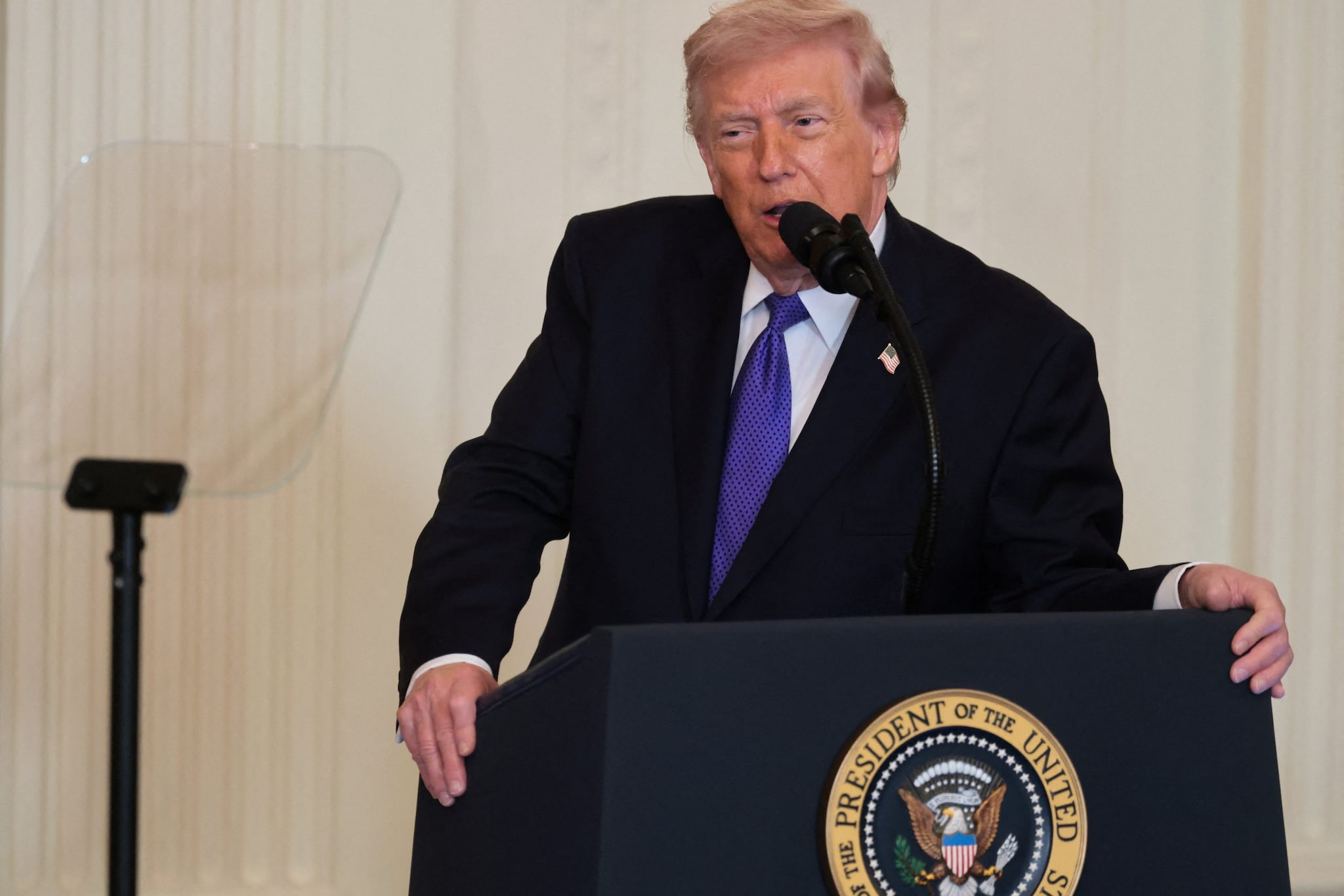
U.S. Treasury Secretary Scott Bessent and Chinese Vice Premier He Lifeng are quietly preparing to meet in Paris next week, a high-stakes prelude to Donald Trump’s planned March 31 visit to Beijing. This mid-March sit-down is a desperate attempt to salvage a trade narrative that has been shredded by recent Supreme Court rulings and escalating military tension in the Middle East. While official channels point to "business deals" involving Boeing jets and American soybeans, the reality is far grimmer. The administration is scrambling to regain leverage after the U.S. Supreme Court effectively disarmed the President’s primary weapon: the broad, emergency-power tariffs that once defined his second-term strategy.
The Disarming of the Tariff King
For years, the threat of escalating tariffs was the hammer that forced Beijing to the table. That hammer just shattered. In a landmark ruling last month, the Supreme Court invalidated the administration’s use of the International Emergency Economic Powers Act to impose sweeping global levies. This wasn't just a legal setback; it was a total tactical reset.
Before the ruling, the White House had escalated tariffs on Chinese imports to as high as 145% in some sectors. Now, those rates have defaulted to a standard 15% global fee—a rate that carries a 150-day expiration date. Trump is heading to Beijing not with a heavy club, but with a ticking clock.
He Lifeng knows this. Beijing's negotiators have spent the last decade learning how to play the long game against Western legal systems. By the time Bessent sits down in Paris, the Chinese delegation will be operating from their strongest bargaining position since 2017. They no longer have to negotiate to remove existing pain; they only have to resist the threat of new, more legally complex "Section 301" investigations that could take months or years to implement.
Boeing and Soybeans are Just Window Dressing
Expect the upcoming Paris meeting to produce headlines about 500-aircraft orders for Boeing and massive soybean quotas. These are "legacy" wins—the kind of optics-heavy numbers that played well during the first trade war. Boeing, which hasn't secured a major Chinese deal in nearly a decade, desperately needs the $50 billion-plus infusion.
However, these numbers are increasingly decoupled from the actual health of the U.S. economy. The real fight in Paris won't be about crops or planes; it will be about the "Affiliates Rule" and the future of advanced semiconductors.
- The Tech Truce: The U.S. recently agreed to suspend the "Affiliates Rule," which targeted any company 50% owned by Chinese entities. In exchange, China "promised" to resume exports of legacy chips and rare earth materials.
- The Rare Earth Trap: China’s recent suspension of export controls on rare earths is temporary. It is a leash, not a release. If the March 31 summit goes poorly, expect those taps to tighten within 48 hours.
- The Taiwan Factor: For the first time, Taiwan is being explicitly linked to trade concessions. Reports suggest Beijing is pushing for reduced U.S. arms sales as a condition for "stable" trade volumes in 2026.
The Paris Ghost Protocol
Why Paris? Hosting these talks in a neutral European capital is a strategic choice. It allows both sides to step away from the immediate fallout of the U.S. military actions in Iran and the capture of Nicolás Maduro. Xi Jinping has reportedly expressed deep "caution" regarding the Trump administration’s recent regime-change operations.
By meeting in France, Bessent and He are attempting to wall off the economy from the erupting geopolitical fires. It is a "Ghost Protocol" of sorts—an attempt to run a parallel relationship where money still flows while the respective militaries move into strike positions.
The strategy is high-risk. Critics argue that by separating trade from security, the U.S. is signaling that its economic interests are up for sale regardless of Beijing’s regional aggression. Conversely, proponents say that without this economic "ballast," the two nuclear powers would have nothing left to talk about but war.
The 2026 Agenda is a Defensive Play
The Trump administration’s 2026 Trade Policy Agenda, released just days ago, admits as much. It focuses on "managing" trade with China rather than "winning" a definitive victory. The language has shifted from total decoupling to "diversifying import sources."
The data confirms this shift. For the first time since the turn of the millennium, China is no longer the partner with which the U.S. holds its largest trade deficit. That title has moved, partly due to the aggressive reshoring efforts and partly because China simply stopped buying American manufactured goods in April 2025 in retaliation for the second trade war's onset.
The Paris talks are less about growth and more about stopping the bleeding. If Bessent cannot convince He Lifeng to commit to a massive, verifiable purchase agreement before Trump lands in Beijing, the March 31 summit risks being a hollow photo-op. And with midterm elections approaching, a hollow summit is a political liability the White House cannot afford.
The mid-March meeting will tell us if the "America First" strategy has enough teeth left to bite, or if the legal and geopolitical constraints of 2026 have finally turned the trade war into a stalemate of mutual exhaustion.
Would you like me to analyze the specific impact of the Supreme Court's tariff ruling on the U.S. manufacturing sector?