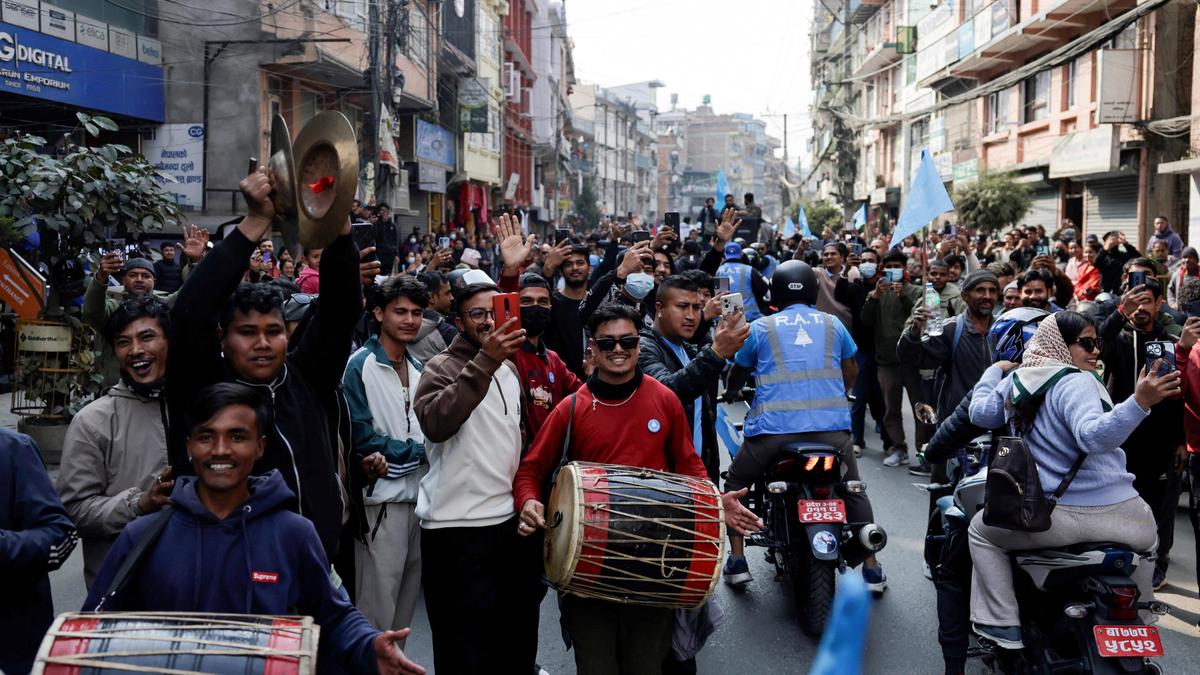
The math simply does not add up. In the lead-up to the landmark March 5 elections, Nepal’s political establishment is engaged in a high-stakes game of fiscal fantasy. Major parties are blanketing the airwaves and social media with manifestos that promise to double the size of the national economy, create millions of jobs, and skyrocket per capita income to $3,000 within five years. Yet, for a nation with a nominal GDP of roughly $45.5 billion and a debt-to-GDP ratio that has nearly doubled in the last decade, these pledges are less like policy and more like a desperate attempt to pacify a generation that recently set the halls of power on fire.
The "Gen Z Uprising" of September 2025, which saw the incineration of the 122-year-old Singha Durbar and the incinerated remains of the former Parliament, was not a random act of vandalism. It was a violent rejection of a political "musical chairs" game that has cycled through 27 prime ministers since 1990. Now, as the country heads to the polls under an interim government led by former Chief Justice Sushila Karki, the old guard is trying to buy back its legitimacy with checks the national treasury cannot cash.
The Trillion Rupee Mirage
The manifestos released by the three dominant forces—the Nepali Congress, the CPN-UML, and the Maoists—read like venture capital pitch decks for a company with no product and a mountain of debt.
The CPN-UML, led by four-time Prime Minister K.P. Sharma Oli, claims it will expand the economy to $69.4 billion in five years and then double it again to $138.8 billion by the next decade. To achieve this, the party would need to sustain an annual growth rate of nearly 15 percent, a feat rarely seen in modern economic history outside of oil-boom states or post-war reconstructions.
Meanwhile, the Nepali Congress has set its sights on a slightly more "modest" $80 billion economy and 1.5 million new jobs. Not to be outdone, the upstart Rastriya Swatantra Party (RSP), led by the popular rapper-turned-mayor Balen Shah, is promising a $100 billion GDP.
The Fiscal Reality Check
To understand why these numbers are hallucinatory, one must look at the structural decay of Nepal’s finances.
- Revenue at an Eight-Year Low: In the first half of the 2023/24 fiscal year, revenue fell to 8.7 percent of GDP. Weak domestic demand and a decrease in VAT collection have left the government struggling to pay its own recurrent bills, let alone fund massive new infrastructure.
- The Debt Trap: Public debt now stands at 48.3 percent of GDP, up from 25 percent in 2015/16. While much of this is concessional, the cost of servicing this debt is eating into the very development budget meant to fuel growth.
- Capital Spending Paralysis: Year after year, Nepal fails to spend its allocated capital budget. By the time June rolls around, the government often enters a "monsoon spending" frenzy, where money is dumped into poor-quality projects just to clear the books.
The Cost of Staying in Power
Populism in Nepal is not just about big GDP numbers; it is about direct cash transfers that the country can no longer afford. Social security spending has surged from Rs 26 billion in 2010/11 to a projected Rs 258 billion in 2024/25. This now consumes nearly 15 percent of the national budget.
Every time a coalition feels its grip on power slipping, it lowers the eligibility age for elderly allowances or adds a new "nutrition grant." The UML’s current promise of 10GB of free monthly data for youth and Rs 20,000 for new mothers are classic examples of "voter bribery" through the national ledger. These programs are universal, meaning a wealthy family in Kathmandu receives the same state support as a destitute widow in the Karnali region. Without means-testing or structural reform, these entitlements are a fiscal time bomb.
The Youth Exodus vs. The Job Promise
The most stinging indictment of these manifestos is the daily queue at Tribhuvan International Airport. Approximately 2,000 to 3,000 young Nepalis leave the country every single day for labor in the Gulf or East Asia.
Political parties promise "millions of jobs," but they ignore the fact that the private sector is currently suffocating. Foreign Direct Investment (FDI) inflows remain pathetic—net FDI stood at a meager $63 million recently. When the rules of the game change every nine months with a new cabinet, long-term investors stay away.
The RSP and the new "Ujyalo Nepal" party, led by former technocrat Kulman Ghising, argue that energy is the answer. They aim for 25,000 MW of electricity production by 2035. While Nepal has immense hydropower potential, the transmission infrastructure and cross-border trade agreements with India remain bottlenecked by the very political volatility these parties perpetuate.
The Geopolitical Shadow
Nepal is no longer just a "yam between two boulders." It has become a high-stakes arena for the US-India-China triad. The 2025 protests were sparked in part by a government ban on social media platforms, a move seen by many as a nod toward more authoritarian, "closed-internet" models favored by some regional neighbors.
The next government will not just inherit a broken economy; it will inherit a fractured social contract. The youth who burned the Parliament are not interested in 10GB of free data. They are demanding a system where the "Big Three" leaders—Deuba, Oli, and Dahal—finally step aside.
The tragedy of the 2026 election is that while the faces in the manifestos might be new, the underlying math remains a work of fiction. If the winning coalition fails to move beyond these "tall claims" and address the revenue leakage and corruption that are the true anchors on the economy, the fire that took down Singha Durbar may just be a preview of what is to come.
Would you like me to analyze the specific fiscal impact of the proposed "10GB free data" and "maternal grants" on Nepal’s 2026 budget deficit?


