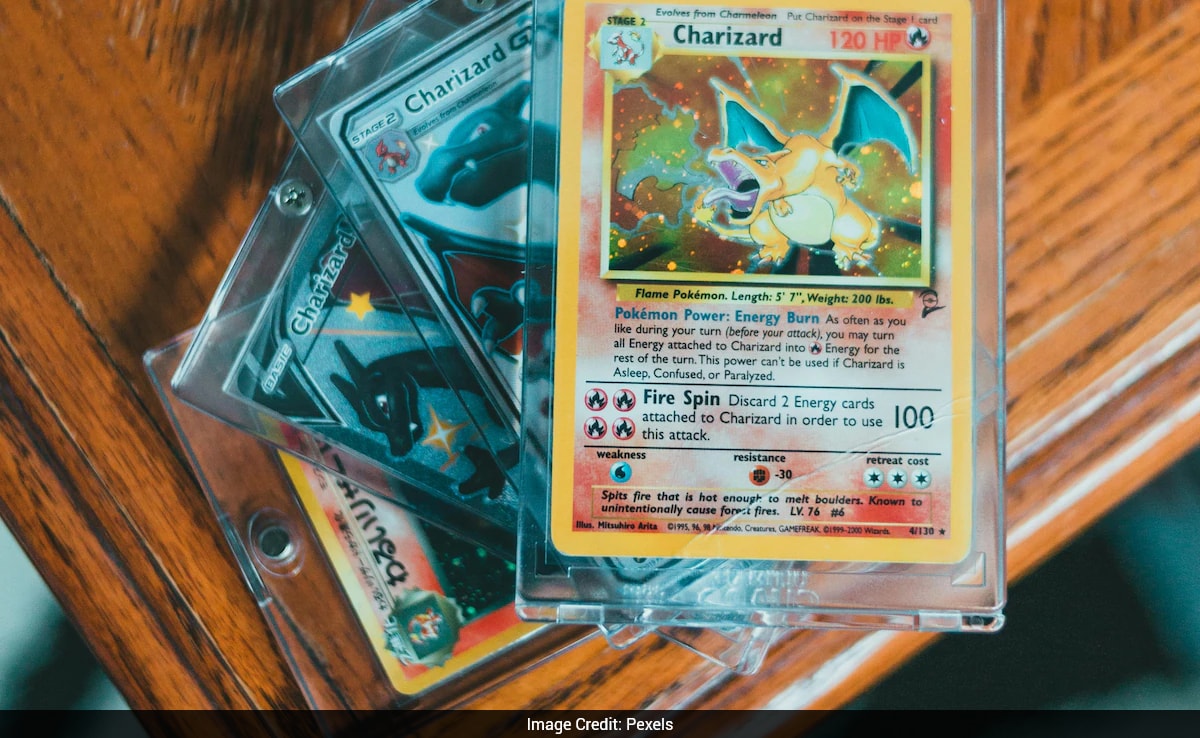
In a suburban attic in the United Kingdom, a man recently uncovered a stack of laminated history that could finance his entire wedding. It is a story that has become a modern folklore staple: an ordinary person discovers a hidden stash of Pokémon cards, realizes they are sitting on a five-figure windfall, and prepares to trade Pikachu for a reception venue. But behind these feel-good headlines lies a predatory, volatile, and increasingly sophisticated secondary market that functions more like a high-frequency trading floor than a hobbyist’s swap meet.
When we talk about a collection being worth "lakhs" or tens of thousands of pounds, we are not talking about the intrinsic value of ink and cardstock. We are discussing a speculative bubble fueled by scarcity, professional grading monopolies, and a generation of adults trying to buy back their childhood with the intensity of a Wall Street hedge fund. For the man in the UK, the cards represent a debt-free start to married life. For the industry, he is another data point in a $12 billion collectibles market that is currently undergoing a painful correction.
The Mechanics of a Modern Treasure Hunt
The cards in question are usually from the late 1990s, specifically the Base Set printed by Wizards of the Coast. To the untrained eye, a Charizard is a Charizard. To the analyst, the difference between a £50 card and a £50,000 card is a matter of microns.
Collectors look for the "Shadowless" border—a printing quirk on early runs where the artwork box lacks a drop shadow on the right side. They look for the "1st Edition" stamp. Most importantly, they look for the condition. This is where the casual "attic find" usually hits a wall. Most cards handled by children in 1999 have "silvering" on the edges or light scratches on the holographic foil. Once a card drops from a "Gem Mint 10" to a "Near Mint 7," the value doesn't just dip; it craters.
The UK wedding fund relies entirely on the whim of third-party grading companies like PSA or BGS. These institutions hold the keys to the kingdom. By encasing a card in a sonically sealed plastic "slab" and assigning it a numerical grade, they transform a toy into a financial instrument. This process has created a bottleneck in the market. During the pandemic, the surge in submissions was so massive that these companies had to suspend operations, proving that the "value" of these cards is tethered to the capacity of a few labs in the United States to look at them through a magnifying glass.
Why Nostalgia is a Volatile Asset
We have seen this before. The Beanie Baby craze of the 1990s and the comic book collapse of the early 1990s followed the same trajectory. The "get rich quick" narrative surrounding Pokémon is dangerous because it ignores the liquidity trap.
Selling a card worth £20,000 is not like selling a share of Apple. You cannot simply click a button and receive cash. You must find a buyer willing to pony up five figures for a piece of cardboard, or you must go through an auction house that will take a 20% cut. If the market is sliding—which it has been since the highs of 2021—your "wedding fund" can evaporate while you wait for the grading return.
The Logan Paul Effect and the Price Distortion
In 2022, influencer Logan Paul wore a PSA 10 Pikachu Illustrator card around his neck at WrestleMania, having purchased it for over $5 million. This single event sent shockwaves through the hobby, but it did a massive disservice to the average person with a shoebox in their garage.
It created an "asking price" versus "sold price" delusion. If you check eBay, you will see thousands of listings for "Rare Pokémon Cards" with astronomical price tags. Most of these will never sell. The actual market is thin at the top and overcrowded at the bottom. The man in the UK is lucky because he likely has "Base Set" holos, which maintain a floor of value due to their historical significance. But for every person finding a gold mine, ten others are finding 2003-era "bulk" that isn't worth the cost of the postage to ship it.
The Professionalization of Play
The transition of Pokémon from a game played on school buses to an alternative asset class has changed the "how" of collecting. We are seeing "box breaks," where people pay hundreds of dollars for the chance to own a single random pack being opened on a live stream. This is gambling masked as nostalgia.
The industry has also seen an influx of "investors" who have no interest in the game or the art. They buy "sealed product"—unopened booster boxes from 20 years ago—and keep them in climate-controlled safes. This artificial scarcity drives up the price for everyone else. When the UK groom-to-be sells his cards, he isn't likely selling to a kid who wants to play; he's selling to someone who will likely lock that card away for another decade, hoping to flip it to the next person in the chain.
Overlooked Risks in the Attic Find Narrative
While the media loves the "man finds fortune" angle, they rarely discuss the tax implications or the security risks. In the UK, a sudden influx of £30,000 from a sale could trigger Capital Gains Tax (CGT) if the profit exceeds the annual exempt amount. Furthermore, the physical security of these items is a growing concern. As prices rose, so did "slabbing" fraud—where counterfeiters create high-quality fake cards and put them in fake PSA holders.
If you are looking at your own old collection, the first step isn't dreaming of a Maldives honeymoon. The first step is a brutal, honest assessment of the "centering" and "surface" of your cards.
The Grading Gamble
The cost of grading a card can range from $25 to thousands of dollars depending on the declared value and the speed of service. For someone trying to fund a wedding, this is a significant upfront capital risk. If you send in a card you think is a 10 and it comes back a 6, you have lost the grading fee and the potential sale value. It is a high-stakes poker game where the house—the grading company—always wins.
The Future of the Cardboard Economy
Is the Pokémon market a bubble? Yes and no. The "junk wax" era of the early 2000s produced too much supply, but the 1999 1st Edition Shadowless cards are genuinely rare. There is a finite number of them in existence. As the generation that grew up with Red and Blue versions enters their peak earning years, the demand for these "trophy assets" will likely remain.
However, the days of 1,000% year-over-year returns are over. The market is maturing. It is becoming more like the fine art market—steady, elitist, and highly dependent on provenance. The man in the UK found his exit ramp at the right time. He is converting a speculative, illiquid asset into a tangible life event.
If you find yourself in a similar position, do not trust the first "buy it now" price you see on the internet. Get a loupe. Study the "pop reports" (population reports) to see how many of your cards exist in high grades. Most importantly, recognize that the market cares nothing for your sentimentality. To a buyer, your childhood memories are just a checklist of "whiting" on the back edges and the clarity of the holographic pattern.
Sell when you have a specific need for the cash, like a wedding or a mortgage down payment. Holding out for the "moon" is how most people end up holding a box of worthless paper when the trend finally shifts to the next nostalgic craze. Take the win, pay for the cake, and let the professional speculators worry about the next market crash.