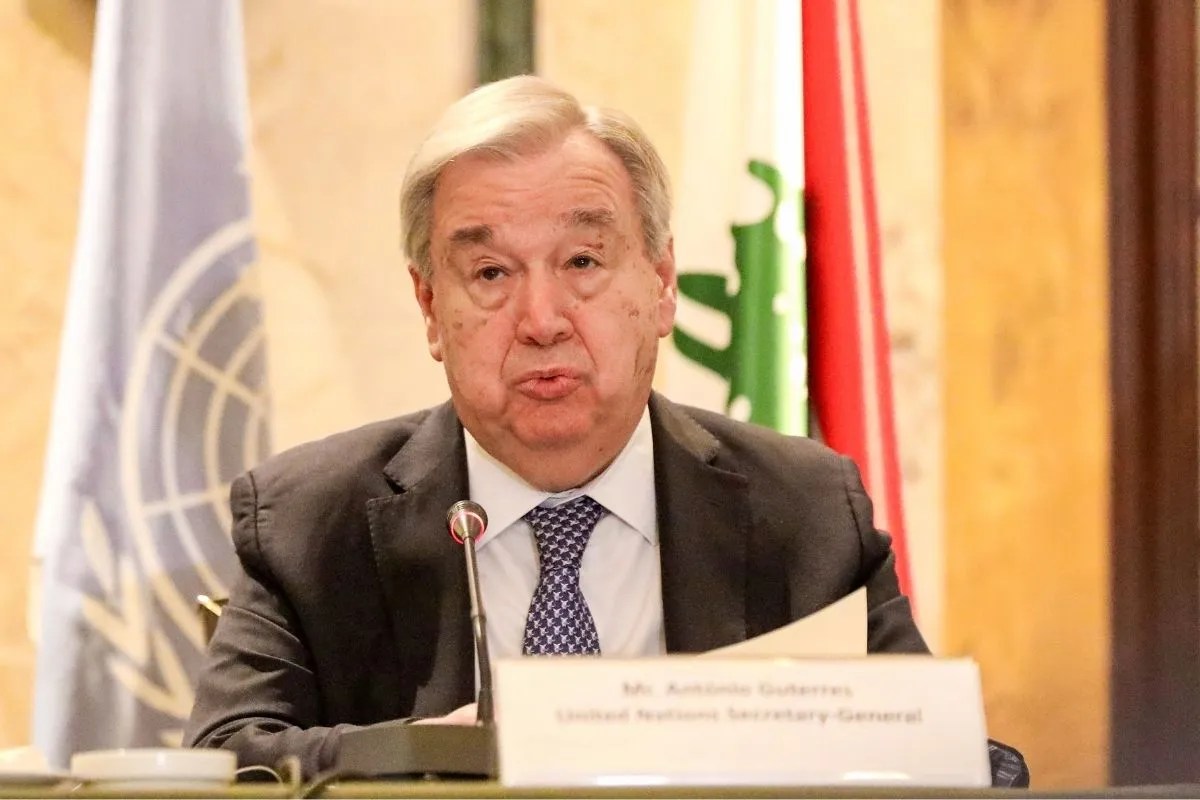
The United Nations is currently peddling a dangerous fantasy that "military action is not the solution." This tired script, recited by bureaucrats in climate-controlled rooms, assumes that all conflicts are misunderstandings waiting for a mediator. It is a fundamental misreading of power dynamics. In the Middle East, the push for an immediate ceasefire isn't a peace strategy; it’s a preservation strategy for the status quo that keeps the region in a permanent state of low-grade fever.
We have seen this cycle play out for decades. Conflict erupts. The UN issues a statement of "grave concern." Diplomats scramble for a ceasefire. The fighting stops, but the underlying rot remains. By freezing the conflict in place, the international community ensures that neither side achieves its strategic objectives, which effectively guarantees that the violence will return in two to five years. We aren't solving problems. We are just kicking the can down a road paved with more casualties.
The Myth of the Neutral Referee
The UN operates on the assumption that it is a neutral arbiter of justice. It isn't. The institution is a collection of competing national interests, often paralyzed by the veto power of the permanent members of the Security Council. When the UN calls for a ceasefire without a roadmap for total disarmament or a radical shift in governance, it is essentially providing a "refueling break" for non-state actors.
History shows us that decisive military outcomes—while brutal and costly—often lead to more stable, long-term peace than negotiated stalemates. Look at the end of the Sri Lankan Civil War. It was horrific. It was internationally condemned. But it ended a thirty-year conflict that endless "peace talks" and Norwegian-brokered ceasefires only managed to prolong. The UN’s refusal to acknowledge that some problems require a definitive winner is why its interventions so often fail.
Why Ceasefires are Often War by Other Means
In the modern Middle Eastern landscape, a ceasefire is rarely a step toward peace. It is a tactical pause. For groups operating under the influence of regional powers like Iran, a ceasefire is a window to:
- Rebuild Tunnels and Infrastructure: Underground networks aren't dug while drones are overhead.
- Resupply Munitions: Smuggling routes become significantly easier to manage when the "fog of war" clears.
- Information Warfare: The pause allows for a pivot to the media front, using the misery caused by the conflict as a tool for international fundraising and diplomatic pressure.
By demanding an end to hostilities before the military goals are met, the UN effectively protects the weaker party from the consequences of their initial aggression. This creates a moral hazard. If you know that the international community will step in and force a stop to the fighting before you are totally defeated, you have every incentive to start the next war.
The Cost of the "Military Action Isn't the Answer" Narrative
When a high-ranking official claims military action isn't the answer, they are ignoring the reality of the $21^{st}$ century. Ask the people who lived under ISIS if military action was the answer. Diplomacy didn't stop the Caliphate. Heavy artillery and air strikes did.
The UN’s rhetoric suggests that there is always a middle ground. But in existential conflicts where one party's stated goal is the total erasure of the other, there is no "compromise" that doesn't involve the eventual destruction of one side. To suggest otherwise is a form of intellectual dishonesty that costs lives.
We need to stop treating "Peace" as the absence of shooting. True peace is the presence of a stable, enforceable order. If that order can only be established through the defeat of a radicalizing force, then military action is not just an answer—it is the only answer.
The Industrial Complex of Concern
The UN’s "concern" has become a commodity. There is a massive infrastructure of NGOs, think tanks, and sub-committees that rely on these conflicts remaining "unsolved but managed." If a conflict actually ended—through a decisive military victory or a total surrender—thousands of people would be out of a job.
This creates a systemic bias toward the "managed conflict" model. The UN prefers a "frozen conflict" over a "concluded conflict" because it allows for the continuation of humanitarian aid cycles and diplomatic summits. It keeps the Middle East as a perpetual project rather than a region that might one day find its own balance of power.
Dismantling the "People Also Ask" Illusions
Does a ceasefire save lives?
In the short term, yes. In the long term, almost certainly not. By preventing a decisive conclusion to a war, you ensure that the war will happen again. Five hundred deaths today might prevent five thousand deaths three years from now. The UN's math only counts the bodies on the ground right now, never the ones that will fall because they refused to let the fire burn out.
Is there a diplomatic solution to Middle East tension?
Not while the primary actors have contradictory, non-negotiable religious or nationalist goals. Diplomacy works when both sides want to trade or coexist. When one side views the other's existence as a theological error, your "peace plan" is just a piece of paper.
Should the international community stop intervening?
The most "contrarian" and perhaps most effective approach would be to let the regional powers sort it out themselves. Western and UN intervention often acts as a shock absorber that prevents the natural consequences of political decisions. Without the "safety net" of a UN-mandated ceasefire, actors in the region might be forced to consider the actual costs of their actions before they pull the trigger.
The Harsh Reality of Power
Power recognizes power. The Middle East respects strength, not resolutions written in New York. When the UN condemns military action, it signals to every bad actor in the region that the West has no stomach for a real fight. This perceived weakness is what actually fuels the tension.
If you want to stop the violence, you don't call for a ceasefire. You clarify the terms of victory. You make the cost of continuing the fight so astronomical that surrender becomes the only logical choice. Everything else is just theatre.
Stop listening to the "concerns" of people who have no skin in the game. Real stability in the Middle East will come from a shift in the balance of power on the ground, not from a speech delivered at a podium. If that shift requires military force to break the stalemate, then so be it. The alternative is another fifty years of "grave concern" and a graveyard that never stops growing.
The UN isn't trying to solve the problem. They are trying to curate the disaster. It’s time we stopped confusing their bureaucratic self-preservation with actual peace-making.