China is watching from above, and they aren't just taking pretty pictures of the clouds. For decades, the United States Navy operated under the assumption that the vastness of the Pacific Ocean was its best cloaking device. If you're moving a carrier strike group across thousands of miles of open water, you're effectively a needle in a haystack. But that haystack just got a lot smaller. Beijing has spent the last decade launching a massive network of intelligence, surveillance, and reconnaissance (ISR) satellites that essentially turn the ocean into a glass bowl.
The reality of modern maritime warfare isn't about who has the biggest guns anymore. It's about who sees whom first. If a Chinese commander can look at a digital map and see the real-time coordinates of a US destroyer near the Taiwan Strait, the tactical advantage of stealth is dead. We're talking about a level of persistent monitoring that was once the stuff of Tom Clancy novels, now backed by actual hardware orbiting at 17,000 miles per hour.
The End of Naval Hiding Spots
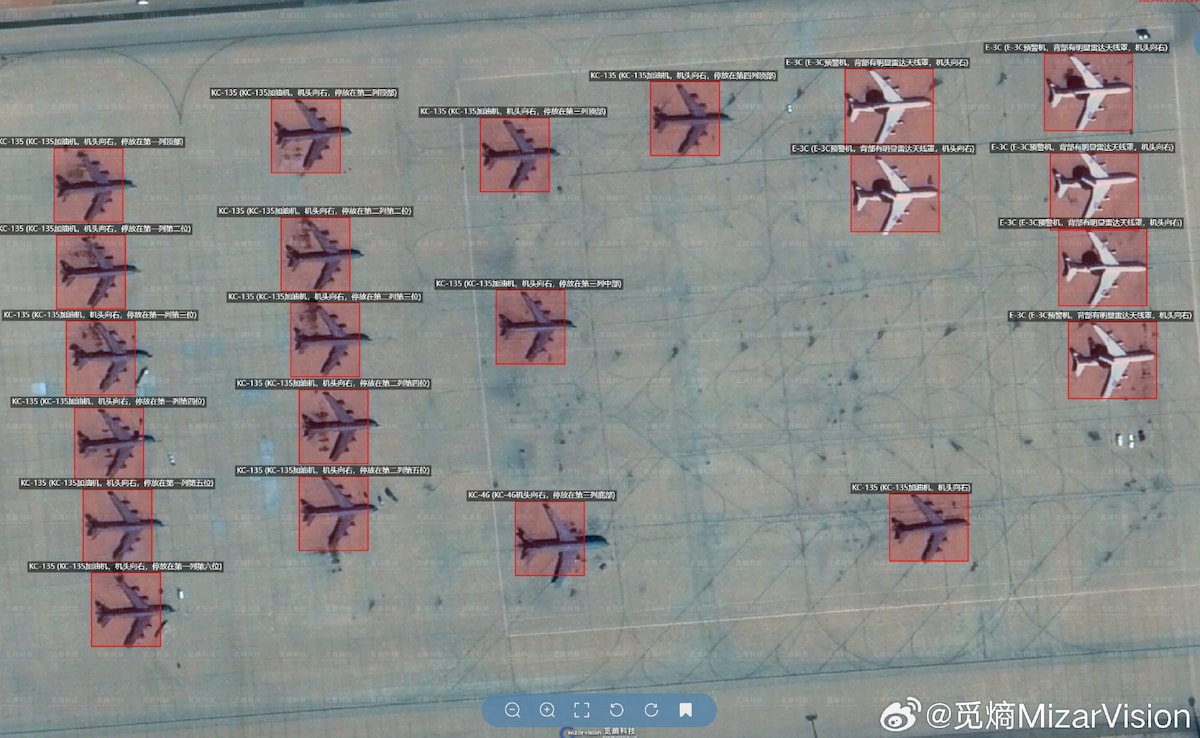
You can't hide a 100,000-ton aircraft carrier when a satellite constellation passes over every few minutes. China's Yaogan series of satellites is the backbone of this operation. These aren't your standard Google Earth cameras. They use a mix of optical sensors, Synthetic Aperture Radar (SAR), and electronic signals intelligence (ELINT).
SAR is the real kicker here. While optical cameras need sunlight and clear skies, SAR uses radar pulses to create high-resolution images. It sees through heavy cloud cover. It sees in the dead of night. It can even detect the specific wake patterns of a ship to determine its speed and heading. When you combine that with ELINT satellites that "sniff" out the radio and radar emissions coming from a fleet, the US military’s electronic footprint becomes a giant "here I am" sign.
Military analysts often point to the "kill chain" as the ultimate metric of success. This is the process of finding a target, tracking it, and then sending that data to a missile battery. In the past, China had the missiles—like the DF-21D "carrier killer"—but they lacked the eyes in the sky to guide them accurately over long distances. That gap is gone. The orbital architecture they’ve built is designed specifically to shorten that kill chain to a matter of minutes.
Why the South China Sea is a Testing Ground
If you want to see this tech in action, look at the South China Sea. It’s the most contested patch of water on the planet. China has used its space-based assets to monitor every FONOP (Freedom of Navigation Operation) the US conducts. They aren't just watching; they're practicing.
By tracking US movements daily, Chinese AI algorithms learn the patterns of American naval behavior. They know how a strike group maneuvers when it’s alert versus when it’s just transiting. This data is fed into a massive terrestrial network that links space assets with land-based long-range sensors and maritime patrol aircraft. It’s a multi-layered net.
I’ve talked to folks in the defense industry who worry that we’re underestimating the sheer volume of data Beijing is processing. It’s not just about one satellite. It’s about the "constellation" effect. When you have dozens of Yaogan satellites in low earth orbit, the "revisit rate"—the time it takes for a satellite to pass over the same spot again—drops significantly. You go from seeing a ship once a day to seeing it every half hour. At that point, you aren't just tracking a ship; you're watching a movie of its movement.
The US Response to Orbital Eyes
The Pentagon isn't just sitting around waiting to be spotted. There’s a frantic push toward what they call "distributed maritime operations." Basically, if one big target is easy to see, stop moving in one big group. The Navy is looking at smaller, more numerous vessels and unmanned surface drones. The idea is to overwhelm the Chinese sensor network with too many targets to track effectively.
There’s also the "dark ship" tactic. This involves turning off all non-essential electronic emissions to blend into the background noise of the ocean. But honestly, that’s getting harder. If SAR can see the physical shape of the hull, your radio silence doesn't matter as much.
We’re also seeing a shift in how the US views space itself. Space is no longer a sanctuary; it’s a frontline. The creation of the Space Force was a direct acknowledgment that the US needs to be able to protect its own satellites and, if necessary, disrupt the opponent's. We’re entering an era of "counter-space" capabilities—lasers, signal jammers, and even kinetic interceptors designed to blind those orbital eyes before the first missile is ever fired on Earth.
Commercial Satellites are the Wild Card
One thing people often overlook is the role of private companies. It’s not just state-owned Chinese satellites doing the heavy lifting. The explosion of the commercial space industry means that high-resolution imagery is now a commodity. Companies like BlackSky or Maxar provide imagery that is often good enough for military-grade tracking.
China has been aggressive in co-opting its domestic commercial space sector. These "private" firms are often deeply integrated with the People's Liberation Army. This gives Beijing a layer of plausible deniability and a surge capacity that’s hard to match. They can use commercial birds for routine tracking and save their high-end military sensors for specific high-priority targets.
This democratization of space surveillance means that the "fog of war" is lifting for everyone, but China has the home-court advantage in the Western Pacific. They’ve built the ground stations, the data processing centers, and the missile infrastructure to act on that information immediately.
What You Should Track Next
If you want to understand the balance of power in the Pacific, stop looking at ship counts and start looking at launch schedules. The number of ISR satellites China puts into orbit each year is a much better indicator of their combat readiness than the number of hulls they launch.
- Monitor the launch frequency of the Yaogan series. A spike in launches usually precedes major regional exercises.
- Watch for developments in "direct-to-sensor" links. This is the tech that allows a satellite to talk directly to a missile, bypassing slow ground-based command centers.
- Keep an eye on US Space Force's "Proliferated Warfighter Space Architecture." This is the American plan to launch hundreds of small, cheap satellites to match the Chinese surveillance density.
The ocean used to be a place where you could disappear. Now, it’s just a giant screen where every move is recorded, analyzed, and targeted from 300 miles up. If the US wants to keep its edge, it has to find a way to break the lens or disappear in plain sight. Both are getting exponentially harder every single day.