Hollywood is currently patting itself on the back in a windowless Vegas ballroom, convinced that a slate of sequels and reboots is the adrenaline shot the industry needs. They call it "the buzziest lineup in years." I call it a suicide note written in neon.
The trade publications are busy swooning over the promise of Dune 3 and a sequel to The Social Network. They see "franchise stability." I see a multi-billion dollar industry that has forgotten how to build a foundation, choosing instead to renovate a house that’s already sliding off a cliff. The "consensus" coming out of CinemaCon is that the theatrical experience is saved because big names are returning to the screen. That logic is as hollow as a popcorn bucket.
The Sequel Delusion
The industry loves sequels because they represent "pre-sold intellectual property." In CFO-speak, that means they don’t have to work as hard to convince you to buy a ticket. But there is a ceiling to nostalgia.
Take the Social Network sequel. The first film was a lightning-strike moment—a perfect alignment of David Fincher’s clinical eye, Aaron Sorkin’s rhythmic cynicism, and a zeitgeist that was just beginning to realize the monster it had invited into its living room. To follow that up now isn't "tapping into the discourse." It’s an act of desperation. We don't need a dramatized version of a Congressional hearing when we’re living the fallout every single day.
When studios lean on these titles, they aren't innovating; they are cannibalizing their own history.
- Diminishing Returns: For every Top Gun: Maverick, there are five sequels that fail to match the cultural footprint of the original.
- Brand Fatigue: You can only ask an audience to care about the same universe so many times before the "epic" feels like a chore.
- The Talent Drain: High-level creatives are being funneled into existing sandboxes rather than being allowed to build their own.
I have watched studios burn $200 million on "safe" bets that ended up being the most expensive tax write-offs in history. Safety is the most dangerous thing in entertainment.
Denis Villeneuve Cannot Save the Spreadsheet
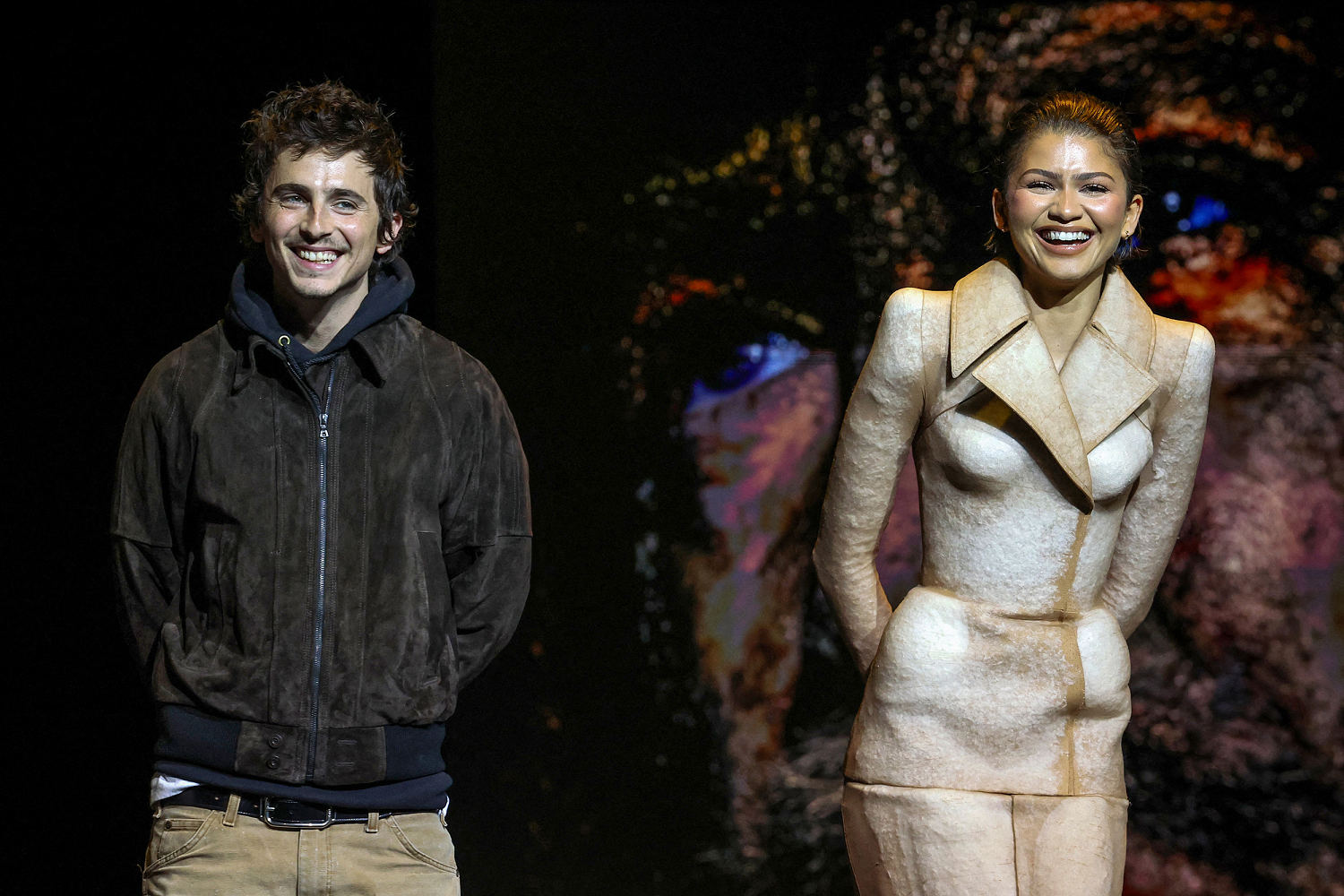
Dune: Part Two was a triumph. It proved that scale and intellect can coexist. Naturally, the takeaway from the suits is: "More Dune."
This is where the logic fails. Dune worked because it felt like an event—a singular, finite vision. By fast-tracking Messiah, the industry is trying to turn a miracle into a manufacturing line. They want a "Dune Cinematic Universe." They want to take the spice and dilute it until it’s just flavored water.
The "People Also Ask" sections of the internet are currently flooded with variations of "When is Dune 3 coming out?" or "What other sequels were announced?" These are the wrong questions. The question you should be asking is: "Why has the mid-budget original film been allowed to die?"
By the time Dune 3 hits theaters, the novelty of the brutalist aesthetic and the desert power will have been mimicked, parodied, and exhausted by every streaming service looking for a piece of the pie. Hollywood is obsessed with the what instead of the how. They see the box office numbers, but they ignore the soul-crushing reality that they are creating a monoculture where only three genres are allowed to exist.
The Lie of the "Theatrical Window"
The rhetoric at CinemaCon always centers on the "sanctity of the theater." It’s a beautiful sentiment that ignores the economic reality of the average person.
The industry complains about piracy and streaming while charging $18 for a ticket and $12 for a soda, all to watch a movie that—statistically speaking—is probably a remake of something they watched on VHS in 1994. The contrarian truth? The theater isn't being killed by Netflix. It’s being killed by a lack of urgency.
If a movie doesn't feel like a "must-see," it’s a "wait-for-home." By doubling down on sequels, studios are telling the audience: "You already know what this is. There are no surprises here." That is the exact opposite of a "must-see" event.
Imagine a scenario where a studio took that $200 million Social Network budget and split it into ten $20 million original films. Five would likely fail. Three might break even. Two could become the next cultural touchstone that fuels the next decade of revenue. But the current corporate structure of Hollywood, beholden to quarterly earnings and risk-averse shareholders, cannot handle a 50% failure rate—even if the upside is the survival of the medium.
The Myth of the "Buzzy" Title
"Buzz" is a metric created by PR firms to justify their retainers. It doesn't mean "interest." It means "noise."
The CinemaCon floor is a vacuum. It’s a room full of people whose salaries depend on the movie theater industry staying exactly as it is. When they cheer for a sizzle reel, they aren't cheering for the art; they are cheering for the hope that they’ll have a job in three years.
You want to see real buzz? Look at the films that capture the imagination of the 18-24 demographic on social media. It’s rarely the $300 million legacy sequel. It’s the weird, the specific, and the authentic. It’s the films that don't feel like they were written by a committee of data scientists trying to optimize "global appeal."
The Math of Creative Bankruptcy
Let's look at the actual mechanics. When a studio greenlights a massive sequel, they are locking up their capital for years.
$$Total Capital = Production + Marketing + Opportunity Cost$$
The "Opportunity Cost" is the one that kills you. It’s the three original scripts that got tossed in the bin because the "Dune" line item took up all the oxygen. It's the new director who got put on a "franchise holding pattern" instead of making the film that defines a generation.
The E-E-A-T (Experience, Expertise, Authoritativeness, Trustworthiness) of the industry leaders is being used to manage decline rather than spark growth. They are experts at squeezing water from a stone. They have the experience to know exactly how to market a sequel to a lukewarm audience. But they are losing the trust of the viewer.
The audience is smarter than the industry gives them credit for. They can smell a cash grab from the first teaser trailer. They know when they are being sold a "Part 3" not because there is more story to tell, but because the studio has a hole in its 2027 calendar.
The Hard Truth About "The Future"
Stop looking at the CinemaCon slate as a roadmap for the future of cinema. It’s a graveyard of ideas dressed up in expensive suits.
The real disruption isn't coming from a sequel to a movie about Facebook. It’s coming from the creators who are currently being ignored by the system because their ideas don't have a "proven track record."
The industry wants you to believe that the only way to save the movies is to keep buying tickets to the things you’ve already seen. They want you to believe that "bigger" is a synonym for "better."
It’s not.
If you want to save the theatrical experience, you don't do it by cheering for Dune 3. You do it by demanding something you haven't seen before. You do it by making the "safe" bet the most expensive mistake a studio can make.
The lights are dimming, but the projectionist is just playing a loop of the last twenty years. If you’re waiting for Hollywood to innovate its way out of this, you’re watching the wrong screen.
The buzz you hear isn't excitement. It’s the sound of the lights flickering out.
Don't buy the ticket. Don't believe the hype. Demand a new story or watch the old one burn.