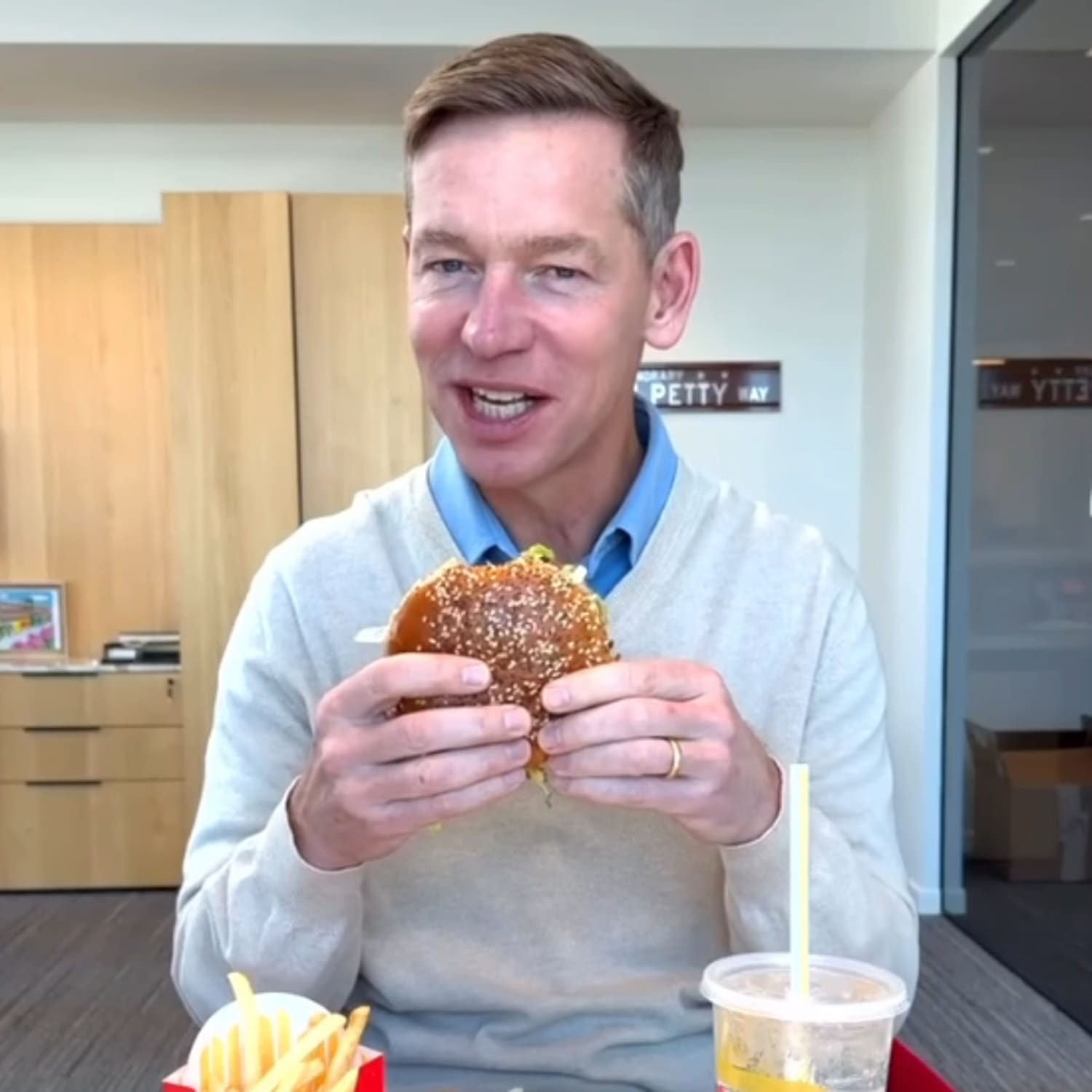
The viral volatility surrounding recent executive communications from McDonald’s and Burger King is not a byproduct of social media spontaneity; it is a clinical case study in brand equity defense and asymmetric marketing warfare. When a CEO’s video content triggers a public "beef" between two global titans, the conflict centers on the struggle to control the narrative of value perception during a period of consumer price sensitivity. This friction reveals a fundamental divergence in how these organizations quantify the risk of executive visibility versus the reward of perceived authenticity.
The Mechanics of Executive Overexposure
Executive leadership in the QSR (Quick Service Restaurant) sector traditionally functions as a stabilizing force, providing high-level strategic guidance while remaining distanced from the tactical "trench warfare" of brand banter. The moment a CEO enters the viral ecosystem, they shift the brand’s Risk Profile. This transition from institutional voice to individual persona creates three specific structural vulnerabilities:
- The Authenticity Trap: High-production values in "casual" CEO videos often trigger a cognitive dissonance in consumers. The delta between a multi-million dollar compensation package and the "everyman" persona required for viral success creates a friction point that competitors can exploit.
- Narrative Hijacking: By putting a face to the corporation, the brand provides a singular target for competitor counter-campaigns. It is mathematically simpler to deconstruct a 60-second video than it is to dismantle a decade of brand positioning.
- The Margin of Error Compression: In a standard ad campaign, failure results in low ROI. In a CEO-led viral event, failure results in a perceived systemic leadership lapse, impacting investor sentiment as much as consumer foot traffic.
Competitive Response as Capital Allocation
Burger King’s decision to engage with McDonald’s viral content is a calculated move in incremental market share acquisition. In the QSR industry, brand loyalty is often secondary to convenience and perceived value. When a competitor’s executive makes a public statement, it presents an opportunity for "Reactive Positioning."
The logic follows a specific cost-benefit function. McDonald’s, as the market leader, spends significantly more on brand maintenance. Burger King, acting as the challenger, uses Social Arbitrage—taking the energy generated by McDonald's high-spend or high-reach content and redirecting it toward their own value proposition.
The Challenger’s Calculus
- Cost of Entry: Near zero. The competitor already built the stage; the challenger merely walks onto it.
- Engagement Multiplier: A direct "call-out" or rebuttal generates higher organic reach than a standalone product announcement because it taps into existing algorithmic momentum.
- The Value Pivot: If the leader's video focuses on "quality" or "culture," the challenger responds with "price" or "utility." This forces the consumer to re-evaluate the leader's message through a lens of skepticism.
The Economics of the Viral "Beef"
The term "beef" is a colloquialism for a sophisticated economic maneuver known as Negative Differentiation. Most marketing aims to show why Brand A is good. Negative differentiation focuses on why Brand B’s current narrative is false.
In the specific context of the McDonald’s and Burger King dispute, the conflict often centers on the Unit Economic Reality of their menus. If a CEO discusses the "mission" of the company while the consumer feels the sting of a $12 "value" meal, the disconnect becomes a liability. Burger King’s strategy is to highlight this disconnect, effectively turning the McDonald's CEO's platform into a megaphone for their own competitive pricing.
Quantifying Brand Damage vs. Brand Lift
To analyze the effectiveness of these interactions, we must look at the Sentiment Delta.
- The Leader's Burden: McDonald’s must maintain a "Gold Standard" image. Any engagement in a public spat that lowers their tone can result in a net loss of brand prestige, regardless of the engagement numbers.
- The Challenger’s Edge: Burger King gains utility by appearing "scrappy" or "tuned-in." For them, the chaos of a public disagreement is a net positive as long as it disrupts the leader's controlled narrative.
Structural Failures in Modern Corporate Comms
The primary reason these viral videos become points of contention is a failure to account for Context Collapse. A video intended for internal employee motivation or a specific LinkedIn demographic is inevitably viewed by a general public struggling with inflationary pressures.
The internal logic—"Look how relatable our leader is"—fails to survive contact with the external reality—"Why is this person talking to me while my burger costs 40% more than it did three years ago?"
The Fragility of "Relatability"
Relatability is a depreciating asset for a C-suite executive. The more they attempt to manufacture it, the more expensive it becomes to maintain. When Burger King "claps back," they aren't just making a joke; they are identifying the Uncanny Valley of corporate communication—the space where a CEO tries to act like a creator and ends up looking like a caricature of a corporation.
The Strategic Shift to Defensive Content
To mitigate these risks, the next evolution of executive communication must prioritize Information Density over Personality. The shift away from the "viral CEO" model will be driven by the need for "Protective Messaging."
- Data-Backed Narratives: Instead of seeking emotional resonance, executives should focus on transparently discussing supply chain efficiencies, sustainability milestones, or wage structures. These are harder to parody and provide less "surface area" for competitor attacks.
- Delegated Charisma: Moving the "face" of the brand from the CEO to mid-level operators or specialized experts (like head chefs or supply chain directors) reduces the stakes of a PR misstep.
- Asynchronous Response Protocols: Brands must develop frameworks to decide when to ignore a competitor's jab. Engaging with every "beef" validates the challenger’s relevance.
The current conflict between McDonald's and Burger King serves as a warning for the S&P 500. The digital square is not a neutral venue for leadership. It is a battlefield where the weapons are memes and the casualty is the Cost of Customer Acquisition (CAC). When a CEO’s video goes viral for the wrong reasons, the CAC for that period spikes as the brand is forced to spend more on traditional media to "fix" the sentiment skewed by the viral event.
Navigating the QSR Attention Economy
The battle for the "Share of Stomach" is increasingly fought in the "Share of Screen." However, the metric that matters is not views; it is Conversion Integrity. Does the video make the viewer more or less likely to believe the brand's core promise?
If McDonald’s focuses on "Legacy" and Burger King focuses on "Rebellion," the CEO’s role is to be the steward of that specific identity. When a CEO acts out of character for the brand’s established archetype, it creates Cognitive Dissonance. This dissonance is the gap where competitors find their footing.
The strategic move is not to avoid video or social platforms but to treat them with the same analytical rigor as a quarterly earnings call. Every frame must be vetted for "Meme-ability" and "Counter-Strike Potential."
The final play for any market leader in this position is to Re-Establish the Hierarchy. McDonald’s should pivot away from direct confrontation and return to a position of institutional silence. By refusing to acknowledge the "beef," they deprive the challenger of the oxygen required to sustain the fire. The challenger's power is derived entirely from the leader's recognition. Withdraw that recognition, and the challenger is left shouting into a vacuum.
For Burger King, the strategy remains constant: find the friction, widen the gap, and offer the consumer a cheaper, faster, or more "honest" alternative while the leader is distracted by their own image. This is not just social media management; it is Capitalist Darwinism in 280 characters or 60 seconds of vertical video.
The most effective response to a competitor's viral misstep is not a joke, but a promotion. If a CEO looks out of touch, the competitor shouldn't just point it out—they should offer a "CEO Discount" that highlights the price difference. Move the conflict from the abstract world of "likes" to the concrete world of "transactions." That is where the war is truly won.
Double down on Operational Transparency over Executive Personality. Use the next 18 months to de-emphasize the individual at the top and re-emphasize the value at the counter. Silence the CEO, empower the menu, and let the competitor exhaust their creative budget chasing a ghost that no longer inhabits the machine.