Celebration is a strategic failure. When news broke of the Iranian Supreme Leader’s death, the Western media cycle defaulted to its favorite script: the emotional catharsis of the exile. We saw the viral clips, the "burn in hell" headlines, and the tearful interviews with those who escaped the regime’s shadow. It makes for great television. It satisfies a primal need for justice.
It is also completely irrelevant to the cold reality of power.
If you are watching the screen waiting for the collapse of a theocratic infrastructure because one 80-year-old man stopped breathing, you are fundamentally misunderstanding how modern autocracies function. We treat these regimes like 1950s comic book villainies where pulling the plug on the leader causes the mountain base to explode. In reality, these systems are more like decentralized corporate conglomerates. They don't die with the CEO; they restructure.
The Myth of the Power Vacuum
The "lazy consensus" dictates that the death of a hardline figurehead creates a vacuum. Pundits rush to predict a "thaw" or a "spring." They assume that because the populace is grieving—or secretly cheering—the internal mechanisms of the state are paralyzed.
They aren't.
I have spent years analyzing the movement of illicit capital and the command structures of sanctioned entities. What the average viewer misses is that the Office of the Supreme Leader is not just a religious post. It is a holding company. It sits atop a multibillion-dollar empire known as Setad (Execution of Imam Khomeini's Order). It controls the Islamic Revolutionary Guard Corps (IRGC), which functions as a state-within-a-state with its own ports, its own black-market oil fleets, and its own tech sector.
When a figurehead dies, the "vacuum" is filled within milliseconds by the institutional inertia of the security apparatus. The IRGC doesn't care about the theological purity of the successor as much as they care about the continuity of their balance sheets. To them, a transition of power is a merger and acquisition event.
Why Emotional Reporting Blinds Us
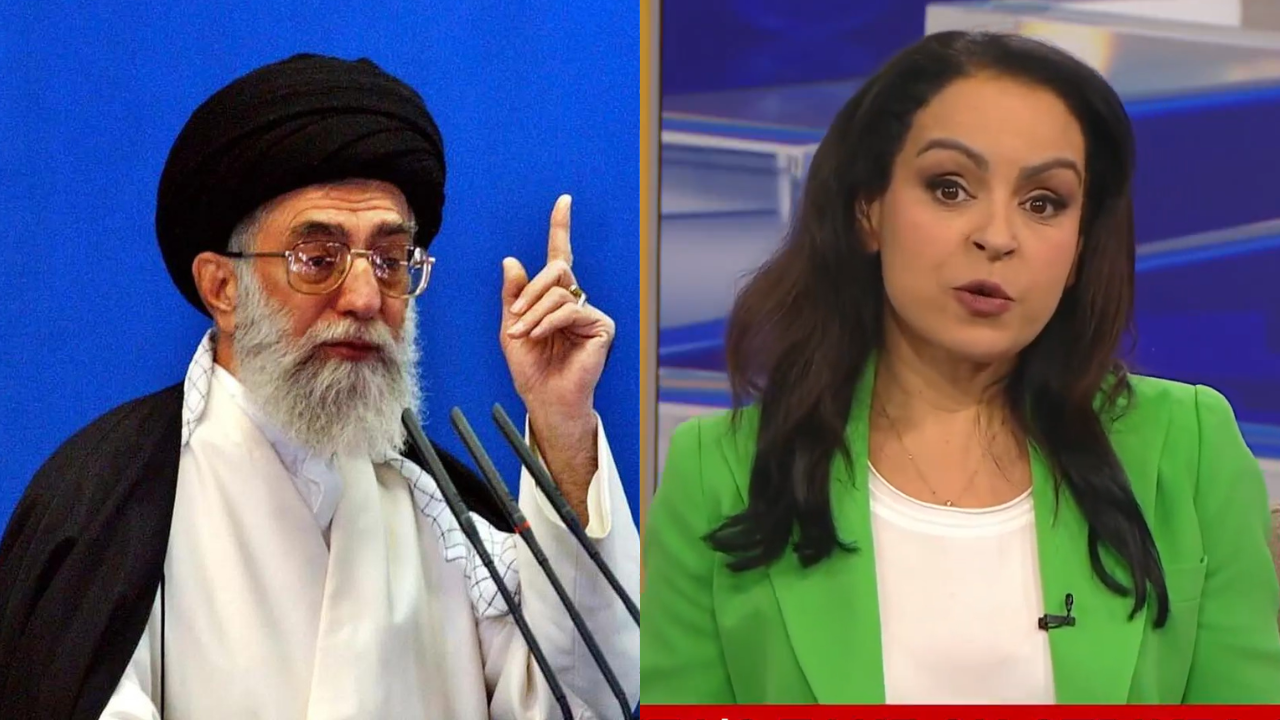
The media fixates on the stories of escapees—like the Iranian-Australian news host—because they provide a moral compass. We need to hear that the villain was hated. But focusing on the "burn in hell" rhetoric creates a false sense of finality. It suggests the story is over.
In reality, the story is just entering a more volatile phase.
Take the Soviet transition after Stalin. The world expected a collapse; it got decades of refined, bureaucratic repression. Take North Korea after Kim Jong-il. The world expected a "westernized" son to open the borders; it got a more efficient, nuclear-armed cyber-warfare state.
By centering the narrative on the emotional reaction of the diaspora, we ignore the technical realities on the ground:
- The Succession Protocol: The Assembly of Experts isn't a debating society. It's a rubber-stamp committee for the security elite.
- Economic Insulation: The regime has spent forty years learning how to survive without the global banking system. A change at the top doesn't magically reconnect them to SWIFT.
- The Proxy Network: Hezbollah, the Houthis, and the militias in Iraq don't take orders from a person; they take orders from a budget. As long as the oil keeps flowing to China, the "resistance" remains funded.
The Danger of Western Optimism
There is a specific brand of Western arrogance that believes every crisis is an opportunity for democratization. We see a funeral and we look for a protest. We see a protest and we assume a revolution.
I’ve watched investors and policy makers lose billions betting on "the turn." They see a dictator fall and assume the "invisible hand" of the market will rush in to fix the broken economy. It never happens that way. What happens is the "iron fist" of the outgoing leader's inner circle tightens to prevent a purge.
If you want to understand what happens next, stop looking at the crowds in the streets. Look at the shipping insurance rates in the Strait of Hormuz. Look at the volume of "ghost tankers" off the coast of Singapore. Look at the price of gold in Tehran’s bazaars. These are the indicators of reality. The rest is just noise for the evening news.
The Diaspora Trap
The most dangerous thing an analyst can do is listen exclusively to the people who left.
Expatriates provide essential testimony on human rights abuses. They are the conscience of a nation. But they are often the least qualified to predict the internal stability of the regime they fled. Why? Because they operate on a logic of justice, while the regime operates on a logic of survival.
The host telling the deceased leader to "burn in hell" is expressing a legitimate, deeply felt grievance. But that grievance doesn't move the needle inside the halls of the Evin Prison or the boardrooms of the Bonyads (charitable trusts).
The status quo isn't challenged by shouting at a ghost. It is challenged by disrupting the flow of capital that allows the successor to pay the riot police.
Imagine the "Reformist" Delusion
Let’s play out a scenario. Imagine the Assembly of Experts picks a "moderate" face to lead. The West celebrates. Sanctions are eased. The media calls it a new era.
Within six months, you realize the IRGC still controls the borders. The "moderate" has no power over the judiciary. The extra-judicial killings continue, but now they are handled with better PR. This is the "nuance" the competitor article ignores. They want the catharsis of a "burn in hell" moment, but they won't tell you that the hell is a self-sustaining ecosystem that doesn't need a specific devil to keep the fires burning.
The Brutal Truth of Continuity
We are addicted to the "Great Man" theory of history. We believe that if we remove the king, the kingdom falls. That hasn't been true since the invention of the modern surveillance state.
Modern autocracies are built on a foundation of Compulsory Complicity. Everyone in the upper echelons of the Iranian government is implicated in the regime's survival. If the system fails, they don't just lose their jobs; they lose their lives or their freedom. That is a more powerful motivator than any theological devotion.
The death of a Supreme Leader is not an ending. It is a stress test.
If the system passes the test—which it usually does—it emerges more cynical and more entrenched. The celebratory rhetoric we see in the media actually helps the regime. It allows them to paint the opposition as "foreign agents" and "enemies of the state," fueling the very propaganda machine they use to justify the next crackdown.
Stop Asking if They are Happy
People ask: "Are the Iranians happy he's dead?"
It’s the wrong question. A better question is: "Who owns the guns now?"
The premise that public sentiment dictates the direction of a totalitarian state is a fairy tale we tell ourselves so we can sleep better. Power in these regions is not granted by the consent of the governed; it is seized through the control of resources and the monopolization of violence.
If you are looking for a shift, don't look at the news anchors in Sydney or London. Look at the mid-level commanders in the IRGC. If they start defecting, you have a story. If they stay silent and keep their hands on the valves of the oil pipelines, nothing has changed.
The "burn in hell" sentiment is a human reaction to a monster. But in the theater of global power, monsters are easily replaced by their apprentices. The apprentice is often younger, more tech-savvy, and even more desperate to prove their strength.
Stop waiting for the "thaw." Start preparing for the "hardening."
When the cameras turn off and the viral clips fade, the machinery of the state will still be grinding. It doesn't have a soul to burn. It only has a ledger. And as long as that ledger remains in the black, the nightmare continues, regardless of who is sitting in the chair.
Stop treating international tragedy like a Netflix season finale. There is no credit roll. There is only the next move.