The room was too small. That is the detail that sticks in the throat of every Argentinian who has seen the photographs. It wasn't a suite in a high-end clinic or a fortified wing of a private hospital. It was a makeshift bedroom in a rented house in a gated community called San Andrés, north of Buenos Aires. There was a bed, a massage table, and a portable toilet.
For a man who had been carried on the shoulders of nations, a man who had dined with Castros and kings, this was the final stadium. Diego Armando Maradona, the "Golden Boy" who turned the 1986 World Cup into a personal fever dream, spent his last days here. He wasn't surrounded by the roar of eighty thousand fans. He was surrounded by silence, clinical neglect, and a medical team now facing the cold glare of a courtroom.
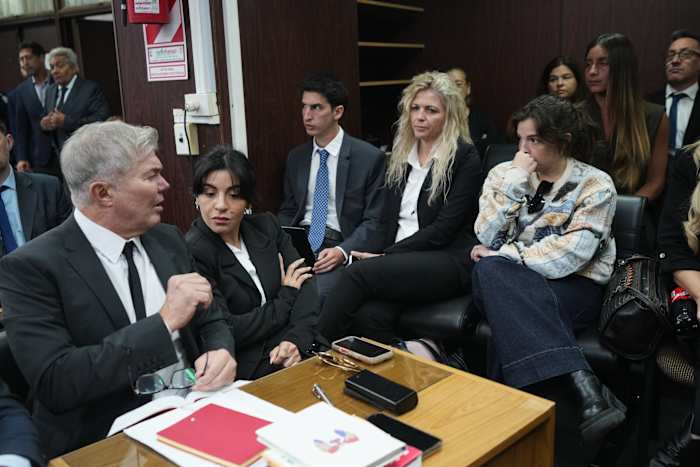
In San Isidro, the machinery of justice has hummed back to life. Eight health care professionals—including neurosurgeon Leopoldo Luque and psychiatrist Agustina Cosachov—stand accused of "homicide with eventual intent." It is a heavy legal term that translates to something much simpler and more haunting: they knew he might die, and they did not do enough to stop it.
The trial is a search for the exact moment a legend became a patient, and a patient became a burden.
The Architect of the End
To understand the trial, you have to understand the state of the man. Imagine a clock that has been overwound for sixty years. Maradona’s body was a map of past wars—broken ankles, failed hearts, and the long, taxing shadow of substance abuse. Shortly before his death in November 2020, he underwent surgery for a subdural hematoma. A blood clot on the brain.
Standard procedure dictates a rigorous, monitored recovery. But the prosecution paints a picture of a "home hospitalization" that was a house of cards. They argue the medical team was disorganized, reckless, and ultimately indifferent.
Consider the role of Leopoldo Luque. To the world, he was the loyal doctor, the man who hugged Diego in post-op photos. To the prosecutors, he is the captain of a sinking ship who refused to call for lifeboats. The legal battle hinges on thousands of leaked WhatsApp messages. These aren't just texts; they are a digital trail of breadcrumbs leading into a dark forest. In these messages, the caregivers speak of Diego not as a national treasure, but as a difficult, deteriorating problem. They joke. They dismiss symptoms. They stay away.
Justice is often a matter of geography. Had Diego been in a Tier-1 cardiac unit when his heart began to fail, would he be celebrating his 65th birthday this year? The prosecution says yes. The defense says his death was an inevitability, the final whistle for a man who had lived ten lives in the span of one.
The Invisible Guard
Beyond the doctors, the trial scrutinizes the "inner circle." This is where the story shifts from a medical malpractice suit into a Shakespearean tragedy. Maradona was never truly alone, yet he died in total isolation.
The nurses on shift, the psychologist, the clinical coordinator—all eight defendants are pieces of a fragmented puzzle. The trial seeks to determine if there was a "plan" of negligence or merely a catastrophic series of individual failures. Witnesses have testified about the lack of basic equipment in the Tigre house. No oxygen tanks. No defibrillator. Not even a proper heart monitor for a man with a known history of heart failure.
It feels surreal. In Argentina, Maradona is more than an athlete; he is a religious figure. For the public, the trial isn't just about determining medical liability. It is an autopsy of how a country let its greatest idol fade away in a rented room with a portable toilet.
The defense teams argue that Maradona was a "difficult patient." They claim he refused care, kicked doctors out, and insisted on his own terms. This is the "Maradona Defense"—the idea that no one could control the man who defied the laws of physics on the pitch. But the law asks a different question: When does a patient's defiance stop being an excuse for a doctor’s inaction?
The Weight of the Evidence
The trial, which has seen delays and procedural hurdles, is now moving into a phase of intense witness testimony. More than 200 witnesses are expected to take the stand. The court will listen to medical experts debate the nuances of "agonal" breathing—the gasping struggle for air that can last for hours.
The prosecution alleges that Maradona was in agony for over twelve hours. Twelve hours of slow, lonely fading.
If convicted, the defendants face between 8 and 25 years in prison. The stakes are not just years behind bars; they are the final entries in the history books. For the families, specifically his daughters Dalma and Gianinna, this is a crusade. They have been vocal, present, and fueled by a specific type of grief that only comes when you believe your father was abandoned.
There is a stark contrast between the Diego the world remembers—the one sprinting through the English defense in 1986, ball glued to his foot—and the Diego described in the San Isidro courtroom. The court records speak of "edemas," "chronic kidney failure," and "cardiac myopathy."
The Ghost in the Courtroom
This trial is the closing ceremony Maradona never got. It is messy. It is painful. It involves forensic reports that read like horror stories and audio recordings that reveal a shocking lack of empathy.
But through the legalese and the medical jargon, a central truth remains. A man died because the people paid to watch him stopped looking. They saw the icon, the myth, and the headache, but they failed to see the human being whose heart was reaching its limit.
The trial continues because a nation cannot look away. It is an attempt to reconcile the glory of the past with the squalor of the end. It is about the duty of care, not just as a medical concept, but as a human one.
When the verdict eventually falls, it won't bring him back. It won't return the ball to his feet or the roar to the stands. It will simply provide an answer to the question that has hung over Argentina for nearly six years.
In those final hours in Tigre, Diego was not a god. He was a sixty-year-old man in a small room, waiting for a help that was already in the house but refused to knock on the door.