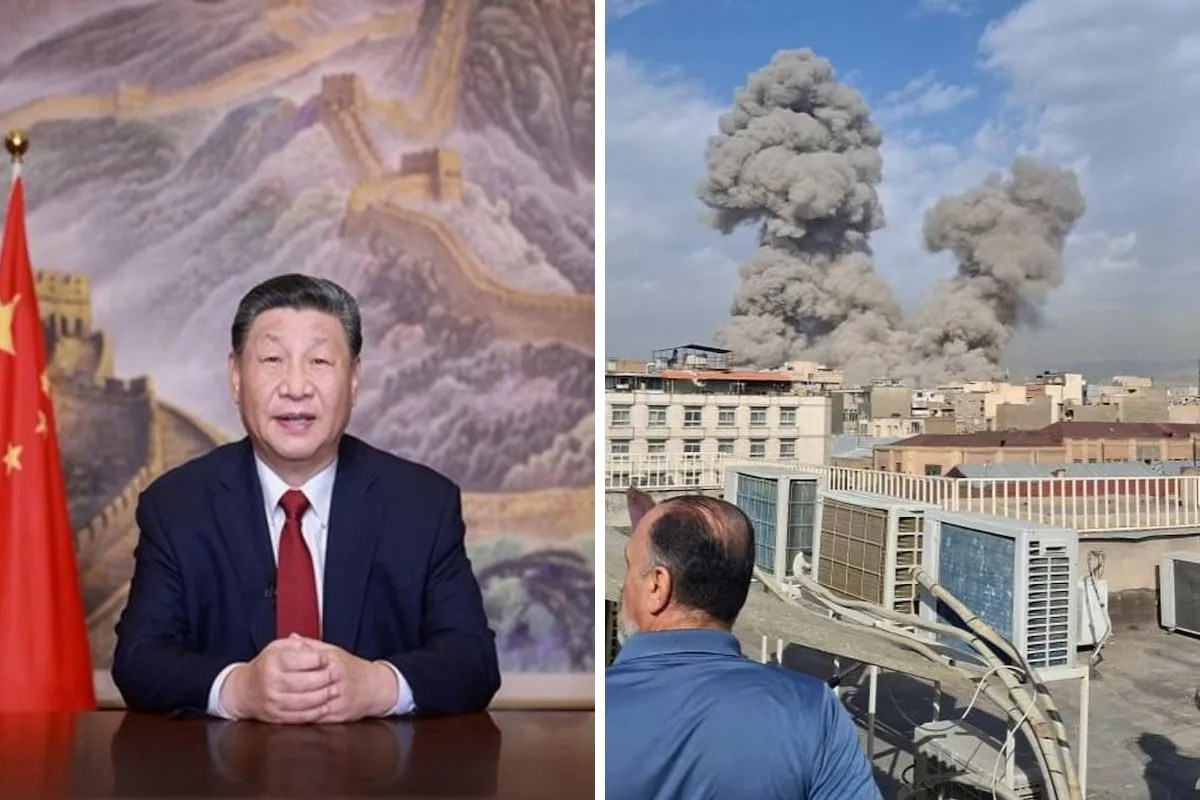
The recent escalation of U.S. military strikes against Iranian-backed assets marks a definitive breaking point in American foreign policy. While the administration's initial rhetoric leaned heavily on isolationism and the avoidance of "forever wars," the reality on the ground has shifted back to a familiar, aggressive interventionism. This is not a series of isolated tactical decisions. It is the formal burial of the non-interventionist promises that defined the last two election cycles. By engaging directly with Iranian proxies and signaling a willingness to strike within sovereign borders, Washington has signaled that the era of strategic restraint is over. The "America First" doctrine has been quietly replaced by a "Forward Presence" reality that mirrors the very policies it once sought to dismantle.
The Strategy of Escalation to De-escalate
The logic behind these strikes rests on the gamble that overwhelming force will deter Tehran from further regional disruption. It is a high-stakes theory. In the Pentagon’s view, allowing attacks on international shipping and U.S. personnel to go unanswered creates a vacuum that Iran is only too happy to fill. By hitting back, the U.S. intends to reset the boundaries of engagement.
However, the "why" goes deeper than simple retaliation. This is about the preservation of the global maritime order. The Red Sea and the Persian Gulf are the arteries of global trade. When these are threatened, the U.S. feels its hand is forced—not just for security reasons, but to maintain its status as the ultimate guarantor of global commerce. If Washington cannot protect a container ship, it cannot protect its influence.
The "how" of these strikes reveals a sophisticated orchestration of intelligence and kinetic power. We aren't just seeing bombs dropped on empty warehouses. The targets include command-and-control nodes, intelligence hubs, and specific leadership figures within the Islamic Revolutionary Guard Corps (IRGC) networks. This surgical approach is meant to decapitate the organizational flow of proxy groups without triggering a full-scale regional war. It is a delicate walk on a razor-thin wire.
The Death of the Isolationist Dream
For years, the political narrative in the United States has drifted toward bringing troops home. Both the populist right and the progressive left found common ground in the idea that Middle Eastern entanglements were a relic of the past. That narrative has now collided with the cold reality of geopolitical competition.
The shift toward interventionism isn't just about Iran. It’s about signaling to China and Russia that the U.S. is not, in fact, retreating from the world stage. Critics of the current policy argue that by striking Iran-linked targets, the U.S. is walking into a trap set by its adversaries—one that drains resources and focus away from the Pacific. Yet, the administration’s actions suggest they believe they cannot afford to look weak in one theater while trying to lead in another.
The Proxy War Paradox
The biggest hurdle in this new interventionist phase is the nature of the enemy. Iran rarely fights directly. They utilize a "gray zone" strategy, employing a network of militias across Iraq, Syria, Lebanon, and Yemen. This provides Tehran with a layer of plausible deniability that traditional U.S. military doctrine struggles to counter.
When the U.S. strikes a militia in Baghdad, it doesn't necessarily hurt the decision-makers in Tehran. In fact, it often fuels local anti-American sentiment, making the presence of U.S. troops even more precarious. This is the paradox of modern intervention: the more the U.S. does to secure its interests, the more it provides its enemies with the political ammunition to demand its exit.
We are seeing a shift in how these proxies operate. They are no longer just ragtag insurgencies; they are equipped with high-end drone technology and anti-ship missiles. The technical gap that once allowed the U.S. to dominate with impunity is narrowing. This means that every "surgical strike" now carries a much higher risk of unintended consequences.
Economic Costs of the New Interventionism
War is expensive, but the threat of regional instability is often viewed as more costly by the banking and energy sectors. The U.S. strikes are, in many ways, an insurance policy for the global economy. If the Strait of Hormuz or the Bab al-Mandab strait were to be effectively closed, the resulting spike in oil prices and shipping costs would trigger a global recession.
- Insurance Premiums: Maritime insurance for ships in the region has skyrocketed by over 300% since the escalation began.
- Rerouting: Major shipping firms are bypassing the Suez Canal, adding 10 to 14 days to journey times and millions in fuel costs.
- Military Spending: The cost of maintaining a carrier strike group in the region exceeds $6 million per day, excluding the cost of the munitions spent during actual engagements.
These numbers highlight the hidden engine driving the interventionist shift. It isn't just about ideology; it's about the bottom line. The U.S. is effectively subsidizing the security of global trade through its military budget.
The Congressional Bypass
One of the most concerning aspects of this shift is the lack of formal debate. These strikes are being conducted under the umbrella of existing authorizations, some dating back decades, or under the President's Article II powers as Commander-in-Chief. The executive branch has effectively bypassed the need for a new Declaration of War or even a specific Authorization for Use of Military Force (AUMF) tailored to the current threat.
This erosion of legislative oversight means that the country can drift into a major conflict without a single vote being cast in the halls of Congress. It’s a trend that has been building for twenty years, but the recent strikes against Iran-linked targets have pushed it to a logical, and dangerous, extreme. The lack of public debate also means there is no clear "exit strategy" being presented to the American people.
Regional Allies and the Double-Edged Sword
The U.S. is not acting in a vacuum. Regional partners like Israel, Saudi Arabia, and the UAE have their own agendas. While they generally welcome a hardline U.S. stance against Iran, they also fear being the targets of Iranian retaliation.
Saudi Arabia, in particular, has been trying to pivot away from its long-standing conflict in Yemen to focus on domestic economic reform. A renewed U.S.-Iran conflict threatens to pull the Saudis back into a cross-border war they are desperate to leave behind. This creates a friction point where U.S. military objectives may actually undermine the long-term stability of its closest regional partners.
The Technological Arms Race in the Desert
The nature of the strikes themselves has evolved. We are no longer seeing massive formations of ground troops. Instead, the intervention is defined by electronic warfare, long-range precision munitions, and autonomous systems.
Iran has invested heavily in "asymmetric" capabilities. Their drone swarms are cheap to produce but expensive to shoot down. A $20,000 Iranian drone can be neutralized by a $2 million U.S. interceptor missile. The math of this attrition is not in Washington's favor. If the U.S. continues down this path of intervention, it must find a way to lower the "cost-per-kill" or risk being economically bled dry by a much smaller adversary.
Hard Truths of the Current Path
There is a growing realization within the foreign policy establishment that there may be no "victory" in the traditional sense. The goal is no longer to win, but to manage the chaos. This is a cynical and exhausting way to run a global superpower. It requires a permanent state of readiness and a willingness to kill and be killed in places most Americans couldn't find on a map.
The administration may claim these strikes are defensive, but to the rest of the world, they look like the re-assertion of an empire. This perception matters. As the U.S. leans back into its role as the world's policeman, it finds the neighborhood has changed. New powers are rising, and the old tools of intimidation are losing their edge.
If you want to see where this leads, look at the munitions stocks. The U.S. is burning through precision-guided bombs at a rate that outpaces production. At some point, the logistical reality will dictate the policy. Until then, expect more "targeted actions" that do just enough to keep the flames of war flickering without ever quite putting them out.
Reach out to your representative and ask for a floor debate on the expansion of military operations in the Middle East to ensure there is a clear legal mandate for these actions.