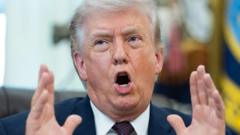
President Donald Trump will address the nation tonight at 9 p.m. Eastern Time, signaling what appears to be the beginning of the end for the month-long conflict with Iran. White House officials indicate the president will outline a rapid withdrawal timeline of two to three weeks, claiming that American military objectives—specifically the total dismantlement of Iran’s nuclear infrastructure—have been achieved. However, the victory lap comes with a massive geopolitical price tag. In the same breath, Trump is expected to threaten a formal exit from NATO, branding the alliance a "paper tiger" for its refusal to join the American-led "Operation Epic Fury."
The conflict, which ignited on February 28, 2026, has seen over 900 strikes in its opening hours and a sustained campaign against Iranian military assets. While Trump claims a "full regime change" has occurred, the reality on the ground is far more complex. The installation of Mojtaba Khamenei as Supreme Leader following his father’s death has not led to a pro-Western pivot, but rather a more entrenched, desperate defensive posture.
The Ceasefire Mirage
The administration is currently floating a narrative that Tehran is begging for peace. On Truth Social, Trump claimed that Iran's leadership reached out to request a ceasefire, a claim that Iranian Foreign Minister Abbas Araghchi immediately dismissed as "baseless." This public posturing serves a dual purpose. By framing the end of the war as an Iranian surrender, Trump can justify a quick exit to a domestic audience increasingly wary of rising gas prices and economic instability.
Behind the scenes, the "15-point ceasefire framework" remains the sticking point. The U.S. demands a total cessation of uranium enrichment and the unconditional reopening of the Strait of Hormuz, which has been effectively shuttered for weeks. Iran, however, has only offered to dilute its 60% enriched uranium in exchange for the lifting of all sanctions—a deal the White House has previously called a non-starter.
Abandoning the Atlantic Alliance
The most explosive element of tonight’s address isn't what happens in Tehran, but what happens in Brussels. Trump’s frustration with NATO has reached a breaking point. Sources close to the President say he feels betrayed by European allies who opted for diplomatic mediation through Oman rather than contributing kinetic force to the campaign.
"They want the protection of our umbrella but won't help us hold the handle," a senior administration official told reporters. By threatening to withdraw from the North Atlantic Treaty Organization, Trump is pivoting toward a "transactional security" model. He has already signaled that future U.S. military support will be contingent on direct alignment with American regional objectives, regardless of prior treaty obligations.
The Nuclear Capability Gap
The Pentagon maintains that the strikes have successfully "obliterated" Iran’s known nuclear facilities. Defense Secretary Pete Hegseth has categorized the upcoming days as "decisive," suggesting that the U.S. will engage in a final wave of strikes to ensure no "breakout" capability remains before the withdrawal begins. Trump has coined the term "spot hits" to describe the future of U.S. involvement—a policy of leaving the country but returning periodically for surgical strikes if intelligence suggests a nuclear restart.
The Economic Fallout
While the military campaign may be winding down, the economic war is just beginning. The Executive Order signed in February, which allows the U.S. to impose tariffs on any country purchasing goods or services from Iran, has created a friction point with Beijing. China’s deployment of the YLC-8B long-range anti-stealth radar in Iran suggests that the "Epic Fury" campaign has pushed Tehran closer to the Eastern bloc than ever before.
For the average American, the "roaring economy" promised during the campaign has met the hard reality of a global energy crisis. With the Strait of Hormuz closed, oil tankers are stalled, and the UAE’s efforts to open the waterway by force have yet to yield results. Trump’s deadline of April 6 for the reopening of the Strait stands as a looming ultimatum. If the waterway remains closed, the President has threatened to "obliterate" Iranian civilian power plants, a move that would escalate the conflict from a targeted military operation to a total infrastructure war.
The gamble is massive. Trump is betting that he can declare victory, bring the troops home, and break the back of the post-WWII security architecture all in one 20-minute speech. If he succeeds, he redraws the map of the 21st century. If he fails, he leaves behind a Middle East in ruins and an America isolated from its most historical allies.
He enters the Oval Office tonight not just as a Commander in Chief, but as an arsonist of the old world order.