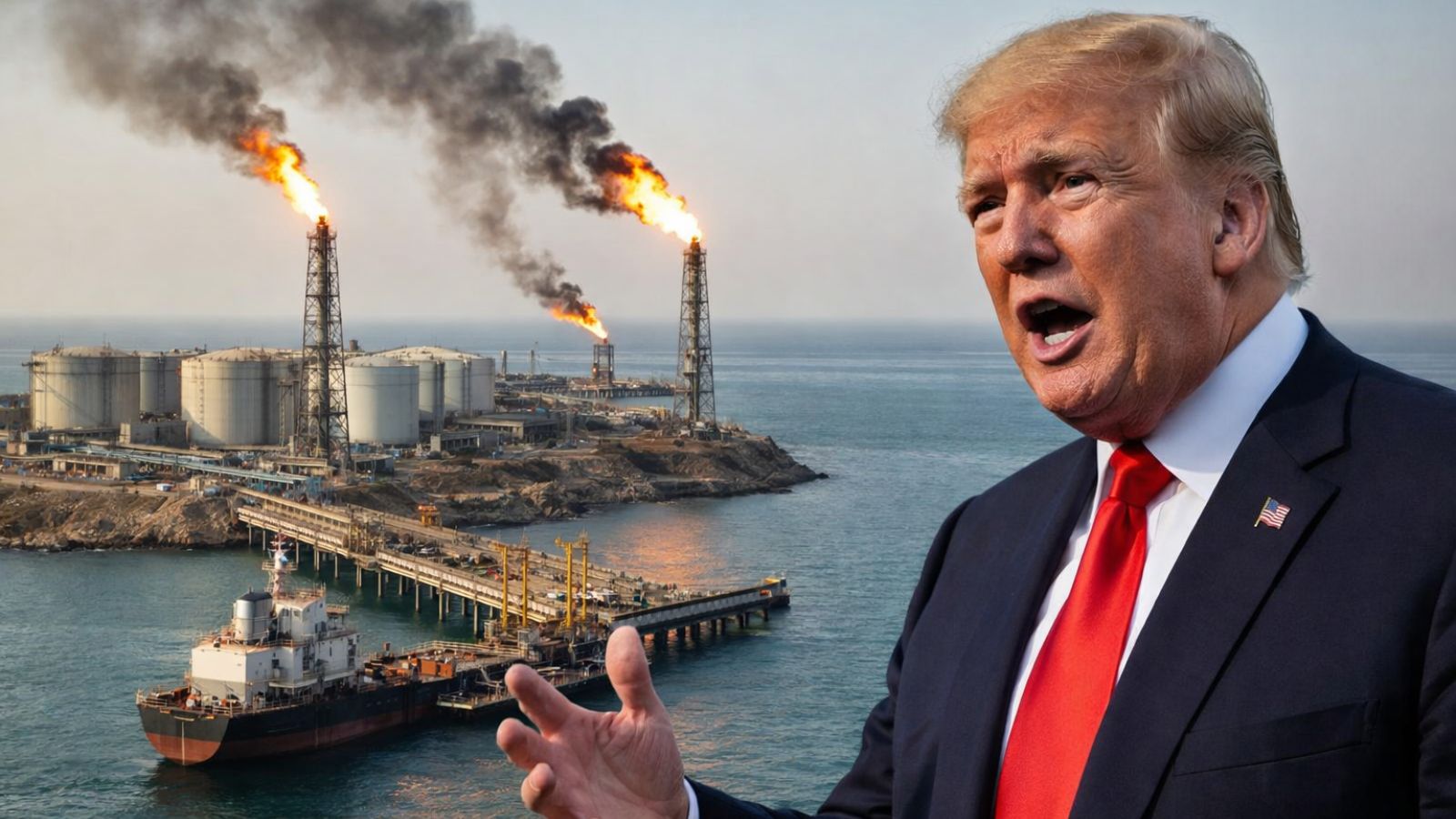
The global energy market just learned a brutal lesson in the fragility of interconnected systems. Within a chaotic forty-eight-hour window, coordinated strikes against critical infrastructure in Iran and Qatar sent natural gas and crude prices into a vertical climb, erasing months of relative calm. While initial reports focused on the immediate physical damage, the real story lies in the fundamental failure of current risk-assessment models. This was not just a series of explosions. It was a surgical strike against the world's most vital energy arteries, proving that the geographical concentration of our fuel supply has become a strategic liability that no amount of diplomatic posturing can mask.
For years, energy analysts leaned on the assumption that certain nodes were "too big to fail" or too dangerous to touch. That assumption died this week. When the smoke cleared over the North Field in Qatar and the refining hubs in southern Iran, the market wasn't just reacting to lost barrels or cubic meters. It was reacting to the realization that the primary valves of global industry are unguarded.
The Geography of Vulnerability
We have built a global economy that depends on a handful of choke points. The recent events targeted exactly these spots. Qatar’s North Field is the heart of the global Liquefied Natural Gas (LNG) trade. It is the single largest non-associated gas field in the world. When reports of structural damage to export terminals began to circulate, the European gas market—already jittery from years of supply uncertainty—went into a tailspin.
The Iranian strikes followed a different logic. Rather than targeting extraction, the hits landed on secondary processing and internal distribution. This created an immediate domestic crisis within Iran, forcing the state to halt exports to maintain its own grid. The ripple effect was instantaneous. By taking out a specific subset of compressors and pumping stations, the attackers demonstrated a sophisticated understanding of how energy flows through the region. This was not a blunt force trauma. It was a targeted disruption of the circulatory system.
The Myth of Spare Capacity
Traders often talk about "spare capacity" as if it were a physical bucket of oil sitting in a warehouse. It isn't. Spare capacity is a complex web of idling wells, functional pipelines, and available tankers. When two major players in the Persian Gulf suffer simultaneous infrastructure hits, that spare capacity vanishes into the noise of logistics.
The math is unforgiving. If you remove even 3% of the global daily supply during a period of high seasonal demand, the price does not rise by 3%. It spikes exponentially because every major industrial buyer is suddenly competing for the same dwindling pool of "uncommitted" cargoes. We saw this play out in real-time as Brent crude blew past resistance levels that had held for a year.
Behind the Technical Failure
Most mainstream reporting focuses on the geopolitical finger-pointing. That is a distraction. The investigative reality is found in the technical failures of the security protocols that were supposed to protect these sites. These facilities are surrounded by some of the most expensive defense hardware on the planet. Yet, the disruption happened.
The evidence points to a hybrid approach. It wasn't just kinetic impact. There were widespread reports of localized telemetry interference in the hours leading up to the physical strikes. In simple terms, the sensors that monitor pipeline pressure and valve status were fed "ghost data." By the time the operators realized the readings were fake, the physical damage was already done. This integration of cyber-interference with physical sabotage represents a new era of industrial warfare that most private energy companies are wholly unprepared to handle.
The Insurance Trap
As prices soar at the pump and on the utility bill, a quieter crisis is brewing in the boardrooms of London and Zurich. The insurance premiums for energy infrastructure in the Middle East are currently being rewritten. When an asset is deemed "uninsurable" or the "war risk" premium exceeds the profit margin of the cargo, the oil stays in the ground.
We are entering a period where the cost of moving energy is becoming as volatile as the energy itself. This "security tax" will eventually be passed down to the consumer, but in the short term, it is strangling the companies that operate these facilities. They are caught between a rock of physical danger and a hard place of financial insolvency.
Why Diversification is a Dying Promise
Politicians love to talk about energy independence and diversifying supply chains. The reality is that building a new LNG terminal or a deep-water oil rig takes a decade. You cannot "pivot" to a new supplier when the primary supplier is on fire.
The Western world’s reliance on the Middle East has changed its shape, but not its volume. Even as the United States became a net exporter of shale, the global price remains tethered to the stability of the Gulf. If the Gulf is unstable, the global price reflects that instability, regardless of where the specific molecules of gas are coming from. The "shale revolution" provided a cushion, but these recent attacks proved that the cushion is thin.
The Role of Shadow Fleets
One overlooked factor in the current price surge is the role of the "shadow fleet"—the aging, under-insured tankers used by sanctioned nations to move product. When legitimate infrastructure is attacked, the market becomes even more reliant on these high-risk vessels to fill the gap.
Following the hits on Iranian infrastructure, the movements of these shadow tankers became erratic. If these vessels are forced to take longer routes to avoid detection or conflict zones, the "ton-mile" cost of shipping skyrockets. This is a hidden lever on the global energy price. We are not just paying for the gas; we are paying for the increased risk taken by every ship on the water.
The Failure of Energy Diplomacy
For the last twenty years, the prevailing theory was that economic interdependence would prevent this kind of infrastructure targeting. The idea was that because everyone needs the money and everyone needs the fuel, nobody would dare break the machine.
That theory is now officially obsolete.
The attackers—whoever they may be—clearly valued the disruption of their opponent's economy more than they valued the stability of the global market. This represents a shift from "rational actor" economics to a scorched-earth strategy where the energy grid is a legitimate battlefield.
The Infrastructure Lag
The physical repairs to the Qatari terminals will take months, not weeks. The specialized components required for LNG liquefaction are not items you find on a shelf. They are custom-built, long-lead-time assets.
- Custom Cryogenic Pumps: Lead times are currently estimated at 14 to 18 months.
- Heat Exchangers: Often require specialized alloys that are in short supply.
- Specialized Labor: There is a global shortage of engineers qualified to repair high-pressure gas infrastructure in a post-strike environment.
This means the "soaring prices" aren't a temporary spike. They are a structural shift. The market is pricing in a long-term deficit because it knows the repairs cannot be fast-tracked.
The Intelligence Gap
How did the security apparatus of two major regional powers fail simultaneously? The investigation into the "how" reveals a massive gap in how we monitor non-traditional threats. Satellite imagery is great for spotting troop movements, but it is useless against a small team with localized jamming equipment and high-yield explosives.
The traditional security model for energy facilities is outward-facing. It looks for threats coming from across a border. It is not designed to handle the "insider-outsider" threat where local vulnerabilities are exploited by foreign intelligence services. The lack of coordination between the private security firms and the national militaries in the region created a seam. The attackers walked right through it.
Market Psychology and the Panic Loop
When the first images of the fires hit social media, the algorithmic trading bots took over. Within seconds, millions of "buy" orders were triggered. This is the dark side of high-frequency trading in the energy sector. The machines don't wait for a damage assessment. They react to the sentiment.
This creates a feedback loop. High prices cause panic, panic causes more buying, and more buying drives prices even higher. By the time human analysts can provide a sober look at the actual supply loss, the damage to the economy is already baked in. We saw this in the 1970s, but today it happens at the speed of light.
The Hidden Cost of the Energy Transition
Ironically, the push for "green" energy has left the existing fossil fuel infrastructure more vulnerable. Because investment in new oil and gas projects has slowed, we are relying on older, more centralized facilities. We haven't built the redundancy that the system needs.
If we had twenty smaller export hubs instead of three massive ones, a strike on one wouldn't matter. But we chose efficiency over resilience. We built massive "megaplants" because they are more profitable. Now, we are seeing the cost of that efficiency. A single point of failure can now take down a third of the regional supply.
The Strategy of Attrition
This isn't just about one week of high prices. It is about the long-term attrition of Western industrial capacity. When energy prices remain elevated for months, manufacturing moves. Chains break. Inflation becomes "sticky."
The real winners of these attacks are those who stand to gain from a weakened, distracted global West. By turning the energy market into a theater of war, the perpetrators have found a way to inflict billions of dollars in damage without ever declaring a formal conflict. It is the ultimate asymmetrical play.
The Immediate Reality
There is no quick fix for the current price environment. Strategic reserves are at historic lows in several major economies, meaning there is no "emergency brake" left to pull. The market is now entirely dependent on the speed of repairs and the absence of a follow-up strike.
If a second wave of attacks hits, even if they are smaller in scale, the psychological floor of the market will collapse. We are currently operating on the hope that this was a one-off event. Hope, however, is not a strategy for energy security.
The industry needs to stop treating "security" as a line item in a budget and start treating it as the foundation of the business model. This means decentralizing assets, investing in hard-wired (non-digital) backup systems, and acknowledging that the era of "safe" energy transit in the Middle East is over.
The data confirms that the vulnerability is baked into the geography. Unless we change how we move and protect fuel, we are simply waiting for the next fuse to be lit.
Review your own supply chain resilience by auditing the origin points of your primary energy inputs. Don't look at the country of origin; look at the specific ports and pipelines. If they are all in the same 200-mile radius, you don't have a supply chain. You have a target.