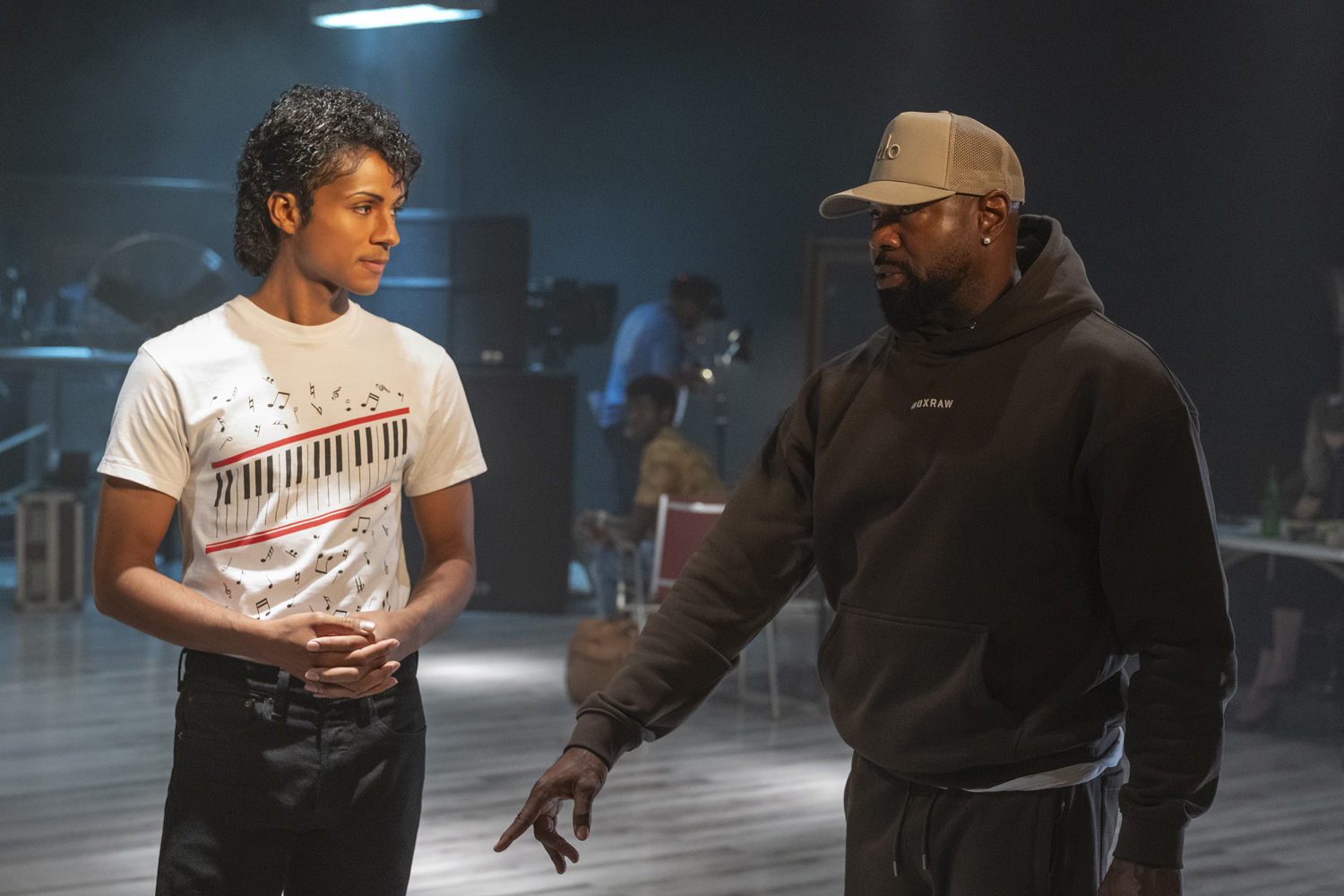
The Michael Jackson estate represents the most complex valuation puzzle in the history of intellectual property. The current conflict surrounding the catalog sale to Sony Music Group—estimated at a valuation exceeding $1.2 billion—is not merely a family dispute or a tabloid fixture; it is a fundamental clash between two divergent asset management philosophies: Liquidity Extraction versus Generational Control. To understand the "war" over this legacy, one must quantify the underlying economic drivers, the structural legal constraints of the 2009 will, and the shifting velocity of the music publishing market.
The central tension exists between the executors, John Branca and John McClain, and the beneficiaries, primarily Katherine Jackson and, by proxy, the three children. This friction is governed by the California Probate Code and the fiduciary duty to maximize the estate's value, a mandate that often contradicts the emotional or "sacred" preservation of the assets. In related news, read about: The Volatility of Viral Food Commodities South Korea’s Pistachio Kataifi Cookie Cycle.
The Tri-Pillar Value Framework of the Jackson IP
The valuation of the Jackson estate rests on three distinct but interdependent revenue engines. The "legacy war" is essentially a disagreement over which of these pillars should be liquidated and which should be held.
- The Publishing Core (Mijac Music): Unlike the Sony/ATV stake which was sold in 2016, Mijac contains Jackson’s own songwriting credits and a curated selection of external hits (e.g., Sly and the Family Stone). This is a high-margin, low-overhead annuity.
- The Master Recordings: The physical and digital "sound" of the records. Sony’s recent acquisition focuses heavily here, as the master owner captures the largest share of streaming payouts ($0.003 to $0.005 per stream on average).
- Name, Image, and Likeness (NIL): This includes the Broadway musical, the "Cirque du Soleil" shows, and the upcoming "Michael" biopic. NIL assets are volatile; their value is highly sensitive to public sentiment and biographical "narrative management."
The executors’ strategy follows a Portfolio Rebalancing Logic. By selling 50% of these interests, they lock in a record-breaking valuation while retaining enough equity to benefit from future upside. The opposition argues that this "rebalancing" is an irreversible erosion of a unique monopoly. The Wall Street Journal has analyzed this important topic in great detail.
The Cost of Capital and Market Timing
A critical oversight in standard reporting is the Opportunity Cost of Delay. The music catalog market peaked between 2021 and 2023, driven by low interest rates and the entry of private equity firms like Hipgnosis and Primary Wave. As the cost of capital rose with central bank rate hikes, the "multiples" paid for catalogs began to compress.
The executors are operating under a "Strike While Liquid" imperative. If they wait five years to settle internal family disputes, the macro-economic environment might value the same assets at 20% less, even if streaming volumes increase. This creates a binary choice:
- The Aggressive Exit: Sell half the asset at a 20x–25x multiple of Net Publisher Share (NPS).
- The Passive Hold: Rely on the slow decay of the "super-superstar" streaming curve.
The data suggests that Jackson’s streaming numbers are remarkably resilient, with billions of annual plays. However, the estate faces a looming Reversion Rights threat under the U.S. Copyright Act of 1976. Section 203 allows creators (or their heirs) to terminate grants of copyright after 35 years. This legal mechanism creates a ticking clock that forces Sony to secure long-term deals now, rather than risk losing the rights piecemeal to the heirs later.
Structural Bottlenecks in the Probate Process
The primary reason this "war" has persisted for over a decade is the lack of a Defined Distribution Trigger. Most high-value estates transition into a closed trust once debts and taxes are settled. The Jackson estate remains in a state of "permanent administration."
This creates an inherent conflict of interest. Executors receive a percentage of the gross income generated (typically around 5% to 10% depending on the jurisdiction and specific court orders). This fee structure incentivizes active deal-making and expansion. Conversely, beneficiaries who want to minimize risk prefer a static, low-cost holding structure.
The legal battle over the Sony deal hinges on whether the executors have the "power of sale" without beneficiary consent. Under the terms of the will, the executors have broad discretionary power. The challenge from Katherine Jackson is not based on a lack of authority, but on a claim of Breach of Fiduciary Duty, arguing that the sale price undervalues the long-term growth of the "Michael" brand post-biopic.
The Biopic as a Valuation Multiplier
The upcoming "Michael" film is the most significant variable in the estate’s current valuation. In the entertainment industry, this is known as the "Bohemian Rhapsody" Effect. After the release of the Queen biopic, the band’s catalog saw a massive surge in streaming, often exceeding 100% growth in certain demographics.
The executors’ decision to sell 50% before the film’s release is a sophisticated hedge.
- Scenario A: The film is a global phenomenon. The 50% retained interest doubles in value, and the cash from the first 50% has already been diversified into lower-risk assets.
- Scenario B: The film triggers renewed scrutiny of Jackson’s personal history, leading to a "brand cooling." By selling 50% now, the estate has insured itself against a total loss of NIL value.
The family’s opposition is rooted in the belief that Scenario A is a certainty. From a risk-management perspective, the executors are treating it as a probability, not a guarantee.
The Information Asymmetry Gap
Much of the internal friction stems from Information Asymmetry. The executors have access to the full "Data Room"—the granular streaming trends, the territorial licensing nuances, and the specific terms of the Sony offer. The beneficiaries see the "Headline Price."
This gap leads to a fundamental misunderstanding of the Discounted Cash Flow (DCF) analysis. A $1.2 billion valuation is not just a number pulled from the air; it is the present value of 25–40 years of projected future earnings, discounted back to today’s dollars. If the discount rate used by Sony is lower than the estate's internal rate of return, the sale is a mathematical win for the estate. If the family believes Jackson’s music is "inflation-proof," they will always view a DCF-based sale as a "steal."
The Generational Shift in IP Utility
We are witnessing the transition of the Jackson legacy from a Family Asset to a Corporate Utility. When an IP reaches this scale, it ceases to behave like music and starts to behave like real estate.
Sony’s objective is to integrate the Jackson catalog into its broader ecosystem:
- Synchronized Licensing: Placing "Billie Jean" in films, commercials, and video games without friction.
- Technological Integration: Using the masters for AI-voice modeling, spatial audio remixes, and virtual reality experiences.
The "war" is a symptom of the family’s desire to maintain a "Veto Power" over these uses. However, in the modern music economy, the "Veto" is an expensive luxury. It slows down the "Speed of License," which in turn reduces the catalog's relevance in the social media era (TikTok/Instagram) where fast approvals are mandatory for viral growth.
Strategic Forecast for Estate Resolution
The current litigation will likely terminate in a settlement that codifies a Dual-Track Governance model. The executors will proceed with the Sony sale, but a portion of the proceeds will be used to fund a "Legacy Defense Fund" or an independent trust with beneficiary-appointed oversight.
The "Michael" biopic will serve as the terminal point for the estate’s aggressive expansion phase. Post-2025, the estate will likely shift from a "Growth and Acquisition" phase to a "Distribution and Maintenance" phase. The family will gain more direct control, but the "Core Master IP" will be managed by Sony’s corporate infrastructure, effectively ending the era of family-run management.
The strategic play for any stakeholder in this position is the Hybrid Monetization Strategy: sell the volatile masters to a major label with the infrastructure to defend them, while retaining 100% of the publishing rights (the "Source Code" of the music) to ensure long-term, high-margin revenue for the heirs. Any deviation from this—either holding everything or selling everything—represents a failure to account for the unique decay and rebirth cycles of celebrity IP.
Monitor the specific "Reversion" filings in the U.S. Copyright Office over the next 24 months. These filings will indicate if the heirs are preparing to claw back individual song rights, which would effectively devalue Sony's recent $600 million+ investment and trigger a new round of litigation focused on "Grant of Rights" vs. "Work for Hire" definitions.