The political geography of Pennsylvania is often described as two urban anchors separated by a vast, conservative interior. But that shorthand ignores the chemical reaction currently happening in the middle. In the small towns of the Rust Belt and the farm-dotted valleys of the interior, the monolithic "Trump voter" has become a myth. The war in Ukraine, and more specifically the billions of dollars in military aid flowing from the U.S. Treasury to the front lines in Donbas, has acted as a wedge, splitting neighbors who once shared a uniform vision of "America First."
This isn’t a simple debate about isolationism. It is a deep-seated identity crisis over what it means to be a global superpower when the local economy feels like it is running on fumes. While Washington focuses on strategic deterrence and NATO borders, the people in these Pennsylvania precincts are calculating the opportunity cost of every artillery shell shipped overseas.
The Cost of Global Presence
For decades, the American working class provided the backbone of the military and the industrial base that armed it. There was a time when interventionism was viewed through the lens of stopping communism or protecting trade routes that kept local factories humming. That social contract has frayed. In towns like York or Lancaster, the sight of tax dollars heading to a foreign conflict is no longer viewed as an investment in global stability. It is seen as a withdrawal from the domestic bank.
The skepticism isn't coming from the left. It is bubbling up from the very base that propelled the populist movement in 2016. These voters are looking at their own infrastructure—the crumbling bridges and the shuttered storefronts—and wondering why the "Arsenal of Democracy" only seems to have a budget for the "democracy" part, and never for the "arsenal" workers' hometowns.
Internal Pressure and the New Skepticism
There is a specific type of tension in these communities. You can find it in the VFW halls and the diners. One group of voters, often older and shaped by the Cold War, sees the support of Ukraine as a moral and strategic necessity. They view Russia as a historical antagonist that must be checked. To them, the "America First" banner includes maintaining a world order where the U.S. remains the undisputed leader.
Then there is the younger or more economically squeezed faction. This group has spent twenty years watching "forever wars" drain the national psyche. They are tired. They don't see the Russian border as their problem. To them, every shipment of Javelin missiles represents a missed chance to fix a local school or lower the cost of diesel. This isn’t a fringe opinion. It is becoming the dominant strain of thought in the rural Pennsylvania landscape.
The Strategic Disconnect
The disconnect between the Beltway and the backyard is massive. In Washington, the argument for aiding Ukraine is often framed in terms of "degrading the Russian military without shedding American blood." It’s a cold, calculated strategic win. But that logic fails to resonate in a town where the biggest employer just cut its second shift.
When a politician talks about "defending the rules-based international order," it sounds like a foreign language to someone struggling with a 40% increase in grocery costs over three years. The "rules" haven't protected their jobs from outsourcing, and the "order" hasn't stopped the flow of fentanyl into their counties. This sense of abandonment is the fuel for the current dissent.
The Two Faces of Nationalism
We are witnessing a split in the definition of nationalism.
- Expansionist Nationalism: The belief that American power must be projected to maintain a safe world for American interests.
- Inward Nationalism: The belief that the nation's strength is entirely dependent on its internal health and that foreign entanglements are a distraction from domestic decay.
The latter is winning. The argument that "we can do both" is no longer accepted at face value. Voters have seen "both" fail for thirty years. They are now demanding a choice.
The Manufacturing Paradox
Ironically, Pennsylvania is home to many of the facilities that actually produce the munitions being sent abroad. You would think this would create a groundswell of support for the war effort. If war means jobs, shouldn't these towns be the loudest supporters?
But the modern defense industry is highly automated. A billion-dollar contract for shells doesn't necessarily mean a thousand new high-paying jobs in Scranton. It often means higher margins for defense contractors and a few extra shifts for a specialized workforce. The broad economic "lift" that war once provided to the American middle class is gone. The wealth generated by the defense sector stays at the top, while the inflationary pressure of government spending hits the bottom.
The Information War at Home
Social media has accelerated this divide. In previous conflicts, the government held a tighter grip on the narrative. Today, a voter in a Pennsylvania border county can see raw footage from the front lines in real-time. They can also see raw footage of the crisis at the U.S. southern border.
The juxtaposition is jarring. They see billions for a border thousands of miles away, and a perceived lack of resources for the border in their own backyard. This comparison has become the primary talking point for the skeptical wing of the party. It is an incredibly effective rhetorical tool because it is grounded in a visible reality. It turns a complex foreign policy issue into a simple question of "Them vs. Us."
The Shadow of the 2024 Election
This internal rift is the most significant challenge facing the Republican coalition. It isn't just about Ukraine. It’s about the future of the party’s foreign policy. If the leadership ignores this growing resentment, they risk alienating a base that is increasingly convinced that the GOP establishment is just as "globalist" as the Democrats.
Candidates are now forced to walk a tightrope. They must sound "tough" to satisfy the traditional hawks, but they must also sound "restrained" to satisfy the populist base. This leads to a muddied, inconsistent message that leaves everyone dissatisfied.
The Erosion of Traditional Alliances
The old alliances that defined the conservative movement—big business, national security hawks, and social conservatives—are breaking apart. The national security hawks are finding they have more in common with centrist Democrats than with the populist wing of their own party. Meanwhile, the populist wing is looking at the military-industrial complex with the same suspicion they once reserved for "Big Tech" or "Big Pharma."
This isn't a temporary swing of the pendulum. It is a fundamental realignment. The skepticism toward the Ukraine war is a symptom of a much larger disease: a total lack of trust in institutional expertise. If the "experts" were wrong about Iraq, wrong about Afghanistan, and wrong about the impact of global trade on the American worker, why should they be trusted now?
The Failure of Persuasion
The Biden administration and the pro-aid wing of the GOP have failed to make a compelling case to the Pennsylvania voter. They have relied on moral platitudes and abstract geopolitical theories. They haven't addressed the fundamental question of "what’s in it for us?"
In a world of limited resources, the "moral high ground" is a luxury many feel they can no longer afford. They want to see a direct line between foreign policy and domestic prosperity. Without that link, the support for any foreign intervention will continue to bleed out.
The Reality of the "Great Divide"
The divide isn't just between Democrats and Republicans. It is between those who still believe in the American Empire and those who just want to believe in America. The town squares of Pennsylvania are the new battlegrounds for this debate.
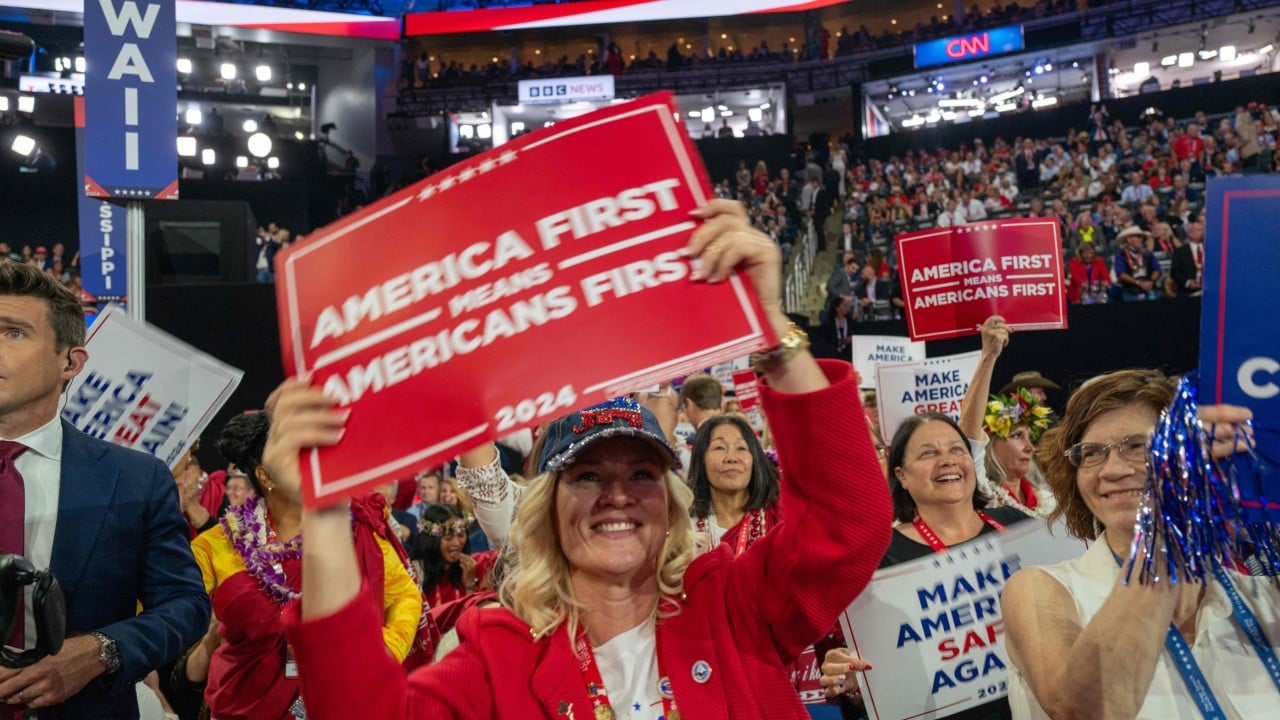
You see it in the yard signs. You hear it in the silence between neighbors. The consensus that once made American foreign policy a "bipartisan" affair is dead. It has been replaced by a fierce, localized debate over the very purpose of the United States on the world stage.
Pennsylvania’s "Trump country" is no longer a monolith of support for a single vision. It is a collection of people trying to figure out if they are being led toward a new era of strength or if they are simply being asked to pay the bill for a dying status quo. The answer to that question will determine the next decade of American politics.
Look at the bridge in your own town before you worry about the bridge in Kyiv. That is the new mantra. It is simple, it is powerful, and it is reshaping the political map from the ground up.
Would you like me to analyze the specific demographic data from the 2024 Pennsylvania primary to see how these foreign policy views translated into actual votes?