The standard narrative on fratricide—popularly known as friendly fire—is a cocktail of grief, moral outrage, and a desperate plea for "better technology." We treat these incidents as glitches in the system. We talk about them as if they are avoidable tragedies caused by a lack of "situational awareness."
That narrative is a lie.
If you want to eliminate friendly fire, stop fighting. As long as you have kinetic movement, high-stress decision-making, and the fog of war, you will have blue-on-blue incidents. In fact, the more "advanced" a military becomes, the more lethal its mistakes. We have reached a point where our obsession with zero-error margins is actually making the battlefield more dangerous for the people on it.
The Lethality Paradox
The competitor's take on this is predictable. They want more sensors. They want more "Target ID" systems. They want a world where a computer tells a pilot exactly who is below them with 100% certainty.
Here is the truth: Complexity is the mother of chaos.
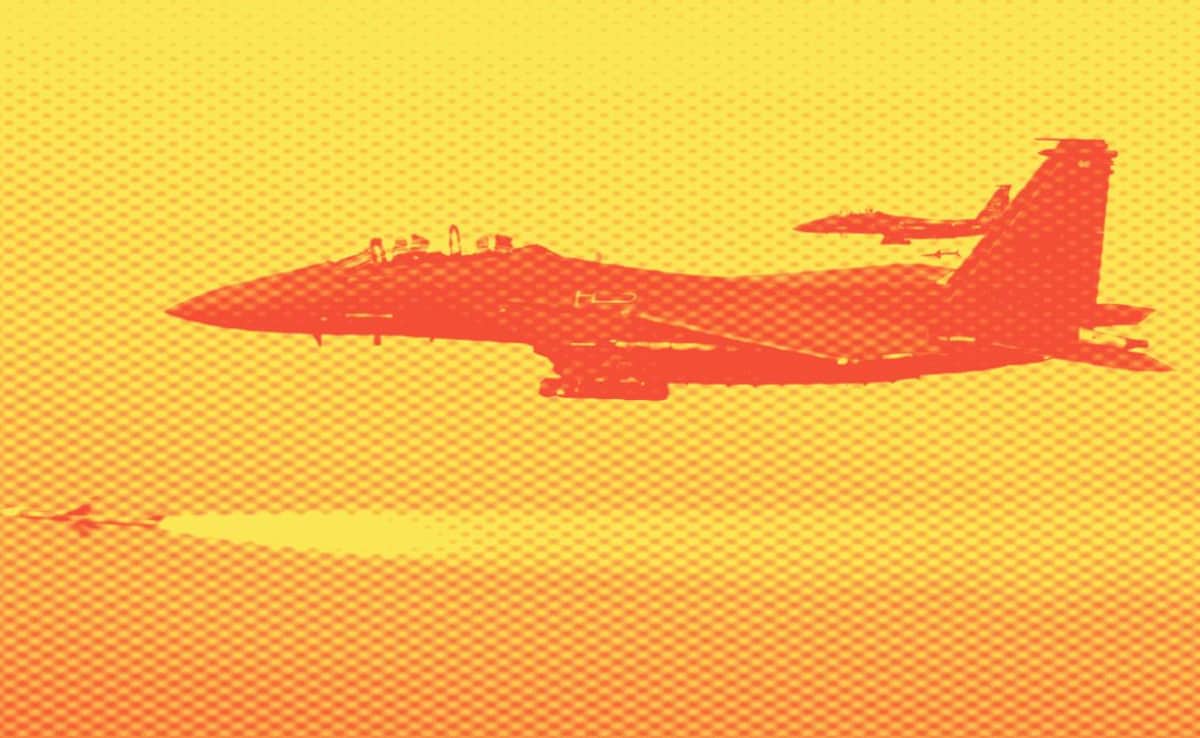
When you add layers of identification friend-or-foe (IFF) technology, you aren't just adding safety; you are adding failure points. In 1994, two U.S. Army Black Hawks were shot down by U.S. Air Force F-15s over Northern Iraq. They had the transponders. They had the radio frequencies. They were in a "No-Fly Zone" monitored by AWACS. The tech worked perfectly, but the human-to-machine interface collapsed under the weight of its own bureaucracy.
We don't have a sensor problem. We have a cognitive load problem.
By demanding that every soldier and pilot verify their target through five different digital handshakes, we slow down the OODA loop (Observe, Orient, Decide, Act). In a high-intensity conflict, speed is life. If you force a ground unit to wait for three levels of digital confirmation before returning fire, they get overrun. If you allow them to be aggressive, they occasionally hit the wrong person.
The industry refuses to admit that we are trading a statistical certainty of friendly fire for a tactical advantage in lethality. We have decided, implicitly, that 10 accidental deaths are better than 100 deaths caused by hesitation. It is time we stopped lying about that trade-off.
The Myth of the "Clean" Battlefield
People love to ask, "Why can’t we just use GPS to track every single soldier in real-time?"
It sounds simple. It’s a favorite for tech consultants who have never been in a GPS-denied environment. In a peer-to-peer conflict—think Russia or China—the first thing that goes away is your "Blue Force Tracker." Signals are jammed. Latency spikes. Data is spoofed.
If your entire strategy for avoiding friendly fire relies on a screen showing you blue dots, you are training your soldiers to be blind. When the screen goes dark, they lose the ability to judge distance, intent, and position. They become more likely to panic-fire.
True "situational awareness" isn't an app. It is a biological skill developed through grueling, repetitive training that prioritizes physical landmarks and unit cohesion over digital crutches.
Stop Blaming the Pilot
The media loves a scapegoat. When a "friendly fire" incident hits the news, the focus is always on the person who pulled the trigger. We analyze their heart rate, their sleep schedule, and their "judgment."
This is a fundamental misunderstanding of systems engineering.
A friendly fire incident is rarely the fault of one person. It is the output of a system that allowed a pilot to be vectored into a space where ground troops hadn't cleared their position, using a radio frequency that was being stepped on by another unit, while under a Rules of Engagement (ROE) framework that was written by lawyers 3,000 miles away.
If you want to fix the problem, stop buying more expensive cameras. Start simplifying the command structure.
Why More Tech Fails
- Information Overload: A pilot seeing 50 icons on a screen is less likely to identify a threat than a pilot looking at 5.
- False Confidence: "The computer says he’s a friendly" leads to complacency. "The computer says he’s an enemy" leads to tragedies when the sensor is wrong.
- Electronic Signature: Every "safety" transponder you put on a soldier makes them a beacon for enemy electronic warfare. You are literally trading the risk of being hit by your friends for the certainty of being targeted by your enemies.
The Uncomfortable Reality of Proximity
As we move toward "Multi-Domain Operations," the distance between units is shrinking while the range of weapons is expanding. We are firing $2 million missiles at targets we can’t see with the naked eye.
The "lazy consensus" says the answer is better AI. The AI will sort the wheat from the chaff.
Wrong. AI is a black box. If an AI identifies a school bus as an armored personnel carrier, no human in the loop is going to have the data—or the time—to argue with it. We are automating the path to fratricide.
I’ve seen programs where the goal was "Zero Fratricide." They spent billions. The result? A system so cumbersome that the troops turned it off because it drained their batteries and snagged on their vests. They preferred the risk of a stray mortar to the certainty of a dead battery in a firefight.
The Redesign
If we actually cared about saving lives rather than selling hardware, we would shift our focus entirely.
- Aggressive Deconfliction Training: Move away from digital simulators. Put people in the dirt and make them communicate under physical duress without electronics.
- Decentralized Command: Give the person closest to the trigger the most authority to say "No," and the least pressure to "Produce Results."
- Accepting the Margin: Admit that in any kinetic environment, there is a non-zero chance of error.
We treat friendly fire like a crime. It is, in reality, a tax. It is the most horrific tax imaginable, paid in the lives of the best people we have, but it is a tax on the speed and violence required to win a war.
If you want to stop the tax, stop the war. But if you're going to fight, stop pretending that a new software update is going to scrub the blood off the floor.
The most "dangerous" enemy in a war isn't the guy in the other uniform; it’s the arrogance of thinking we can engineer out the human element of chaos. We’ve built the most lethal killing machine in history, and then we act shocked when it kills.
Accept the friction, or get out of the way.