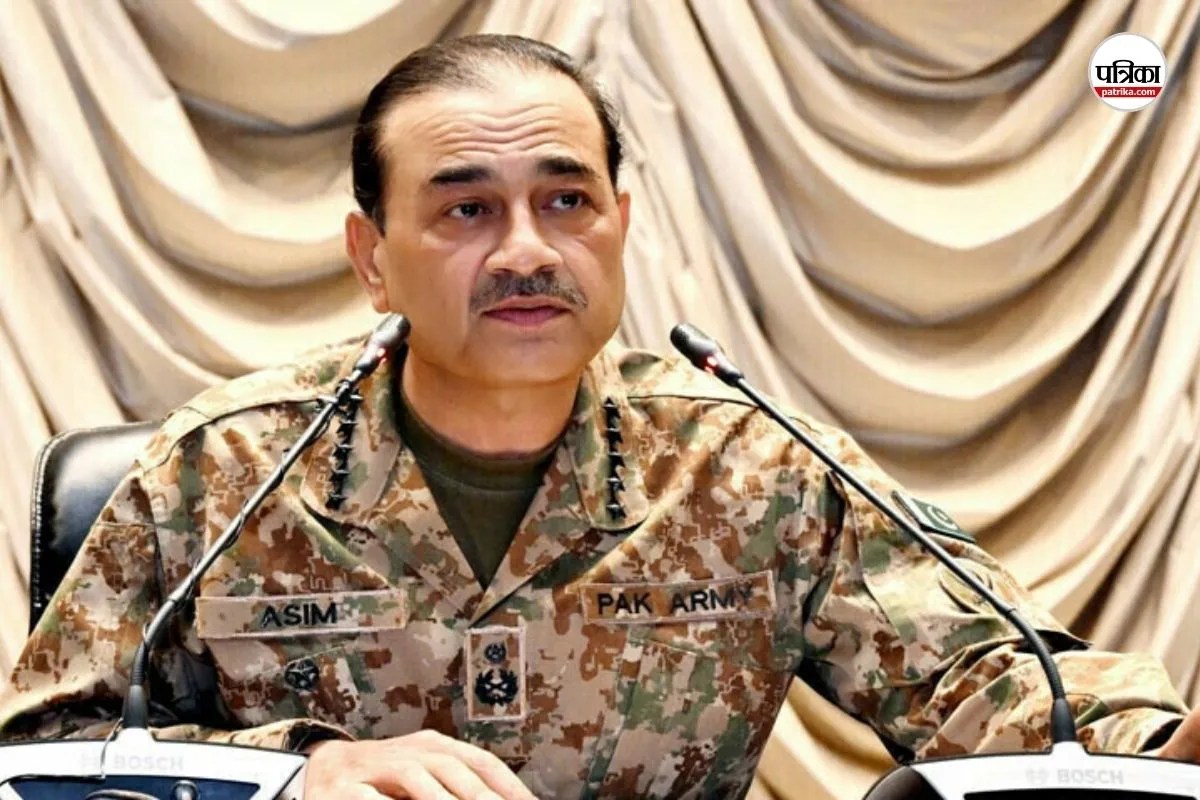
The mainstream media is fixated on the wrong drama. While Indian and Pakistani tabloids obsess over the "bawaal" (uproar) surrounding General Asim Munir’s sudden poetic affection for Iran, they are missing the cold, hard mechanics of survival. Most analysts are calling this a "shift in regional policy." They are wrong. This isn't a shift. It is a frantic, high-stakes tactical retreat by a military establishment that has run out of friends and, more importantly, run out of cash.
The lazy consensus suggests that Munir is simply trying to repair a fractured relationship after the tit-for-tat missile strikes of early 2024. The reality is far grimmer. Pakistan is currently trapped in a geopolitical pincer movement between an increasingly impatient China and a Washington that has largely moved on. By pivoting toward Tehran, Munir isn't showing "love"—he is flashing a flare gun.
The Myth of the "Brotherly" Alliance
Stop falling for the rhetoric. In the world of high-stakes intelligence and border security, "brotherhood" is the word used right before a betrayal. For decades, the Pakistan-Iran border, specifically the Sistan-Baluchestan region, has been a lawless theater of proxy wars.
When Munir speaks of Iran with newfound warmth, he isn't resolving the fundamental friction of the Jaish al-Adl or the Baloch Liberation Army. He is trying to bribe the neighborhood bully with compliments because he can no longer afford to fight him.
Let's look at the math the General won't mention:
- Debt Service: Pakistan is staring down a mountain of external debt.
- The IMF Noose: Every concession to the IMF erodes the military’s domestic popularity.
- Energy Deficit: The Iran-Pakistan (IP) gas pipeline is a multibillion-dollar fine waiting to happen if Pakistan doesn't move forward, yet moving forward invites U.S. sanctions.
Munir’s pro-Iran stance is a pathetic attempt to navigate this "Sanction Trap." He is betting that he can flirt with Tehran just enough to satisfy domestic religious lobbies and avoid Iranian litigation, while somehow convincing the U.S. State Department that he is "de-escalating" the region. It is a strategy built on a foundation of sand.
Why the "Uproar" is a Distraction
The "bawaal" in Pakistan over Munir's statements is largely manufactured or misunderstood. Critics claim he is abandoning traditional allies like Saudi Arabia. This is a fundamental misunderstanding of how the Gulf operates in 2026.
Riyadh doesn't care about Pakistan’s flowery language toward Tehran anymore. The Saudis are busy building NEOM and normalizing their own relations with Iran via Chinese mediation. The real tension isn't ideological; it's transactional. The "uproar" serves the military’s purpose: it creates a facade of a vibrant internal debate, distracting the public from the fact that the state's sovereign control over its borders is at an all-time low.
The Border Paradox
The General’s critics ask, "If you love Iran so much, why are the borders bleeding?"
This is the right question for the wrong reasons. The borders are bleeding because the Pakistani military can no longer sustain a multi-front "active" posture. They are stretched thin in Khyber Pakhtunkhwa against the TTP and exhausted in Balochistan.
A Bitter Truth: You don't make peace with your neighbor because you suddenly trust them; you make peace because your own house is on fire and you can't afford a garden hose.
The China Factor: The Silent Spectator
Everyone forgets that Beijing is the architect of this forced friendship. China’s "Belt and Road" interests require a stable corridor. They are tired of their workers being targeted in Pakistan by militants who allegedly cross over from Iranian soil.
Munir isn't acting out of a sudden realization of Islamic solidarity. He is acting on instructions. If Pakistan wants continued Chinese investment, it must stop being the regional problem child. The "pro-Iran" rhetoric is a performance for a Chinese audience. It is an attempt to prove that Rawalpindi can still manage its "Near Abroad" without dragging the CCP into a localized war.
The Failure of "Strategic Depth"
For thirty years, Pakistan’s military doctrine was obsessed with "strategic depth"—the idea that they needed influence in Afghanistan to counter India. That doctrine is dead. It didn't just fail; it backfired spectacularly, giving rise to a hostile Taliban government in Kabul that ignores Islamabad’s dictates.
Now, we are seeing the birth of "Strategic Desperation."
Munir is trying to create a Western flank that is at least "not hostile" so he can refocus on domestic survival. But here is the nuance the "bawaal" coverage misses: Iran knows this. Tehran is not a naive player. They see a weakened Pakistani state and a General who is domestically unpopular. They will extract every possible concession—on trade, on border access, and on the pipeline—while giving back nothing but empty smiles. Munir is trading long-term sovereignty for short-term quiet.
Stop Asking if the "Pivot" is Real
People ask: "Is Pakistan really moving away from the U.S. toward a China-Iran-Russia axis?"
This is a flawed premise. Pakistan is not "moving" anywhere. It is drifting. It is a ship with no engine, being pushed by the strongest current of the month. One week it’s "security cooperation" with Washington to get F-16 spares; the next, it’s "unbreakable bonds" with Tehran to appease a restless border.
This isn't diplomacy. It’s a survival racket.
The Real Risks Nobody Mentions
- The Sectarian Powderkeg: By leaning too far into a pro-Iran narrative, the military risks alienating its own domestic hardline Sunni base. This is a demographic they have historically used as a tool of the state. If that tool turns against them, the internal security situation becomes unmanageable.
- The US Sanction Trigger: The U.S. has been "patient" with Pakistan because of its role in counter-terrorism. But if Munir actually moves on the IP gas pipeline, that patience evaporates. Pakistan cannot survive 48 hours of genuine U.S. primary and secondary sanctions.
- The Baloch Blowback: No amount of diplomatic hugging between Munir and Iranian officials will stop the insurgency in Balochistan. In fact, it might accelerate it. Insurgents see this rapprochement as two "occupiers" teaming up, which only serves to radicalize the youth further.
The Strategy for the Discerning Observer
If you are looking at this from a business or geopolitical perspective, do not invest in the hype of a "New Regional Order." Instead, look at the following indicators to see if Munir’s gambit is actually working:
- The USD/PKR Exchange Rate: If the pivot to Iran actually helped, you’d see trade pressure ease. It won't.
- Border Fencing Activity: Watch if the "brotherly" talk results in decreased military presence. Spoiler: It won't. The military will actually increase its presence while talking about peace.
- IMF Review Language: Watch for how the West reacts to this "love affair." If the language in the next IMF tranche gets "technical" and "difficult," you’ll know the pro-Iran stance has backfired.
The General’s statements aren't a sign of strength or a new vision. They are the tactical maneuvers of a leadership that is effectively insolvent, trying to buy time in a region that has run out of patience.
The "uproar" isn't about Iran. It's about the terrifying realization that the men in uniform don't have a Plan B. They are just trying to survive until the next fiscal quarter.
General Munir isn't building a bridge to Tehran; he's looking for a place to hide from the inevitable consequences of decades of failed policy. If you want to believe the "brotherhood" narrative, go ahead. Just don't be surprised when the bridge collapses under the weight of its own contradictions.
The General is playing a game of poker with a hand full of low cards, and everyone at the table can see his reflection in the glass. He isn't reinventing Pakistani diplomacy; he is managing a bankruptcy. Keep your eye on the ledger, not the lectern.