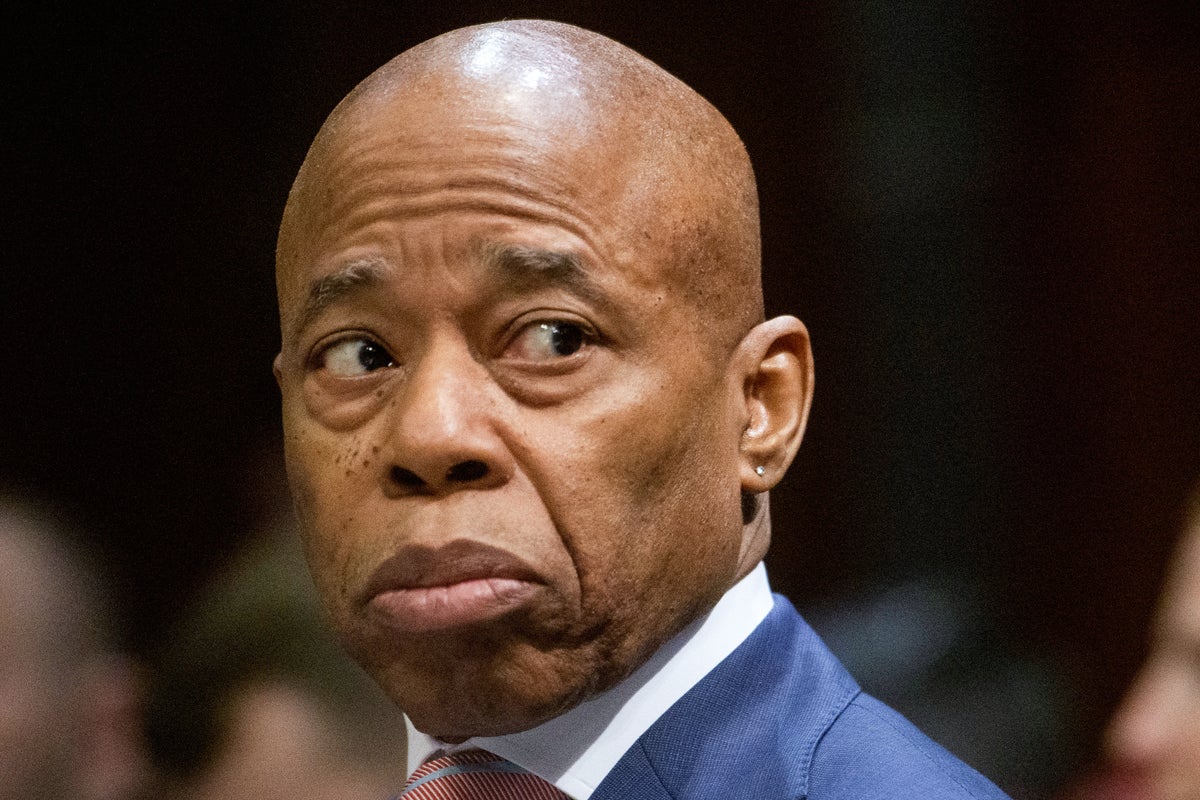
The formal conferral of honorary citizenship upon Eric Adams by the Republic of Albania represents more than a ceremonial gesture; it is a manifestation of municipal-to-state geopolitical arbitrage. While legacy reporting focuses on the optics of the "International Mayor," a structural analysis reveals a calculated strategy to convert local constituent density into sovereign-level diplomatic capital. Adams is not merely receiving an award; he is validating a framework where sub-national leaders operate as independent trade and security nodes outside the traditional jurisdiction of the federal State Department.
The Tri-Axis Framework of Municipal Influence
To understand why a mid-sized Balkan nation would grant its highest civic honor to the mayor of a Western city, we must deconstruct the utility functions at play. This relationship operates across three specific axes:
- Demographic Concentration as Leverage: New York City houses one of the largest Albanian diasporas globally. For the Albanian state, the Mayor of New York is the primary gatekeeper to their most influential external economic engine.
- Sovereign Legitimacy via Proxy: For a developing economy seeking EU integration or NATO prominence, high-visibility alignment with the "Capital of the World" functions as a signal of stability and Western alignment, bypassing the slower channels of D.C. diplomacy.
- Reciprocal Political Insurance: Adams utilizes these international ties to solidify his domestic base. By securing "Honorary Citizen" status, he transforms from a local administrator into a global statesman, a pivot designed to dilute local political vulnerabilities with international prestige.
The Economics of Diaspora Diplomacy
The Albanian-American community in New York is not a monolith, but it represents a significant capital flow variable. Remittances and investment from NYC-based Albanians directly impact the GDP of the Balkan region. When a mayor engages in "International Mayoralty" tactics, they are effectively managing a trade corridor.
The mechanics of this relationship are governed by the Proximity-Influence Loop. As the mayor strengthens ties with the sovereign state (Albania), he increases his standing with the local diaspora (voters and donors). As he increases his standing with the diaspora, his value to the sovereign state increases. This creates a self-reinforcing cycle of political capital that operates independently of the mayor’s performance in local sectors like sanitation or housing.
Strategic Divergence from Federal Protocol
Standard diplomatic protocol dictates that foreign policy is the sole purview of the national government. However, the Adams model exploits a jurisdictional vacuum. By focusing on "sister city" agreements and honorary citizenships, municipal leaders can engage in shadow diplomacy that influences trade, migration patterns, and security cooperation without requiring Congressional approval.
The risk in this model is Interference Friction. When a sub-national leader develops deep, non-transparent ties with foreign entities, it creates a misalignment with national security interests. The transition from "International Mayor" to "Honorary Citizen" marks the point where the distinction between public service and private diplomatic interest becomes mathematically difficult to separate.
The Value of the Honorary Citizenship Asset
Honorary citizenship is a non-tangible asset with high symbolic yield. In the context of the Albanian-Adams agreement, the asset provides:
- Extraterritorial Branding: The ability to project authority in foreign markets, easing the path for future private-sector consulting or board positions.
- Political Diversification: Reducing reliance on local party structures by building a global network of "sovereign friends."
- Narrative Displacement: Moving the public discourse from local investigative scrutiny to international achievement.
The Cost Function of Sub-National Statecraft
There is no "free" diplomatic status. The cost of this honorary citizenship is paid in Administrative Bandwidth. Every hour spent in Tirana or engaging with foreign dignitaries is an hour removed from the core operational requirements of New York City’s $100 billion+ budget.
The structural inefficiency arises when the mayor's personal diplomatic brand outpaces the city's actual ROI from these trips. To measure the efficacy of such a move, one must track the Delta ($\Delta$) between foreign direct investment (FDI) into NYC resulting from the trip versus the political capital expenditure required to defend the absence from local duties.
The Mechanism of Symbolic Reciprocity
Albania’s decision to honor Adams at the "House of Leaves" or via President Bajram Begaj’s decree is a calculated move in Asymmetric Diplomacy. Albania gains a high-ranking American ally who can advocate for Balkan interests in the media capital of the world. Adams gains a "Global Statesman" resume.
This creates a Principal-Agent Problem. The "Principal" (the citizens of NYC) expects the "Agent" (the Mayor) to focus on city-state deliverables. Instead, the Agent invests resources in "Global Branding," which yields high returns for the Agent but marginal, if any, returns for the Principal.
Operational Risk and the Transparency Deficit
The primary limitation of the Adams model is the lack of a standardized reporting framework for municipal diplomacy. Unlike federal officials, municipal leaders often lack the robust vetting and disclosure requirements necessitated by high-level foreign interactions. This creates a Structural Blind Spot:
- Undisclosed Quid Pro Quos: The risk that symbolic honors are precursors to favorable zoning, procurement, or policy decisions for diaspora-linked businesses.
- Security Vulnerabilities: Foreign intelligence services often target sub-national leaders as "soft entry points" to influence national policy.
- Legal Overreach: As seen in recent federal inquiries, the line between "cultural exchange" and "unregistered foreign agency" is porous.
Strategic Forecast for the International Mayoralty
The precedent set by the NYC-Albania relationship suggests a shift toward City-States as Sovereign Actors. We should expect to see major metropolitan mayors increasingly seek formal status in foreign nations to insulate themselves from domestic political volatility.
The tactical play for observers is to monitor the Alignment Coefficient: the degree to which a mayor’s foreign accolades correlate with specific local policy shifts. If a mayor receives citizenship and subsequently pushes for specific bilateral trade incentives or cultural centers, the "honor" was not a gift, but a transaction.
Future municipal leaders will likely adopt the Adams blueprint of "Global Presence," but those who survive the inevitable regulatory backlash will be those who can quantify the benefit to their local tax base. For Adams, the honorary citizenship is a hedge—a way to ensure that even if his local mandate expires, his global mobility remains at a premium.
Analyze the timing of these international milestones against domestic legal or political pressures. The correlation between domestic "heat" and international "honors" is rarely coincidental; it is a calculated deployment of prestige to offset a deficit in local approval. Investors and policy analysts must treat these foreign honors as lead indicators of a shift in the leader’s focus from local governance to personal legacy preservation.



