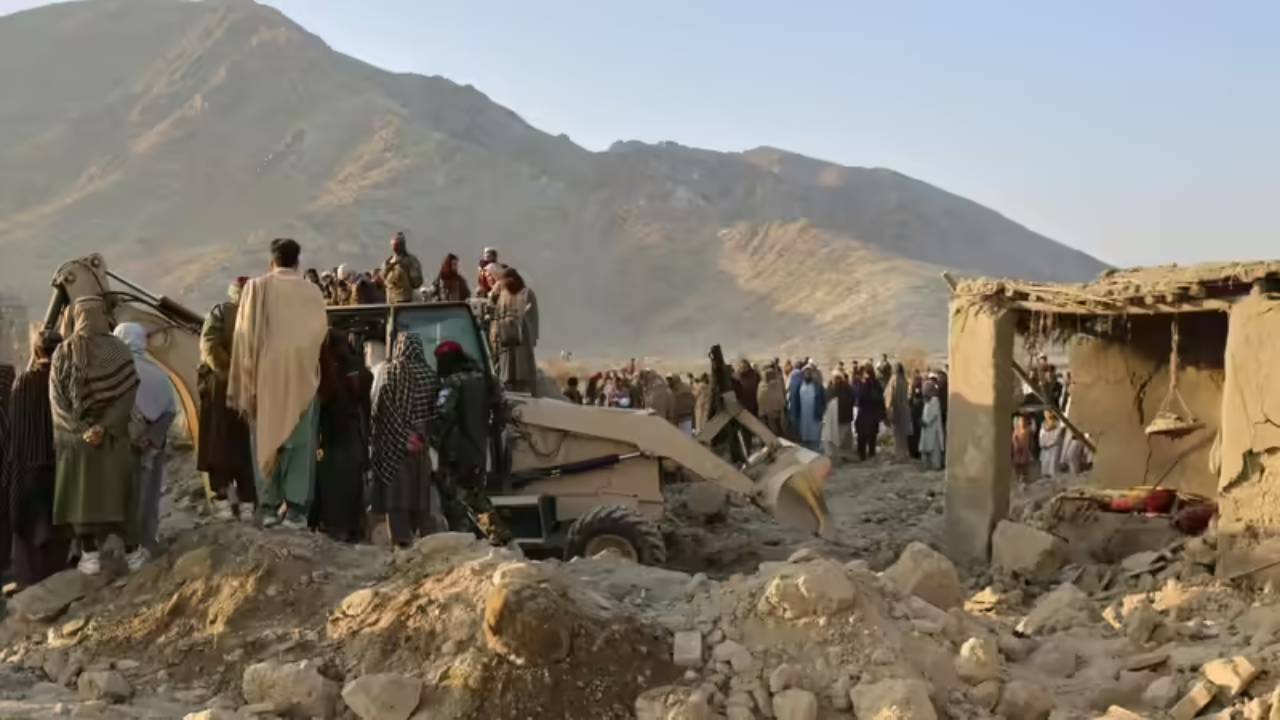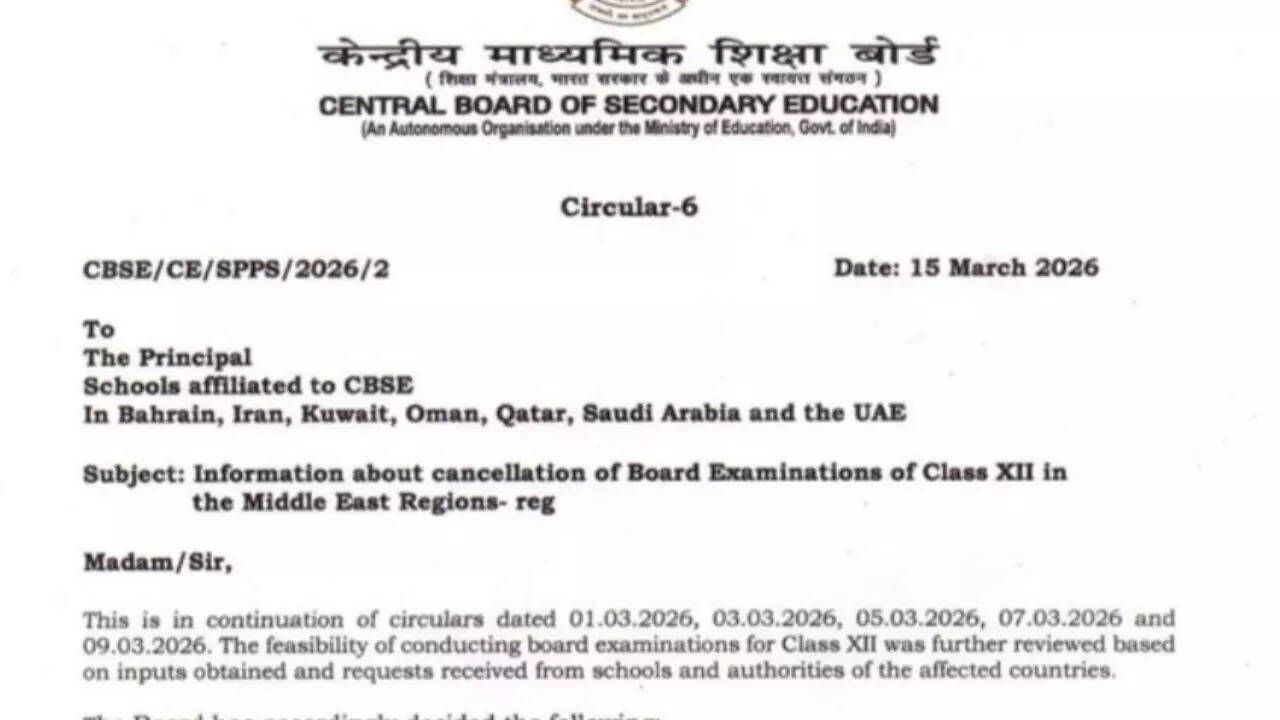
The cancellation of CBSE Class 12 board exams across seven Middle Eastern nations—Bahrain, Kuwait, Oman, Qatar, Saudi Arabia, the United Arab Emirates, and Iran—is not merely an administrative retreat; it is a forced recalibration of human capital logistics under the pressure of kinetic conflict. When regional volatility reaches a threshold where the physical safety of the examinee and the integrity of the examination materials cannot be guaranteed, the Central Board of Secondary Education (CBSE) triggers a systemic shutdown to prevent a catastrophic failure of the certification process.
The Strategic Triad of Examination Integrity
To understand why a cross-border educational body would halt operations, one must analyze the three interdependent pillars that support the board exam ecosystem. The collapse of any single pillar renders the entire session unviable.
- Logistical Sovereignty: The movement of physical question papers from encrypted storage to designated centers requires secure transit corridors. In a state of active or imminent conflict involving missile exchanges or airspace closures, the "Chain of Custody" is broken. If a paper cannot be delivered with 100% certainty of its sealing, the exam's validity across the remaining global network is compromised.
- Psychological Parity: Standardized testing relies on the assumption of a level playing field. A student in Dubai hearing air raid sirens or facing internet blackouts does not operate under the same cognitive load as a student in New Delhi. To proceed with the exam would create a statistical outlier that disrupts the normalization of results, effectively punishing students located in the conflict zone.
- Physical Infrastructure Resilience: Examination centers require uninterrupted power, digital connectivity for attendance syncing, and the presence of invigilators. Military escalations often lead to the requisitioning of public spaces or the imposition of curfews, stripping the board of its operational theater.
Quantifying the Ripple Effect on Higher Education Timelines
The suspension of Class 12 exams initiates a terminal delay in the global university admissions cycle. Because the Class 12 certificate is the primary "Proof of Competency" for Indian expatriates seeking entry into both domestic (JEE, NEET) and international (UCAS, Common App) systems, the cancellation creates a massive bottleneck.
The Admission Latency Variable
The time delta between the scheduled exam date and the rescheduled assessment determines the "Decay Rate" of student performance. Knowledge retention peaks at the point of the original exam date; every day of delay introduces cognitive fatigue and diminishing returns on preparation. For the 20,000+ students typically affected in these regions, a three-week delay can result in a 5-15% variance in standardized test scores, according to historical educational data regarding disrupted sessions.
The Transnational Credit Risk
Universities in the UK, USA, and Canada operate on strict enrollment windows. If the CBSE cannot provide a "Predicted Grade" or an "Equivalency Certificate" within the Q2 window, these students face the "Gap Year Default." This isn't just an academic delay; it is an economic loss for the families involved, involving forfeited deposits and the opportunity cost of one year of professional earnings.
The Conflict-Education Correlation
The specific geography of this cancellation—the GCC countries and Iran—highlights the fragility of the "Expat Education Model." This model relies on the stability of host nations to deliver a curriculum tethered to a home nation (India). When the host nation enters a state of high-alert due to regional tensions, the tether snaps.
The mechanism at play here is the Regional Risk Premium. For an educational board, the cost of conducting an exam in a volatile zone includes:
- Increased insurance premiums for staff and facilities.
- Contingency overheads (backup digital infrastructure).
- Reputational risk if a center is compromised.
When these costs exceed the administrative budget or the ethical risk threshold, "Force Majeure" is invoked.
Alternative Assessment Frameworks: The Crisis Protocol
In the absence of a physical exam, the CBSE must pivot to a "Statistical Proxy Model." This is not a guess; it is a mathematical derivation based on historical performance data.
- Internal Assessment Weighting: Using the student’s performance in Class 10, Class 11, and the Class 12 pre-board exams to project a final score.
- The Bayesian Inference Approach: Adjusting the internal scores based on the "School’s Historical Mean." If a school consistently produces students who score 90% in the boards despite scoring 80% in pre-boards, the algorithm adjusts the current batch upward to maintain consistency with previous years.
- Digital Proctored Alternatives: While theoretically possible, the scale of CBSE (millions of students) makes the "Digital Pivot" a logistical impossibility for a high-stakes summative assessment. The bandwidth requirements alone in conflict-strained regions create a digital divide that violates the board’s equity mandate.
Macro-Economic Implications for the Gulf Region
The Middle East is a critical revenue generator for the Indian education sector. The sudden halt of operations signals to the global community that the region’s "Stability Quotient" has dipped below the operational baseline. This has secondary effects on:
- Professional Migration: Parents may reconsider long-term stays in regions where their children’s educational trajectory can be severed by geopolitical events.
- Education Technology (EdTech) Acceleration: The failure of physical exams will likely catalyze the adoption of decentralized, blockchain-verified credentials and hybrid learning models that are less susceptible to physical blockades.
The Tactical Response for Stakeholders
The immediate requirement for affected families is the transition from "Exam Readiness" to "Documentation Readiness." The strategic move is to secure certified transcripts of all internal assessments immediately. In the event of a prolonged conflict, these internal documents become the primary currency for university negotiations.
Furthermore, students must pivot their focus to the competitive entrance exams (JEE, NEET, SAT) that may still be functional or offer alternative dates. The board's decision to cancel is a finality; waiting for a reversal is a sunk-cost fallacy. The priority shifts from mastering the CBSE syllabus to hedging against its absence by diversifying the portfolio of "Proof of Merit."
Institutions must now implement a "Dual-Track Grading System" where internal assessments are benchmarked against national standards in real-time throughout the year. Relying on a single, end-of-year summative event in a high-volatility region is no longer a viable risk management strategy. The future of educational continuity in the Middle East depends on the decentralization of the assessment authority, allowing local centers the autonomy to conduct exams when "Windows of Stability" open, rather than waiting for a synchronized global signal that may never come.
Strategically, the CBSE must move toward a "Modular Assessment Model" where credits are earned in smaller, frequent intervals. This reduces the "Blast Radius" of a single cancellation. If a student has already secured 70% of their credits through mid-term modules, a final exam cancellation becomes a manageable variance rather than a total system failure.