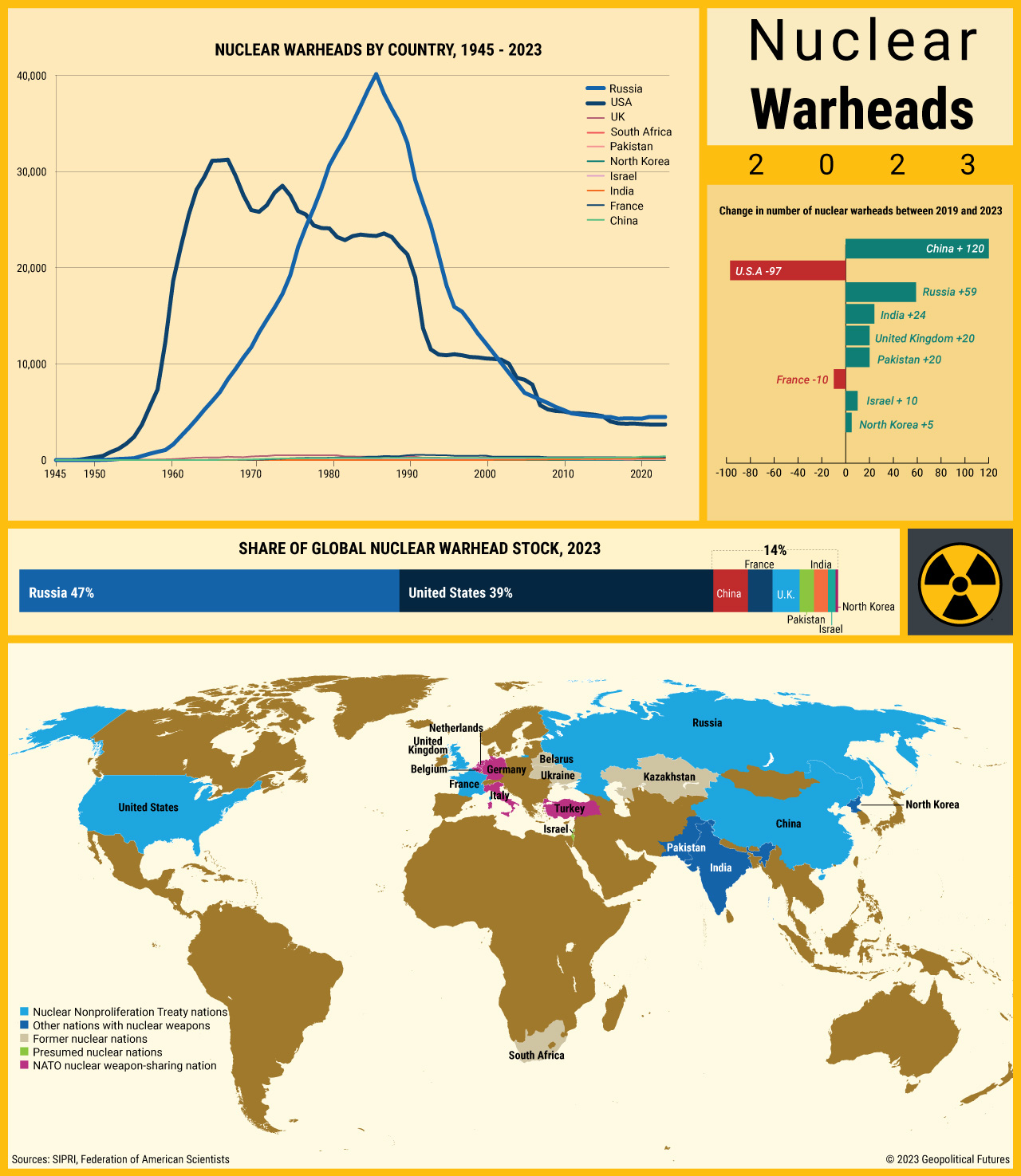
The shift from conventional to nuclear deterrence in the Middle East represents a fundamental breakdown of regional security equilibrium. When Israeli Envoy Reuven Azar draws a parallel between the Iranian nuclear program and the North Korean precedent, he is not making a rhetorical flourish; he is identifying a specific failure in the global non-proliferation architecture. The emergence of a "North Korea-like" situation in the Middle East is characterized by the transition from a state of manageable friction to one of permanent, high-stakes nuclear blackmail. This transformation fundamentally alters the cost-benefit analysis for every regional actor, moving the theater of operations from tactical border skirmishes to an existential stalemate where the margin for error is zero.
The Triad of Proliferation Risk
The risk of an Iranian nuclear breakout is best understood through three distinct operational pillars: the collapse of conventional deterrence, the "cascade effect" of regional proliferation, and the decoupling of economic incentives from state behavior.
1. The Erosion of Conventional Deterrence
In a pre-nuclear environment, deterrence is maintained through a balance of conventional military capabilities, intelligence superiority, and economic leverage. Once a regional adversary achieves nuclear status, these levers lose their efficacy. The North Korean model demonstrates that a nuclear umbrella allows a state to engage in high-level conventional aggression or proxy warfare with relative impunity, knowing that any decisive counter-escalation by its rivals risks triggering a nuclear threshold.
This creates what strategic analysts call the stability-instability paradox: stability at the strategic (nuclear) level encourages instability at the tactical (conventional/proxy) level. For Israel and its Gulf partners, this means a future where Iranian-backed entities can operate with increased audacity, shielded by the ultimate deterrent in Tehran.
2. The Horizontal Proliferation Cascade
Nuclearization is rarely an isolated event. It is a contagion. If Iran achieves a verifiable nuclear capability, the security architecture of the Middle East shifts from a unipolar or bipolar struggle into a chaotic multipolar race. Traditional regional powers—specifically Saudi Arabia, Egypt, and Turkey—would face immense domestic and strategic pressure to acquire their own deterrents to avoid permanent geopolitical subordination.
Unlike the Cold War, which relied on a relatively stable bilateral communication framework between Washington and Moscow, a multipolar nuclear Middle East would involve at least four or five actors with overlapping territorial disputes, religious frictions, and varying degrees of command-and-control maturity. The statistical probability of a miscalculation or an accidental launch increases exponentially with every new nuclear actor.
3. The Decoupling of Economic Sanctions
The Envoy's reference to North Korea highlights the limitations of the "Economic Pressure for Compliance" model. North Korea has demonstrated that a regime prioritized on survival and strategic defiance can withstand decades of near-total isolation if it possesses a nuclear deterrent that makes regime change too costly for external powers.
This creates a bottleneck for Western diplomacy. If Iran successfully replicates this model, the "carrots" of global trade integration and the "sticks" of financial sanctions become obsolete. The state moves into a post-economic strategic phase where its survival is guaranteed by its arsenal rather than its GDP.
The Mechanics of the North Korean Precedent
To understand why the North Korean comparison is surgically precise, one must examine the specific technical and diplomatic milestones that Pyongyang bypassed.
- The NPT Exit Strategy: Both regimes utilized the framework of the Non-Proliferation Treaty (NPT) to acquire civilian nuclear technology before pivoting toward weaponization. This "breakout" capability turns international law into a shield for illicit development.
- Strategic Depth via Ballistic Technology: The North Korean model is not just about the warhead; it is about the delivery system. The integration of Long-Range Ballistic Missiles (LRBMs) and Intercontinental Ballistic Missiles (ICBMs) ensures that the threat is not merely regional but global, forcing distant superpowers to compromise on regional security to protect their own soil.
- The Black Market Tech-Exchange: A nuclear Iran would likely engage in the same "proliferation for profit" or "technology swapping" that has characterized the North Korea-Iran-Pakistan axis for decades. This creates a shadow network of nuclear expertise that is nearly impossible for intelligence agencies to fully map or neutralize.
The Cost Function of Inaction
The failure to prevent a nuclear Iran imposes a set of "locked-in" costs on the international community. These are not speculative; they are the direct consequences of a shifted power dynamic.
The Security Premium on Energy Markets
The Strait of Hormuz remains the world’s most critical energy chokepoint. In a conventional conflict, the disruption of oil flow is a manageable risk through naval escort and strategic reserves. In a nuclear-backed conflict, the risk premium on every barrel of oil would skyrocket. The mere threat of a nuclear-armed state closing the strait would induce global market volatility that no amount of increased production in the Permian Basin or the North Sea could offset.
The Obsolescence of Regional Accords
Frameworks like the Abraham Accords are built on the premise of a shared security interest against a common threat. However, if that threat becomes nuclear-capable, the incentive structure for smaller regional players changes. Some may seek "Finlandization"—a state of neutral submission to the dominant regional power—to avoid being the frontline of a nuclear flashpoint. This would effectively dismantle the burgeoning coalition between Israel and the Sunni Arab states, returning the region to a state of fractured vulnerability.
Logical Constraints of the "Diplomacy-Only" Path
The current diplomatic impasse stems from a fundamental misalignment of timelines. Western diplomatic cycles operate on 2-to-4-year election windows, seeking short-term de-escalation. The Iranian strategic timeline, much like the North Korean one, is generational.
The primary limitation of current negotiations is the "Sunk Cost of Enrichment." Having invested billions in underground facilities like Fordow and Natanz, and having endured decades of sanctions, the Iranian leadership views the acquisition of nuclear "threshold" status as a non-negotiable return on investment. Consequently, any agreement that does not address the permanent dismantling of enrichment infrastructure—not just a temporary freeze—is a tactical pause rather than a strategic solution.
The Strategic Play: Integrated Containment
To prevent the North Koreanization of the Middle East, the strategy must shift from reactive diplomacy to a posture of Integrated Containment. This is not a call for immediate kinetic action, but a recalibration of the regional power balance.
- Redefining the Red Line: The international community must move away from "weaponization" as the red line. By the time a warhead is mated to a missile, the deterrent is already active. The new red line must be "Threshold Capability"—the technical point at which a state can produce enough weapons-grade uranium for a device within a 2-week window.
- Extended Deterrence Guarantees: The United States and its allies must provide "hard" security guarantees to regional partners, mirroring the NATO Article 5 framework. This reduces the incentive for states like Saudi Arabia to seek their own independent nuclear programs, slowing the horizontal proliferation cascade.
- Active Interdiction of Proliferation Networks: A permanent, multinational maritime and intelligence task force must be dedicated solely to the North Korea-Iran-Russia technology exchange. Proliferation is a supply chain problem; by disrupting the flow of specialized carbon fiber, high-speed centrifuges, and telemetry data, the "time-to-threshold" can be artificially extended.
The window for preventing a nuclear-armed Middle East is narrowing. Unlike the Cold War, where the primary objective was the management of existing arsenals, the current challenge is the prevention of a systemic collapse of the non-proliferation regime. If the North Korean model is allowed to take root in Tehran, the Middle East will move from a theater of manageable conflict to a permanent state of existential brinkmanship, where the global economy and regional survival are held hostage by the physics of the atom.