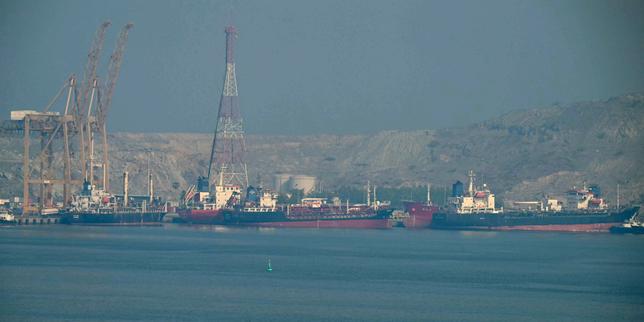
The Strait of Hormuz functions as a global economic carotid artery where approximately 20% of the world’s liquid petroleum gas and oil consumption passes through a transit point only 21 miles wide at its narrowest. For the Gulf Cooperation Council (GCC) states, specifically Saudi Arabia and the United Arab Emirates (UAE), this geographical constraint creates a binary risk profile: total export fluidity or total economic paralysis. The strategic imperative to bypass Hormuz is not merely a logistical upgrade; it is a fundamental reconfiguration of the Arabian Peninsula's spatial economy to decouple national sovereignty from Iranian proximity.
The Bottleneck Variable and the Premium of Transit Risk
The Strait of Hormuz is defined by a "chokepoint tax" that manifests through fluctuating maritime insurance premiums, increased freight costs during periods of regional friction, and the psychological volatility of global energy markets. To quantify the necessity of bypass infrastructure, one must evaluate the Probability of Closure (PoC) against the Cost of Redundancy (CoR).
Current GCC strategy operates on the logic that the CoR—billions invested in pipelines and canals—is a fixed insurance premium that protects against the catastrophic tail risk of a Hormuz blockade. The logic follows a three-pillar framework of strategic autonomy:
- Geographic Redundancy: Establishing export terminals on the Red Sea and the Gulf of Oman.
- Volume Scaling: Ensuring bypass capacity can handle at least 60% of total national export volume.
- Terminal Versatility: Transforming export hubs into integrated industrial zones to capture more value per barrel.
Structural Bypassing through Pipeline Architecture
The primary mechanism for de-risking the Strait is the expansion of trans-peninsular pipeline networks. These are not simple conduits but high-pressure engineering feats designed to overcome the friction of distance and elevation.
The East-West Pipeline (Petroline) Evolution
Saudi Arabia’s Petroline connects the Abqaiq processing facilities in the Eastern Province to Yanbu on the Red Sea. Originally designed with a capacity of approximately 5 million barrels per day (bpd), recent upgrades aimed at expanding this to 7 million bpd reflect a direct response to regional instability. The engineering challenge here lies in the Compression Gradient. Transporting crude across 1,200 kilometers of desert requires a massive energy input to maintain flow rates, effectively increasing the "cost per barrel" of bypassed oil compared to the gravity-fed or short-distance tanker loading in the Persian Gulf.
The ADCOP Infrastructure
The United Arab Emirates operates the Abu Dhabi Crude Oil Pipeline (ADCOP), which funnels oil from the Habshan fields directly to Fujairah on the Gulf of Oman. Fujairah’s strategic value is its location outside the Strait’s immediate naval reach. By maintaining a capacity of 1.5 million bpd, the UAE has effectively immunized a significant portion of its rentier income from Iranian maritime threats. The limitation of ADCOP is its fixed throughput; unlike a tanker fleet, it cannot scale rapidly in response to a sudden surge in global demand without further capital-intensive pumping stations.
The Canal Pharaonique and the Logic of Mega-Engineering
The most ambitious, albeit speculative, element of this de-risking strategy involves the Salwa Canal or similar proposals to sever the Qatari peninsula or create a navigable waterway across the Saudi interior. While the media often focuses on the "pharaonic" scale, a rigorous analysis identifies three terminal constraints:
- Bathymetry and Dredging Costs: The Persian Gulf is shallow. Creating a deep-water canal capable of hosting Very Large Crude Carriers (VLCCs) requires the removal of billions of cubic meters of sediment. The maintenance Capex for such a project would likely exceed the long-term savings in transit fees.
- Thermal Evaporation and Salinity: Large-scale open-water canals in the Arabian desert face extreme evaporation rates. This alters local salinity levels and can impact the structural integrity of the canal walls through accelerated salt crystallization.
- Ecological Displacement: The disruption of coastal aquifers and marine habitats creates a secondary layer of risk—environmental litigation and international pressure—that GCC states are increasingly sensitive to as they court Western ESG-compliant investment.
If a canal project moves from rhetoric to reality, it will likely serve as a multi-purpose corridor: a defensive trench, a logistical shortcut, and a site for new desalination plants, rather than a pure replacement for the Strait of Hormuz.
The Economic Friction of Red Sea Reorientation
Shifting the center of gravity from the Persian Gulf to the Red Sea introduces a new set of variables. While bypassing Hormuz mitigates Iranian risk, it increases exposure to the Bab el-Mandeb chokepoint and the Suez Canal.
The Red Sea is a crowded maritime corridor. For Saudi Arabia, moving its export terminal to Yanbu solves the "Hormuz Problem" but creates a "Suez Dependency." If a VLCC departs from Yanbu for European markets, it gains a competitive advantage. However, if that same tanker is destined for Asian markets (the GCC's primary customers), it must travel south through the Bab el-Mandeb—another volatile chokepoint—or circumnavigate Africa.
The Logistics of Reverse Transit
The gravity of oil demand has shifted East. Therefore, any infrastructure that moves oil West (to the Red Sea) for Asian buyers incurs a Logistical Penalty. The mathematics of the bypass must account for the extra 2,000 to 3,000 nautical miles required to round the peninsula. This suggests that the pipelines are not meant for 24/7 operation at peak capacity, but rather as Tactical Surge Capacity to be used when the Strait of Hormuz risk premium exceeds the additional shipping costs of the Red Sea route.
The Port of Fujairah as a Global Arbitrage Hub
Fujairah is the physical manifestation of the GCC’s de-risking success. It has evolved from a bunkering station into one of the world’s largest crude storage hubs. The facility allows for "Blending and Arbitrage." By storing various grades of crude outside the Strait, the UAE can wait for price fluctuations or supply shocks to offload inventory without being subject to the immediate naval tensions inside the Gulf.
The storage capacity in Fujairah acts as a Macro-Economic Shock Absorber. In a scenario where Hormuz is closed for 30 days, the volume held in Fujairah, combined with the flow from ADCOP, allows the UAE to fulfill its long-term contracts with Japanese and South Korean refineries, preserving its reputation as a reliable supplier—a currency as valuable as the oil itself.
Geopolitical Counter-Moves and The Security Paradox
Investment in bypass infrastructure triggers a predictable response from regional rivals. As the GCC reduces its reliance on Hormuz, the "deterrence value" of the Strait for Iran shifts. If Saudi Arabia and the UAE can export 80% of their oil via pipelines, an Iranian blockade of the Strait becomes less of a global economic nuclear option and more of a targeted strike against smaller players or LNG exporters like Qatar who remain tethered to the Gulf.
This creates a Security Paradox: by making the Strait less essential, the GCC may inadvertently lower the threshold for conflict within it. If the global consequences of a blockade are diminished by bypass pipelines, the "cost" of a skirmish becomes more palatable for belligerents, potentially leading to more frequent, lower-intensity maritime disruptions.
Hydrogen and the Future-Proofing of Transit
The transition toward a hydrogen economy offers a second-mover advantage for bypass infrastructure. Pipelines currently being built or upgraded for crude oil and natural gas are being engineered with materials—such as specialized polymers and high-grade steel—capable of being retrofitted for ammonia or hydrogen transport.
The strategy is to build "Linear Energy Corridors." A pipeline from the solar-rich interior of Saudi Arabia to the Red Sea coast can transport green hydrogen in 2040 just as effectively as it transports light sweet crude today. This ensures that the billions spent on bypassing Hormuz are not stranded assets in a decarbonizing world, but the foundational architecture for the next century of energy dominance.
Strategic Realignment Recommendations
The diversification of export routes is a mandatory evolution of the GCC’s "Vision" programs. To maximize the utility of these multi-billion dollar bypass projects, the following tactical moves are required:
- Hardening of Red Sea Infrastructure: Increased naval presence and the establishment of air defense umbrellas (MIM-104 Patriot or domestic equivalents) around Yanbu and the Bab el-Mandeb to prevent the relocation of the chokepoint risk.
- Bilateral Transit Agreements: Formalizing "Flow Guarantees" with transit-adjacent nations to ensure that pipelines crossing national borders (or entering contested waters) are protected by international maritime law and joint security pacts.
- Digitization of Flow: Implementation of IoT and satellite-based leak detection to minimize the operational downtime of trans-peninsular pipelines, ensuring that the "Insurance Policy" is always ready for immediate activation.
The Gulf states are successfully transitioning from being "Geography-Dependent" to "Infrastructure-Dominant." The Strait of Hormuz will remain a critical artery, but through the aggressive deployment of capital and engineering, it is no longer a terminal vulnerability. The shift toward Red Sea and Gulf of Oman terminals represents the most significant reordering of global energy logistics since the closing of the Suez Canal in 1967.