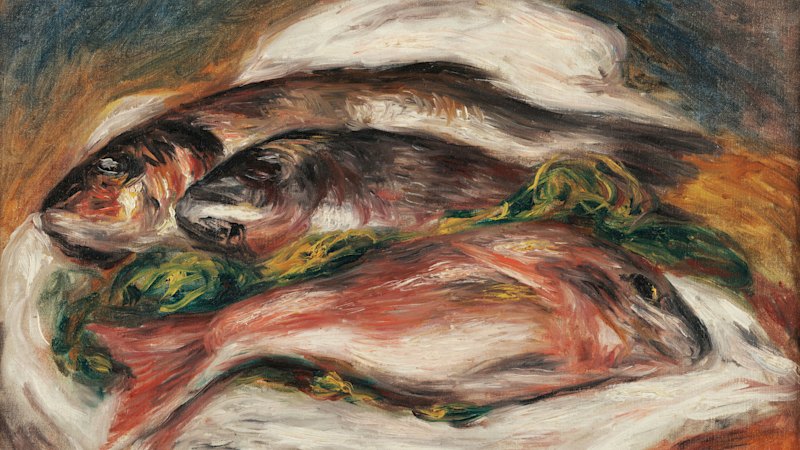
The headlines are predictable. "Tragedy at the Museum." "Masterpieces Lost to the Shadows." "Renoir, Cezanne, and Matisse Vanish in Bold Midnight Raid."
The media loves a heist. It paints a picture of sophisticated "Thomas Crown" types dodging laser grids to whisk away cultural treasures for a shadowy billionaire’s basement. It’s a romantic, cinematic lie. For a different look, read: this related article.
Here is the cold, hard reality from someone who has spent two decades tracking high-value assets through the grey market: These paintings are now the most expensive pieces of worthless canvas on the planet. When a Renoir or a Matisse is ripped from a museum wall, it doesn’t enter a secret, high-stakes auction. It enters a coffin. The thieves didn't "liberate" art; they effectively deleted it from the economy. The moment the police report is filed, the asset’s liquidity hits absolute zero.
The Fallacy of the Private Collector
The biggest misconception fueled by Hollywood is the "Dr. No" scenario—the idea that a reclusive villain is sitting in a bunker sipping Petrus while staring at a stolen Cezanne. Similar coverage on the subject has been published by Reuters.
It almost never happens.
Real art collectors are driven by two things: ego and ROI. - Ego requires the ability to show the work off. You cannot brag about a painting that brings a SWAT team to your door.
- ROI requires the ability to sell. A stolen Matisse is a "hot" asset that can never be authenticated, insured, or legally transferred.
I have seen "investors" try to move stolen goods in the backrooms of Geneva and Singapore. The second they realize the provenance is tainted, they run. Why? Because the art world is a small, gossipy village. The Art Loss Register and Interpol databases are updated faster than a TikTok feed.
The "sophisticated thief" is a myth. Most museum heists are committed by mid-level smash-and-grab crews who think they can flip a $50 million painting for $5 million on the street. They quickly realize they can’t even flip it for $5,000 because no fence is stupid enough to touch a world-famous image.
The Art as Collateral Scam
If you can’t sell the painting, what do you do with it?
In the underworld, stolen masterpieces aren't treated as art. They are treated as junk bonds. Criminal syndicates use stolen Renoirs as "collateral" for drug shipments or arms deals. They don't want the painting. They want the idea of the painting’s value to sit in a warehouse while a shipment of cocaine moves across a border.
- The Hand-off: Group A gives Group B a stolen Cezanne to prove they have "assets."
- The Devaluation: Because the painting is unmarketable, its "underworld value" is usually less than 5% of its fair market value.
- The Deterioration: These works require climate-controlled environments. Thieves shove them into attics, basements, or—in one famous case—the trunk of a rusted sedan.
By the time these paintings are recovered (and they usually are, eventually), they are often ruined. The "theft" is actually a slow-motion act of vandalism. We aren't losing art to collectors; we’re losing it to humidity and ignorance.
Stop Blaming the Security Guards
Every time a museum gets hit, the public outcry focuses on the "lax security."
"How could they let them walk out the front door?"
"Where were the motion sensors?"
This line of questioning misses the point. Museums are fundamentally designed to be accessible, not secure. If you wanted 100% security, you’d put the Matisse in a lead-lined vault at the bottom of a salt mine. But then, nobody sees it.
The trade-off for public culture is vulnerability.
The real failure isn't the guy making $15 an hour watching a monitor. The failure is the valuation system itself. We assign these astronomical prices—$100 million for a canvas—which creates a "bounty" that attracts the desperate and the dumb.
If we stopped fetishizing the price tag and started focusing on the work’s status as a non-transferable public utility, the incentive for theft would evaporate. You can’t "steal" the air. You shouldn't be able to "steal" a Renoir and expect it to remain a financial asset.
The Brutal Truth About Recovery
When a museum announces a painting has been "found," they usually omit the gritty details.
Recovery rarely happens because of brilliant detective work. It happens because the thieves realize they are holding a radioactive brick. They can't sell it. They can't trade it. The police are closing in.
So, they leave it in a bus station locker or tip off an anonymous lawyer.
The "heroic recovery" is actually a clumsy surrender. ### The Real Cost of Art Crime
- Insurance Premiums: They skyrocket for every museum in the region, leading to fewer exhibits and higher ticket prices.
- Conservation Costs: Restoring a painting that was rolled up or kept in a damp garage can cost hundreds of thousands.
- Cultural Trauma: The loss of the "aura" of the original work.
Why You Should Stop Worrying About the Thieves
The thieves aren't the winners here. They are the biggest losers in the room. They took a massive risk for a product they can't move. They are now hunted by every major law enforcement agency on Earth for a prize that is currently worth less than a used Honda Civic.
We need to stop treating art theft as a high-stakes thriller and start treating it as what it is: a pathetic, failed business model.
The next time you see a headline about a stolen Matisse, don't mourn the art. It’s still there, somewhere, rotting in a box because someone was too stupid to understand how markets work.
The tragedy isn't that the art is gone. The tragedy is that it was stolen by people who don't even know what it is.
If you want to protect art, stop looking at the security cameras. Start looking at the black market’s inability to distinguish between a masterpiece and a liability. The greatest deterrent to art theft isn't a laser grid; it's the fact that a stolen Renoir is the most useless object a criminal can own.
Art is only valuable when it’s seen. Once it’s stolen, it isn't art anymore. It’s just evidence.
Stop romanticizing the heist. Start mocking the stupidity of the thief.
Burn the "Thomas Crown" script and realize that the guys who took that Cezanne are currently wondering how they’re going to pay rent, because you can’t eat a masterpiece, and you certainly can’t sell one.