The screen at Gate B12 didn't just turn red; it died. One moment, it was a flickering beacon of hope displaying a 4:15 PM departure to Charlotte; the next, it was a blank, obsidian void reflecting the exhausted faces of two hundred people who suddenly had nowhere to go.
Outside the floor-to-ceiling glass of Logan International, the world had vanished. There was no runway, no horizon, and certainly no sky. There was only the "Whiteout"—a frantic, horizontal assault of ice crystals screaming across the tarmac at fifty miles per hour. This wasn't just a storm. It was a physical wall built between the East Coast and the rest of the moving world.
By the time the sun set behind that opaque curtain of gray, the numbers began to trickle in like a cold sweat. Five thousand. That is the official tally. Over 5,000 flights were scrubbed across the Eastern Seaboard as the heavy snow settled in.
Numbers are comfortable. They are easy to graph. They fit neatly into a news ticker or a corporate briefing. but a number like 5,000 doesn't tell you about Sarah.
The Anatomy of a Standstill
Sarah sat on her carry-on bag near a Hudson News, clutching a phone that was down to 4% battery. She wasn't a statistic. She was a daughter trying to reach a bedside in Virginia before a heart stopped beating. To the airline’s automated system, she was merely "Record Locator: XJ792L—Status: Cancelled."
When we talk about 5,000 cancelled flights, we aren't talking about planes. Planes are aluminum tubes parked on de-icing pads, shivering under layers of chemical glycol. We are talking about the sudden, violent suspension of half a million human trajectories.
The East Coast is the nervous system of American transit. When the snow hits the "Big Three"—LGA, JFK, and EWR—the tremors move outward until a traveler in San Diego finds themselves stranded because a crew in Boston couldn't get out of their driveway. It is a fragile, interconnected web that we pretend is invincible until the clouds decide otherwise.
Consider the physics of the failure. It isn't just the snow on the wings. It’s the logistics of the human soul. Pilots time out. Flight attendants are stuck in hotels three towns over because the shuttle buses can't find the road. The catering trucks can't traction their way to the fuselage.
The Illusion of Control
We live in an age where we believe we have conquered geography. We buy a ticket on an app, slide a barcode under a laser, and expect to be deposited in a different climate three hours later. We have forgotten what it means to be at the mercy of the elements.
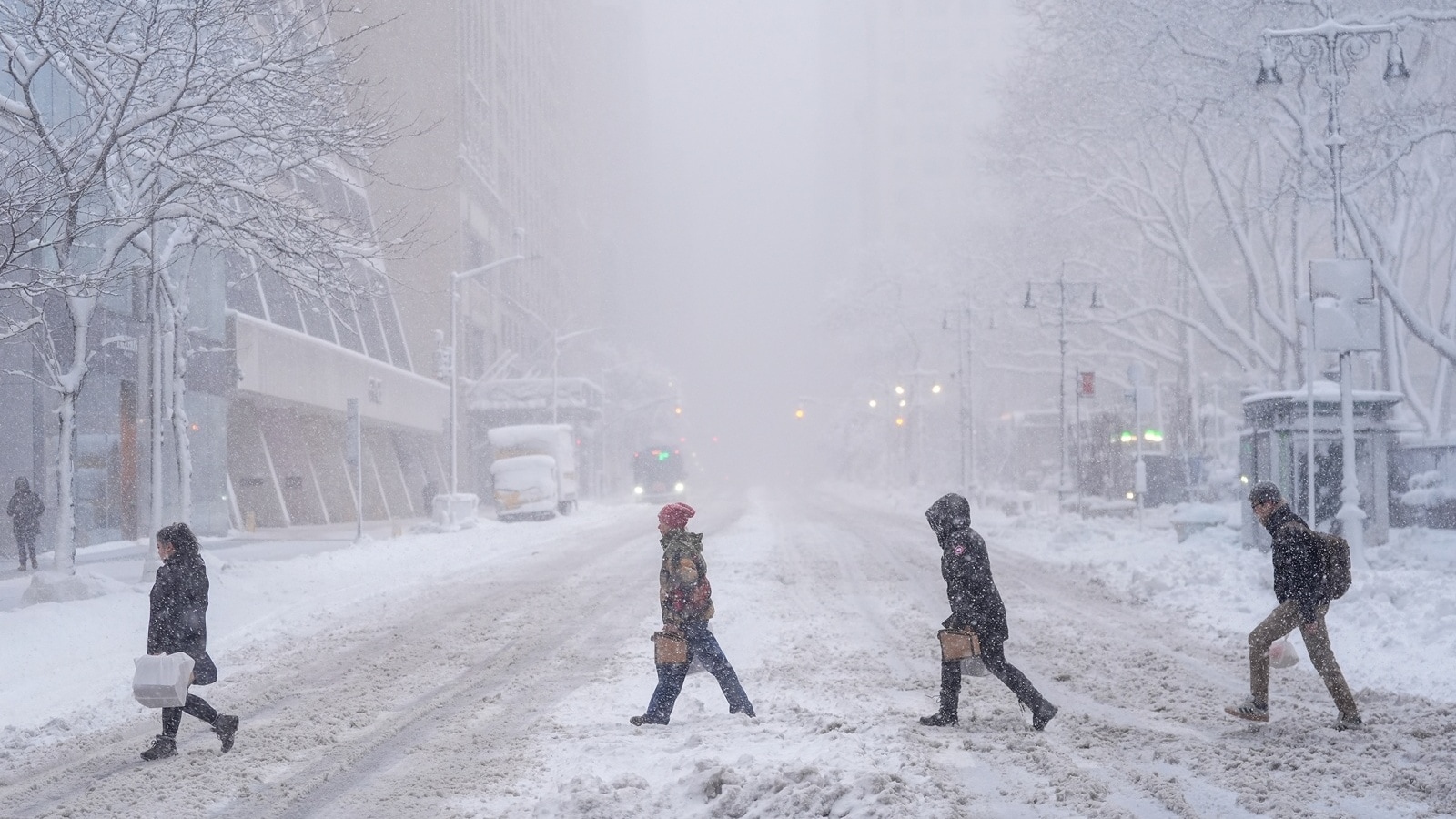
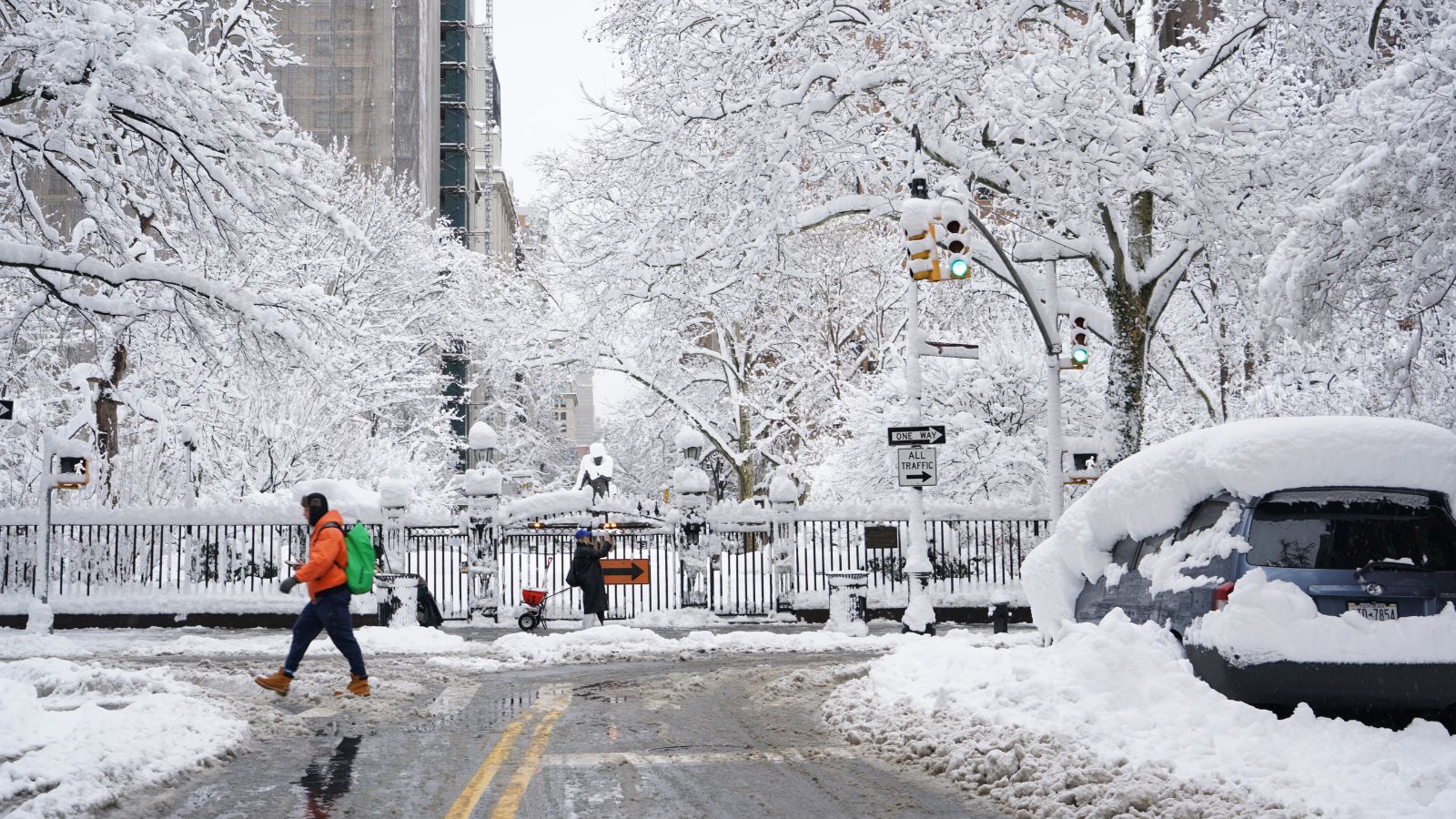
The heavy snow hitting the US East Coast this week served as a brutal reminder of our hubris. In New York, the accumulation turned the city’s frantic energy into a muffled, eerie silence. In Philadelphia, the slush became a concrete-like slurry that snapped power lines and silenced the rails.
The ripple effect is where the true weight lies. For every cancelled flight, there is a sequence of failures.
- The business deal that required a handshake, now relegated to a glitchy video call that loses the nuance of the room.
- The family reunion where the "empty chair" isn't a metaphor, but a literal piece of furniture in a dining room three states away.
- The sheer, soul-crushing exhaustion of the "terminal sleep"—that specific brand of misery found only when resting your head on a backpack while a janitor buffs the floor ten feet away at 3:00 AM.
The Economics of the Void
The financial experts will tell you that a day like this costs the industry hundreds of millions. They calculate fuel savings against lost revenue and rebooking overhead. They look at the "Bottom Line."
But there is a secondary economy at play: the economy of frustration.
When 5,000 flights vanish, the demand for the remaining seats on the following day becomes a predatory scramble. Prices for a Last-Minute-Emergency-Get-Me-Home seat can skyrocket to four times the original fare. Hotels within a ten-mile radius of the airport suddenly find their "Standard King" rooms are worth more than a night in a Parisian suite.
The traveler pays twice. Once in money, and once in time—the only currency that never sees an exchange rate in your favor.
The Human Response to the Hush
Walk through an airport during a mass cancellation and you will see a strange evolution of human behavior.
Phase one is the Rage. This is characterized by the pounding of fists on plexiglass and the demanding of "answers" from a gate agent who has as much control over the clouds as they do over the tides. It is a desperate attempt to exert will over the weather.
Phase two is the Negotiation. This is the frantic scrolling. The calling of "Gold Member" hotlines. The attempt to find a bus, a train, a rental car—anything that moves. But the rental car lots are already empty, the keys handed over hours ago to the lucky few who moved faster than the logic of the storm.
Phase three is the Resignation. This is the most profound. It is the moment when the thousand-yard stare sets in. People begin to share chargers. They share stories. They realize that they are all, for one brief and terrible moment, exactly the same. They are people who wanted to be somewhere else, held captive by a frozen sky.
Beyond the Ticker Tape
The news reports will move on by tomorrow. The "Heavy Snow" headline will be replaced by "The Great Dig Out," and then by something else entirely. The 5,000 cancelled flights will become a footnote in a quarterly earnings report.
But for the people on the ground, the story doesn't end when the runways are plowed. The backlog lasts for days. The emotional exhaustion lingers for weeks.
We look at the radar and see colors—dark blues, deep purples, the dreaded "pink" of freezing rain. We should see the invisible threads of five thousand lives being yanked back. We should see the fragility of our "connected" world.
As the de-icing trucks finally begin their slow, rhythmic dance under the floodlights of a clearing midnight, the first plane will eventually roar into the thin, cold air. It will carry the lucky ones. But behind them, in the terminals, on the couches of strangers, and in the quiet lobbies of airport Marriotts, the ghost of the 5,000 remains.
It is a reminder that despite our satellites and our glass-bottomed towers, we are still just small creatures waiting for the wind to stop blowing so we can finally go home.
Somewhere in the terminal, Sarah’s phone finally died. She tucked it into her pocket, leaned her head against the cold glass of the window, and watched the snow pile up against the dark, unmoving wheels of the plane that was supposed to save her.
The sky doesn't care about your schedule.
And sometimes, that is the only truth that matters.