Sarah stands in the center of aisle four, clutching a box of cereal like it’s a legal contract she’s trying to litigate. She is forty-two, tired, and deeply suspicious. The box is vibrant, shouting about heart health and "ancient grains" in a font that suggests rustic honesty. She flips it over. The list of ingredients is forty lines long. It contains words that look like they belong in a petrochemical engineering manual rather than a breakfast bowl.
She puts the box back. She picks up a different one. This one claims to be "all-natural." Meanwhile, you can read similar developments here: The Estrogen Patch Shortage is a Manufactured Crisis of Medical Timidity.
What does that even mean? Arsenic is natural. Lead is natural. Sarah is experiencing a modern, quiet crisis that millions face every Tuesday at 6:00 PM: she has been told to "eat real food," but she has realized that she no longer speaks the language of her own dinner plate.
The directive to eat "real food" has become the gold standard of health advice. It sounds simple. It sounds intuitive. It is, in reality, a riddle wrapped in a marketing budget. We have reached a point in human history where the most basic act of survival—nourishing our bodies—requires a degree in linguistics and a deep skepticism of everything we see. To see the bigger picture, check out the excellent analysis by World Health Organization.
The Ghost in the Machine
To understand why Sarah is confused, we have to look at what happened to the tomato.
A hundred years ago, a tomato was a tomato. It grew in dirt, it tasted like sunlight and acid, and it rotted in four days. Today, a tomato is often a logistical miracle. It is bred for shelf-life, for transportability, and for a specific shade of Pantone red that triggers a dopamine response in the produce section. It is technically food. But as the definition of food has expanded to include "edible food-like substances," the word "real" has lost its tether to the earth.
We are currently living through a massive, unconsented experiment in chemistry. The "Letters to the Editor" in major newspapers are filled with people complaining that they can’t afford to eat well, or that they don't have time. But beneath those valid complaints lies a deeper, more terrifying truth: we have forgotten what the baseline is. When every label claims to be the "real" version of something, nothing is real.
Consider the "natural flavor." On a label, it sounds like someone squeezed a lemon or crushed a vanilla bean. In reality, a natural flavor is a laboratory creation. It is a chemical compound derived from a biological source, processed through solvents and heat until it captures the idea of a taste. It’s the ghost of a strawberry, haunted by a centrifuge.
When Sarah reads "natural flavors," she thinks of a garden. The manufacturer thinks of a vat. This isn't just a misunderstanding; it’s a breakdown of the social contract between those who produce food and those who consume it.
The Myth of the Educated Consumer
We love to blame the individual. We tell Sarah that she just needs to be more "literate." We tell her to read the labels.
This is a trap.
Labeling laws are not designed to inform; they are designed to comply. They are a game of hide-and-seek played with bold text and fine print. Look at sugar. A single granola bar might contain four different types of sugar, but because they are listed as "organic cane syrup," "barley malt," "brown rice syrup," and "fructose," they appear lower down on the ingredient list. If they were grouped together as "Sugar," that word would be the very first thing Sarah saw.
The industry counts on her being tired. They count on her having two kids tugging at her coat and a mental to-do list a mile long. They know that in the three seconds she spends looking at that box, "No High Fructose Corn Syrup" will register as a win, even if the alternative syrup inside is functionally identical to her liver.
We are asking people to be detectives in a crime scene where the evidence has been scrubbed by a team of lawyers. It isn't a lack of education. It’s an abundance of deception.
The Poverty of Time and the Wealth of Chemicals
Let’s talk about the hypothetical, yet very real, Mark. Mark works two jobs. He has twenty minutes to get dinner on the table before he has to collapse into sleep. For Mark, "real food" feels like a luxury for people with vegetable gardens and ceramic Dutch ovens.
He buys a pre-packaged pasta meal. It costs four dollars. It takes six minutes.
The invisible stakes for Mark are not just his cholesterol levels. It’s his relationship with the physical world. When Mark eats that meal, he isn't participating in the cycle of seasons or the geography of his region. He is consuming a product that has been engineered to hit "bliss points"—the precise ratio of salt, sugar, and fat that overrides the brain’s "I’m full" signal.
The food isn't just feeding him; it’s hacking him.
This is where the argument that "real food is a choice" falls apart. For many, the choice has been engineered out of existence. The supermarket is a maze designed to keep you away from the perimeter, where the actual plants and animals are, and push you into the center aisles where the profit margins—and the preservatives—are highest.
The "real food" movement often fails because it speaks in the language of the elite. It talks about sourdough starters and farm-to-table cooperatives. But for the person in a food desert, or the person working sixty hours a week, "real" needs to be accessible. It needs to be recognizable.
The Language of the Kitchen
So, how do we fix the translation error?
It starts with a brutal simplification. We need to stop looking at what the front of the box says and start looking at what the food does.
Real food rots.
Real food has a history.
Real food doesn't need a health claim, because everyone knows what a head of broccoli is for.
If a product has to tell you it’s healthy, it’s probably lying. A bag of spinach doesn't have a "heart-healthy" sticker on it. An egg doesn't brag about being "low-carb." These things simply are what they are. The moment we start needing labels to tell us that a food is "good," we have entered the territory of the processed.
There is a visceral, emotional core to this that we rarely discuss. Eating is an act of trust. Every time we swallow something, we are trusting that the world is providing us with what we need to sustain our cells. When that trust is betrayed by confusing nomenclature and chemical fillers, it creates a subtle, persistent anxiety. We feel it in the grocery store. We feel it when we look at our reflection.
We aren't just hungry for calories. We are hungry for honesty.
The Reclamation
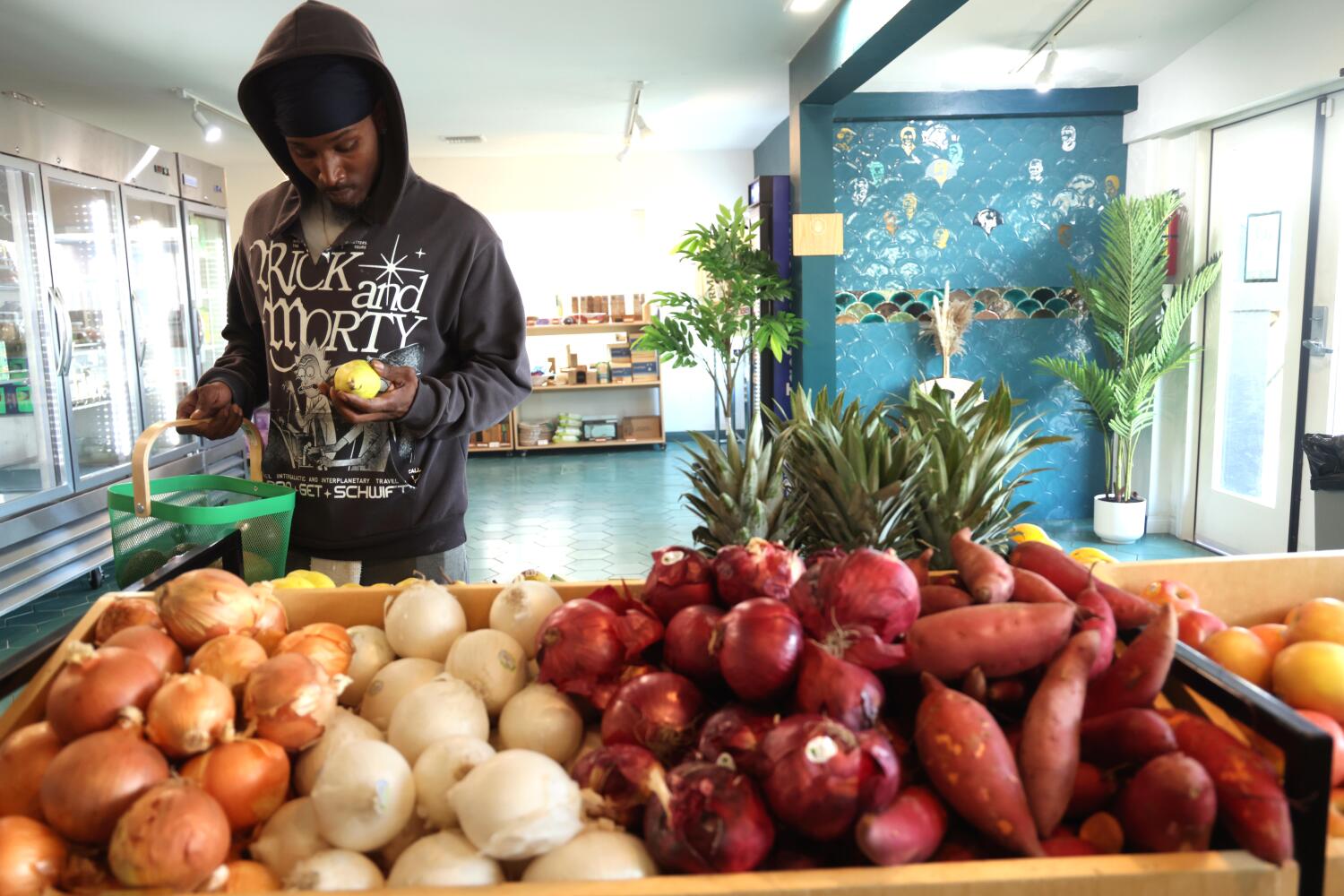
Sarah eventually walks away from the cereal aisle. She goes to the produce section. She buys a bag of oats, some apples, and a carton of eggs. It isn't flashy. There are no "ancient grains" slogans on the paper bag of oats.
But as she stands in her kitchen the next morning, stirring the oats on the stove, something changes. The smell isn't "synthetic vanilla flavor #4." It’s just grain and water and heat. She cuts an apple. She sees the juice bead up on the surface of the slice.
In this moment, the translation error is corrected.
The path back to "real food" isn't paved with better regulations or more complex labels. It is paved with the refusal to accept the simulation. It’s about recognizing that the corporate definition of "food" has drifted so far from the biological reality that the two are no longer speaking the same language.
We have to be willing to be "uneducated" by the standards of the marketing world. We have to be willing to look at a box of "veggie straws" and see them for what they are: potato starch and food coloring, dressed up in a garden’s clothing.
The stakes are higher than we think. It’s not just about obesity or diabetes or the rising cost of healthcare. It’s about our autonomy. When we lose the ability to identify what we are eating, we lose a fundamental piece of our humanity. We become consumers in the most literal, destructive sense of the word—units that process commodities.
To eat real food is to perform a small, quiet act of rebellion. It is to look at the towering walls of neon-colored boxes and choose the thing that grew in the dirt, the thing that will eventually die, and the thing that doesn't need a marketing department to justify its existence.
Sarah takes a bite of the oats. They taste like nothing and everything all at once. They taste like the truth.
The supermarket remains a hall of mirrors, but she isn't looking at the reflections anymore. She is looking at the grain. She is looking at the fruit. She is finally, after years of searching, eating.