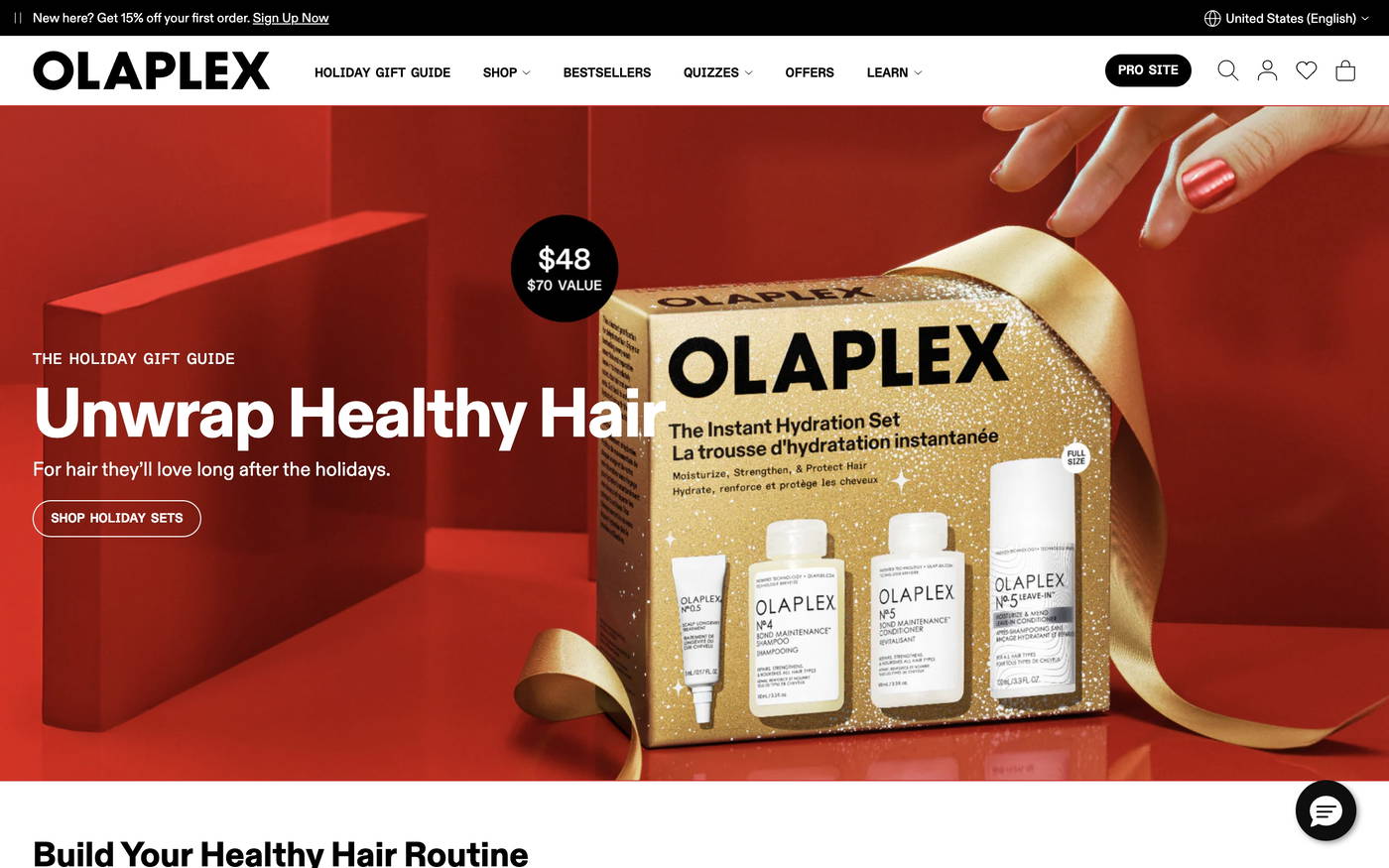
The acquisition of Olaplex by Henkel for $1.4 billion represents a calculated pivot from traditional chemical formulation toward high-margin, science-led "prestige" hair care. This transaction is not merely a brand absorption; it is an infrastructure play designed to stabilize Henkel’s Consumer Brands unit against the volatility of mass-market retail while capturing the value of a proprietary molecular platform.
To evaluate the success of this $1.4 billion valuation, we must deconstruct the deal through three specific filters: the defensibility of the Bis-Aminopropyl Diglycol Dimaleate patent, the efficiency of the "prosumer" distribution model, and the integration of a lean, venture-backed startup into a legacy industrial conglomerate.
The Molecular Moat and Patent Longevity
The core value of Olaplex resides in its chemistry, specifically its ability to cross-link broken disulfide bonds in human hair. Unlike traditional conditioners that coat the hair shaft in silicones to simulate smoothness, Olaplex functions as a structural additive.
The $1.4 billion price tag rests heavily on the exclusivity of this mechanism. Henkel is essentially purchasing a chemical monopoly. The "Bond Building" category, which Olaplex effectively created, operates on a high-barrier-to-entry model due to the following variables:
- The Disulfide Bridge Function: During oxidative processes—such as bleaching or permanent coloring—the cystine bonds within the hair cortex are severed. Olaplex’s active ingredient acts as a bridge. Henkel’s internal R&D can now leverage this patent to enhance their existing professional color lines (Schwarzkopf), creating a vertically integrated "protection-plus-pigment" offering.
- Litigation as a Barrier: Olaplex’s history of aggressive patent defense, notably against L’Oréal, established a precedent. Henkel inherits not just the formula, but the legal framework required to suppress "dupe" products that attempt to replicate the bond-building efficacy without infringing on the specific dimaleate structure.
- The Margin of Science: Scientific claims allow for a pricing premium that exceeds standard cosmetic manufacturing costs by several hundred percent. By shifting from "beauty" to "biotechnology," Henkel moves its products from the discretionary budget of the consumer to the non-negotiable budget of the professional stylist.
Distribution Efficiency and the Prosumer Funnel
The acquisition targets a unique "inverted" marketing funnel. While Henkel’s traditional brands rely on massive TV and digital spend to drive volume, Olaplex utilizes a tiered influence model that lowers the Customer Acquisition Cost (CAC) significantly.
Tier 1: The Professional Gatekeeper
The professional stylist acts as the primary salesperson. By ensuring the product is essential for high-revenue services (like platinum blonde transformations), Olaplex forces adoption. The stylist’s recommendation carries a trust weight that traditional advertising cannot replicate. Henkel’s existing relationships with salons globally provide the immediate "pipes" to scale this influence.
Tier 2: The Retail Bridge
The transition from salon-only to Sephora and high-end retail represents a "halo effect." Consumers who experience the treatment in a professional setting are conditioned to purchase the maintenance products (No. 3, No. 4, No. 5) for home use. Henkel’s challenge is maintaining this perceived scarcity while using their massive logistics network to increase SKU availability.
Tier 3: The Digital Echo
Olaplex's lean headcount—historically fewer than 100 employees for a billion-dollar brand—is a testament to the power of organic social proof. The brand’s growth was driven by user-generated content (UGC) from stylists showing "before and after" structural repairs. Henkel must resist the urge to over-corporatize this communication, as the authenticity of the "insider" professional community is the brand’s primary engine of growth.
The Valuation Gap and Risk Assessment
While $1.4 billion appears aggressive for a specialized brand, the math aligns with a "Platform Acquisition" strategy. Henkel is not just buying current EBITDA; they are buying the ability to apply Olaplex technology to their entire $6 billion+ beauty portfolio.
However, several structural risks threaten the projected Return on Invested Capital (ROIC):
- Brand Dilution: If Henkel pushes Olaplex into mass-market drugstores to chase short-term volume, they risk destroying the "professional-only" prestige that justifies the $30-per-bottle price point.
- Patent Expiration and Innovation Leaps: The "bond-building" space is no longer a blue ocean. Competitors are developing alternative proteins and synthetic peptides (such as K18) that claim to repair hair at different structural levels. Henkel is betting $1.4 billion that the dimaleate patent remains the "gold standard" for at least another decade.
- Cultural Friction: The "Big Company vs. Small Brand" syndrome. Henkel is a 140-year-old German giant with rigorous processes; Olaplex is a high-growth, agile entity. The risk of talent attrition among the original Olaplex team could lead to a loss of the specific market intuition that built the brand.
The Revenue Synergy Equation
The logic of the deal can be summarized by a simple synergy formula:
$$V_{total} = V_{olaplex} + (S_{dist} + S_{rnd}) - C_{int}$$
Where:
- $V_{total}$ is the total value to Henkel.
- $V_{olaplex}$ is the standalone brand value.
- $S_{dist}$ is the synergy gained from Henkel’s global distribution.
- $S_{rnd}$ is the value of applying the bond-building patent to other Henkel brands.
- $C_{int}$ is the cost of integration and potential brand erosion.
For Henkel, the $S_{rnd}$ variable is the hidden driver. If they can incorporate bond-building technology into every bottle of Schwarzkopf hair dye sold globally, the $1.4 billion price tag becomes a bargain.
The Strategic Play
To maximize this acquisition, Henkel must move immediately to protect the professional core while expanding the "Molecular Care" category. This involves a two-track strategy.
First, they must implement a strict "Selective Distribution" agreement. They should limit Olaplex to high-end professional environments and premium retail to prevent the brand from becoming a commodity. The moment Olaplex is seen on a clearance shelf in a discount pharmacy, the $1.4 billion investment begins to devaluate.
Second, they should initiate a "Component Branding" strategy. Similar to "Intel Inside," Henkel can market their other hair care lines as "Powered by Olaplex Technology." This allows them to raise the price floor of their mid-market brands without needing to sell the Olaplex brand itself at a lower price point. This captures the value of the science across a much larger volume of units.
The success of this deal will be measured not by Olaplex’s standalone sales in three years, but by the margin expansion across Henkel's entire hair care division. They have purchased the "Intel" of the beauty world; now they must ensure every "computer" they sell uses it.