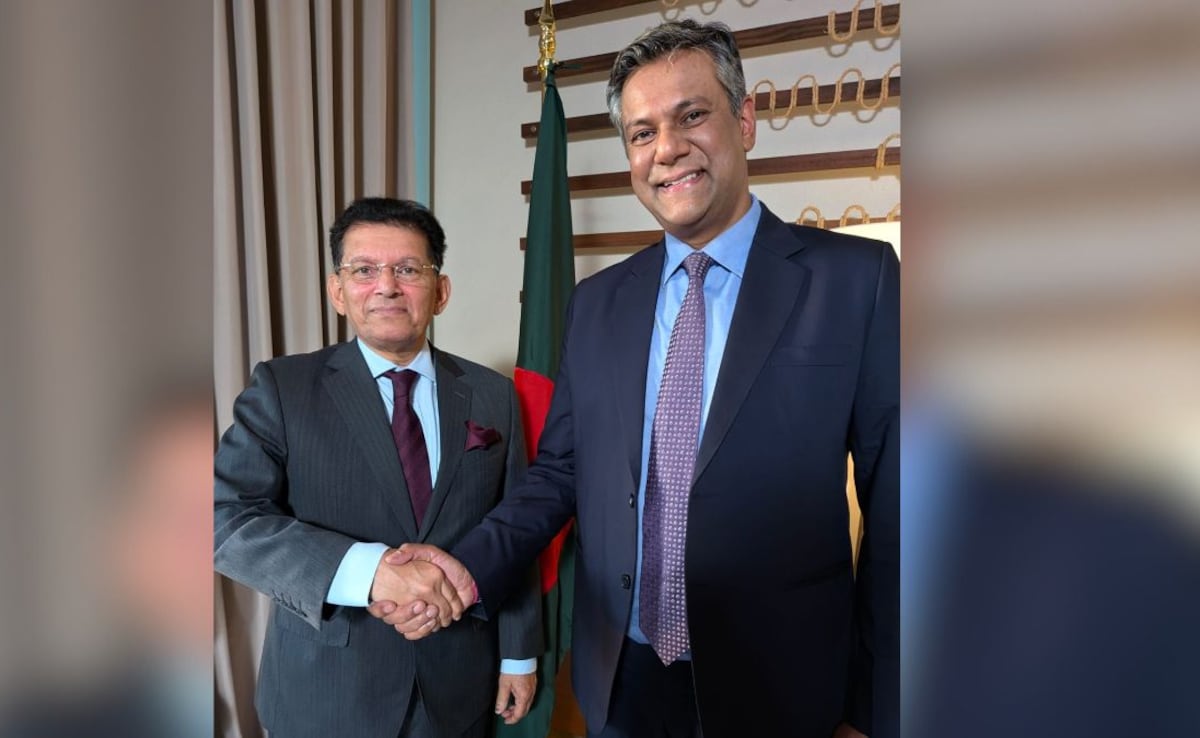
Foreign Minister Khalilur Rahman inherited a diplomatic minefield when he took office in early 2025, but the current trajectory of Bangladesh’s international relations suggests a radical departure from the "friendship to all, malice to none" mantra that defined previous decades. While official state visits and polished press releases paint a picture of harmonious bilateral ties, the reality on the ground is a frantic balancing act between competing superpowers that are no longer satisfied with neutrality. Bangladesh is currently navigating a period where its strategic geography—perched on the Bay of Bengal—is both its greatest asset and its most dangerous liability. The shared future Rahman speaks of is not a guaranteed path to prosperity, but a narrow tightrope over a geopolitical chasm.
To understand the current friction, one must look at the massive infrastructure projects and the debt cycles that power them. Dhaka is currently juggling billions in loans from various sources, each coming with strings that pull the nation in different directions. While the Foreign Minister emphasizes mutual respect and economic cooperation, the underlying mechanics of these deals reveal a fight for influence that threatens to undermine national sovereignty if not managed with clinical precision.
The Indo-Pacific Trap and the Bay of Bengal Power Play
The Bay of Bengal has transformed into a theatre of competition. It is no longer just about trade routes; it is about maritime security and the ability to project power across South Asia. Bangladesh’s recent moves to modernize its naval capabilities and upgrade its port facilities have drawn intense scrutiny from both New Delhi and Beijing. Every time Rahman meets with a counterpart, the shadow of the Indo-Pacific Strategy looms.
Washington views Bangladesh as a necessary partner in its efforts to contain regional dominance by any single power. Meanwhile, Beijing sees the country as a vital node in its logistical network. Rahman’s challenge is to secure the investment needed for the Matarbari deep-sea port and other critical infrastructure without signing away the right to choose his own allies. This is a game of high-stakes poker where the chips are the country’s long-term economic independence.
The Debt Sustainability Problem
Foreign policy is fundamentally an extension of domestic economic needs. Bangladesh needs energy, it needs technology, and it needs markets for its garments. However, the cost of this development is rising. External debt has ballooned, and the terms of recent bilateral agreements are increasingly opaque. While the official line focuses on "shared growth," analysts are looking at the interest rates and the collateral requirements.
If the global economy faces another shock, the ability to service these debts while maintaining a neutral diplomatic stance will vanish. History shows that when a small nation becomes too indebted to a single patron, its foreign policy is the first thing to be auctioned off. Rahman is currently betting that he can diversify his creditors enough to prevent any one nation from holding the keys to the Dhaka secretariat.
Migration and the Human Capital Crisis
The most visceral aspect of Bangladesh’s foreign policy isn't found in a boardroom; it is found at the borders. The ongoing crisis with Myanmar regarding the Rohingya population remains an open wound that the international community has largely moved on from. Rahman has been vocal about the need for a "shared future" in the region, but that future is impossible as long as over a million refugees remain in limbo.
The diplomatic failure to secure a safe and voluntary return for these people is a testament to the limitations of soft power. Despite numerous high-level meetings, the repatriation process is stalled. This isn't just a humanitarian issue; it is a security risk that threatens the stability of the entire Chittagong region. The frustration within the Foreign Ministry is palpable, as regional neighbors prioritize their own trade interests with the Myanmar junta over the resolution of a crisis that is bleeding Bangladesh’s resources dry.
Labor Markets and the Middle East
The lifeblood of the Bangladeshi economy remains the remittances from millions of workers abroad. Foreign policy here is about protecting the rights of these workers and ensuring the continued flow of labor to the Gulf states and Southeast Asia. However, the "bilateral ties" Rahman negotiates are often lopsided. Bangladesh frequently finds itself in a position of a price-taker, accepting harsh conditions for its citizens in exchange for foreign currency.
Recent efforts to open new markets in Eastern Europe and East Asia are a step toward breaking this dependency. But these new frontiers come with their own set of diplomatic requirements, including stricter adherence to labor standards and international law. The Foreign Minister has to sell a version of Bangladesh that is no longer just a source of cheap labor, but a partner in a global supply chain. It is a difficult sell when the domestic regulatory environment is still catching up to international expectations.
The Climate Diplomacy Gap
Bangladesh is often cited as the poster child for climate vulnerability, but the rhetoric of "climate justice" has yielded little in the way of hard financial commitments from the world's biggest emitters. Rahman’s role involves constant lobbying for the Loss and Damage Fund, yet the actual disbursement of these funds is caught in a bureaucratic nightmare.
The shared future the Minister describes must include a tangible mechanism for survival. Without it, the sea-level rise in the south will create a domestic migration crisis that no amount of foreign investment can solve. The diplomatic strategy has shifted from pleading for aid to demanding compensation, a subtle but significant change in tone that reflects a growing impatience in Dhaka.
Regional Connectivity and the Indian Factor
The relationship with India remains the most complex piece of the puzzle. Shared history and a long border necessitate cooperation, but the power imbalance is a constant source of friction. Issues like water sharing from common rivers—specifically the Teesta—remain unresolved despite decades of talk.
When Rahman speaks of bilateral ties, he is operating in the shadow of these long-standing disputes. The transit and transshipment agreements that allow Indian goods to move through Bangladeshi territory are seen by some as a pragmatic economic move and by others as a concession that yields too little in return. The success of Bangladesh’s foreign policy is often measured by how much it can extract from its larger neighbor without becoming a satellite state.
Digital Sovereignty and the New Trade Frontiers
As the global economy shifts toward data and technology, Bangladesh is attempting to skip stages of industrial development. This requires a new kind of diplomacy—one focused on intellectual property, cybersecurity, and tech transfers. The Foreign Ministry is now dealing with Silicon Valley and Shenzhen as much as it deals with London or Washington.
The risk here is a new kind of colonization through technology. If the country’s digital infrastructure is built entirely on foreign proprietary systems, "sovereignty" becomes a hollow word. Rahman has been pushing for partnerships that involve local manufacturing and data localization. However, the pressure to adopt "turnkey" solutions from foreign giants is immense.
The foreign policy of the next decade will be defined by who controls the cables, the servers, and the algorithms that run the country’s financial systems.
The Shift Toward Middle Power Ambition
There is a growing sense in the Dhaka corridors of power that Bangladesh is no longer just a "basket case" or a developing nation on the fringes. It is a nation with a population larger than Russia and an economy that has shown remarkable resilience. This newfound confidence is reflected in Rahman’s more assertive stance on the international stage.
However, ambition must be tempered by reality. A middle power needs more than just a large population; it needs a military that can defend its interests, an economy that can withstand sanctions, and a diplomatic corps that can outmaneuver its rivals. Bangladesh is currently in the "gray zone" between being a passive observer and an active player.
The shared future that Rahman promotes is a vision of a multipolar world where Bangladesh is a hub, not a spoke. To get there, the country must solve its internal governance issues while simultaneously fighting off the gravitational pull of the world's superpowers. The diplomatic maneuvers we see today are the opening gambits in a game that will take decades to play out.
The window for error is closing. As global alliances harden and the world drifts toward a new Cold War, the luxury of being everyone’s friend is disappearing. Bangladesh will soon have to make choices that will define its trajectory for the rest of the century. The Minister’s job is to ensure that when those choices are made, they are made on Dhaka’s terms, not as a reaction to external pressure.
The ultimate test of the current foreign policy will not be found in the speeches at the UN or the handshakes in New Delhi. It will be found in whether the "shared future" actually results in a sovereign, stable, and prosperous nation, or if Bangladesh becomes just another piece of territory contested by empires. Hard-hitting diplomacy requires more than just good intentions; it requires the leverage to say "no" when everyone else is demanding a "yes."