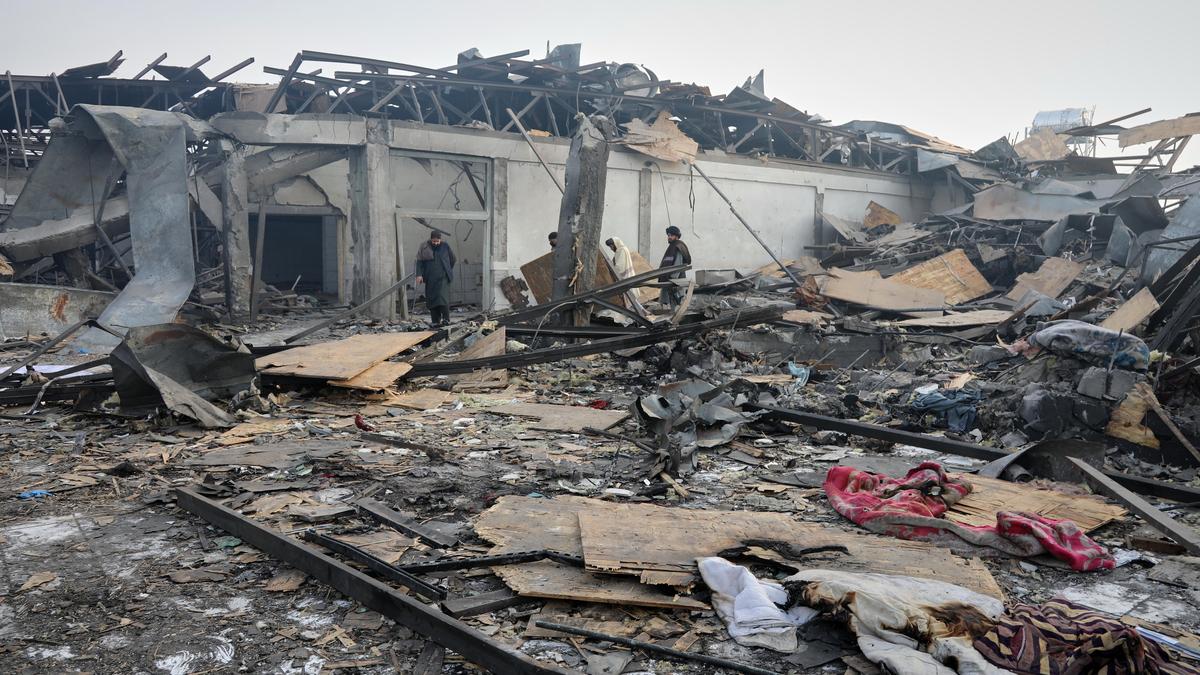
India didn't hold back at the United Nations General Assembly. When Pakistan's leadership tried to use the global stage to criticize India, the response from New Delhi was swift, sharp, and deeply personal. Indian diplomats slammed what they called Pakistan’s "air-bombing campaigns" against its own people, specifically pointing out that these military actions didn't even pause for the holy month of Ramadan. It's a heavy accusation. It shifts the narrative from a bilateral border dispute to a question of human rights and internal stability.
You've probably seen the headlines before. India and Pakistan trade barbs at the UN like it’s a scheduled sport. But this time, the tone felt different. India’s First Secretary, Petal Gahlot, used the "Right of Reply" to dismantle a speech by Pakistani Prime Minister Shehbaz Sharif. She didn't just defend India’s record; she went on the offensive, highlighting the irony of a nation preaching peace while allegedly conducting scorched-earth military operations within its own borders.
The Ramadan factor in diplomatic warfare
The mention of Ramadan wasn't an accident. By highlighting that air strikes continued during a month of fasting and prayer, India aimed for the moral high ground. It’s a move designed to resonate with the wider Muslim world and the Global South. The Indian delegation argued that a country that "follows in hate, bigotry, and intolerance" shouldn't be lecturing the world on faith or justice.
Pakistan’s internal security operations in regions like Khyber Pakhtunkhwa and Balochistan have long been a point of contention. India’s strategy is now to link these internal actions to the broader issue of regional instability. When India talks about "air-bombing campaigns," they’re referencing the use of heavy artillery and fighter jets against domestic insurgents—a tactic that often results in significant civilian displacement.
Breaking down the theatrics
Indian officials frequently use the term "absurd theatrics" to describe Pakistan’s UN speeches. This isn't just a snarky comment. It’s a calculated dismissal of Pakistan’s attempt to "internationalize" the Kashmir issue. India’s stance is firm: Kashmir is a bilateral matter, or better yet, a purely internal one. By bringing up Pakistan's domestic military record, India essentially tells the UN, "Clean your own house before you look over our fence."
The exchange also touched on a recent military flare-up, which some sources refer to as Operation Sindoor. While Pakistan claimed to have damaged Indian jets, India’s Air Chief Marshal Amar Preet Singh confirmed that it was actually Pakistan that lost multiple fighter jets. The discrepancy in these accounts shows just how much the UN floor has become a secondary battlefield for information warfare.
Why the Indus Waters Treaty is the next flashpoint
Beyond the usual rhetoric about terrorism, a more dangerous topic is bubbling up: water. In recent sessions, Pakistan warned that India’s potential suspension of the Indus Waters Treaty could be seen as an "act of war." This treaty has survived multiple wars since 1960, but the "good faith" that kept it alive is evaporating.
India has placed the treaty in a sort of diplomatic limbo, or "abeyance," until Pakistan takes "credible and irrevocable" steps against terror groups. If you're following the money and the resources, this is the real story. Terrorism is the persistent headache, but water is the existential threat. India is signaling that the old rules of engagement—where the treaty was sacrosanct regardless of border tensions—might be over.
The reality of the Pahalgam attack
One of the specific triggers for this latest round of UN vitriol was the April 2025 terror attack in Pahalgam. It wasn't just another skirmish; it was an attack on tourists. For India, this was a deliberate attempt to kill the "normalcy" narrative in Jammu and Kashmir. When tourists are targeted, the economic stakes go through the roof.
India’s rebuttal at the UN specifically named "The Resistance Front" (TRF) as a Pakistani-sponsored outfit. They accused Pakistan of shielding this group at the UN Security Council just months prior. This level of granularity—naming specific groups and dates—shows that India’s diplomatic team is moving away from vague generalities and toward a "prosecutorial" style of diplomacy.
What this means for the region in 2026
If you think this is just a war of words, you're missing the forest for the trees. This level of public hostility usually mirrors what’s happening on the ground. We’re seeing a shift from "strategic restraint" to a doctrine of "active defense." India’s message is that it will no longer allow terrorism to be practiced under the "cover of nuclear blackmail."
- Zero Tolerance: India is signaling that the era of "distinction" between terrorists and their sponsors is dead.
- Internal Focus: By bringing up air strikes in Pakistan, India is forcing the international community to look at Pakistan’s own human rights record.
- Bilateral or Bust: There is zero room for third-party mediation. India has rejected offers from various global powers, insisting on direct, bilateral resolution—but only after the "terror ecosystem" is dismantled.
Honestly, the prospect of a "composite dialogue" looks dim. While Prime Minister Sharif offered a "result-oriented dialogue," the conditions set by India—shutting down all camps and handing over wanted individuals—are terms Pakistan is unlikely to meet anytime soon. We’re stuck in a loop where the UN becomes the only place they actually "talk."
To stay informed on this evolving situation, keep a close watch on the official statements from the Ministry of External Affairs (MEA) and the UN’s Daily Press Briefings. The rhetoric at the UNGA is often the first sign of a shift in military or economic policy on the ground.