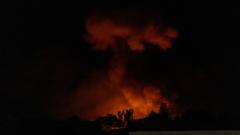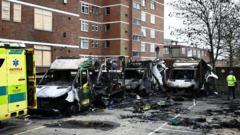
The pre-dawn silence of Golders Green was shattered on March 23 by a series of sharp, metallic cracks—the sound of oxygen canisters exploding inside burning ambulances. By the time the flames were extinguished, four emergency vehicles belonging to the Hatzola volunteer service were charred skeletons. Today, the Metropolitan Police announced three more arrests in East London, bringing the total to five. While the headlines focus on the police procedural, the deeper story is a chilling intersection of community vulnerability and a surging trend of violence against those who provide the most essential care.
A 20-year-old man, a 19-year-old man, and a 17-year-old boy were taken into custody during early morning raids. They are held on suspicion of conspiracy to commit arson with intent to endanger life. This specific charge is a heavy one. It suggests that this was not a random act of vandalism or a localized protest gone wrong. It implies a calculated attempt to cause harm in a densely populated neighborhood, using the very tools meant to save lives as instruments of destruction.
The Volunteer Shield Under Fire
Hatzola is not a standard wing of the NHS. It is a volunteer-led, community-funded lifeline that has operated in North London for decades, often reaching patients minutes before state-bound resources can navigate the city’s congestion. By targeting these specific vehicles, the attackers did not just destroy property; they removed a critical layer of medical security for thousands of residents.
The timing of the attack and the nature of the target have forced Counter Terrorism Policing (CTP) to take the lead on the investigation. While the incident has not been formally declared a "terrorist" act, the involvement of CTP signals that the authorities are looking for more than just a motive. They are looking for a network.
The three suspects arrested on April 1 include two British nationals and one dual British-Pakistani national. They join two older men, aged 45 and 47, who were arrested shortly after the fire and remain on bail. The age gap between the suspects is notable. We are seeing a mix of youth and middle age, raising questions about how such an operation was coordinated and whether online radicalization or local recruitment played a role in bridging that generational divide.
A Pattern of Escalating Hostility
This arson is an extreme manifestation of a broader, more systemic crisis. Data from the London Ambulance Service (LAS) released earlier this year showed that attacks on emergency workers reached an all-time high in 2025, with an average of seven incidents reported every single day. We are talking about kicking, spitting, and weaponized threats against people whose only job is to stop the bleeding.
The Assaults on Emergency Workers (Offences) Act 2018 was supposed to be the deterrent. It increased the maximum sentence for such crimes to two years. Yet, the numbers continue to climb. Why?
- The Proximity Factor: Emergency workers operate in the "grey zone" of public space, often entering private homes or navigating volatile crowds without the defensive equipment or legal mandate of the police.
- The Symbolic Target: In times of high social tension, an ambulance is no longer seen by some as a neutral vessel of mercy. It is seen as an extension of the state or, in the case of Hatzola, a visible symbol of a specific community.
- The Oxygen Risk: The use of accelerants on vehicles containing compressed oxygen canisters is a deliberate escalation. It transforms a simple fire into an explosive event capable of shattering windows in nearby synagogues and homes—which is exactly what happened in Golders Green.
The Security Dilemma for London’s Communities
The Metropolitan Police have responded by deploying "enhanced, bespoke policing plans" across London, including visible armed patrols. For a community entering the Passover festival period, this is a double-edged sword. While the presence of armed officers offers a sense of immediate protection, it also serves as a constant, looming reminder that their charity workers and medical volunteers are now considered high-value targets.
Detective Chief Superintendent Luke Williams has been careful to label these measures as "precautionary." But when you have five people in custody for a coordinated arson attack on medical infrastructure, "precautionary" feels like a polite euphemism for a high-alert environment.
The investigation now moves into the forensic analysis of digital footprints. Searches at the three addresses in East London are ongoing. Detectives are looking for more than just gasoline cans; they are looking for the communication trail that explains how three teenagers and two older men ended up allegedly conspiring to blow up ambulances in North West London.
We are watching a shift in the landscape of urban unrest. When medical vehicles are no longer off-limits, the social contract hasn't just been breached—it has been set on fire. The arrests may provide a sense of justice, but they do not replace the four ambulances or the lost sense of security that the residents of Golders Green now have to live without.