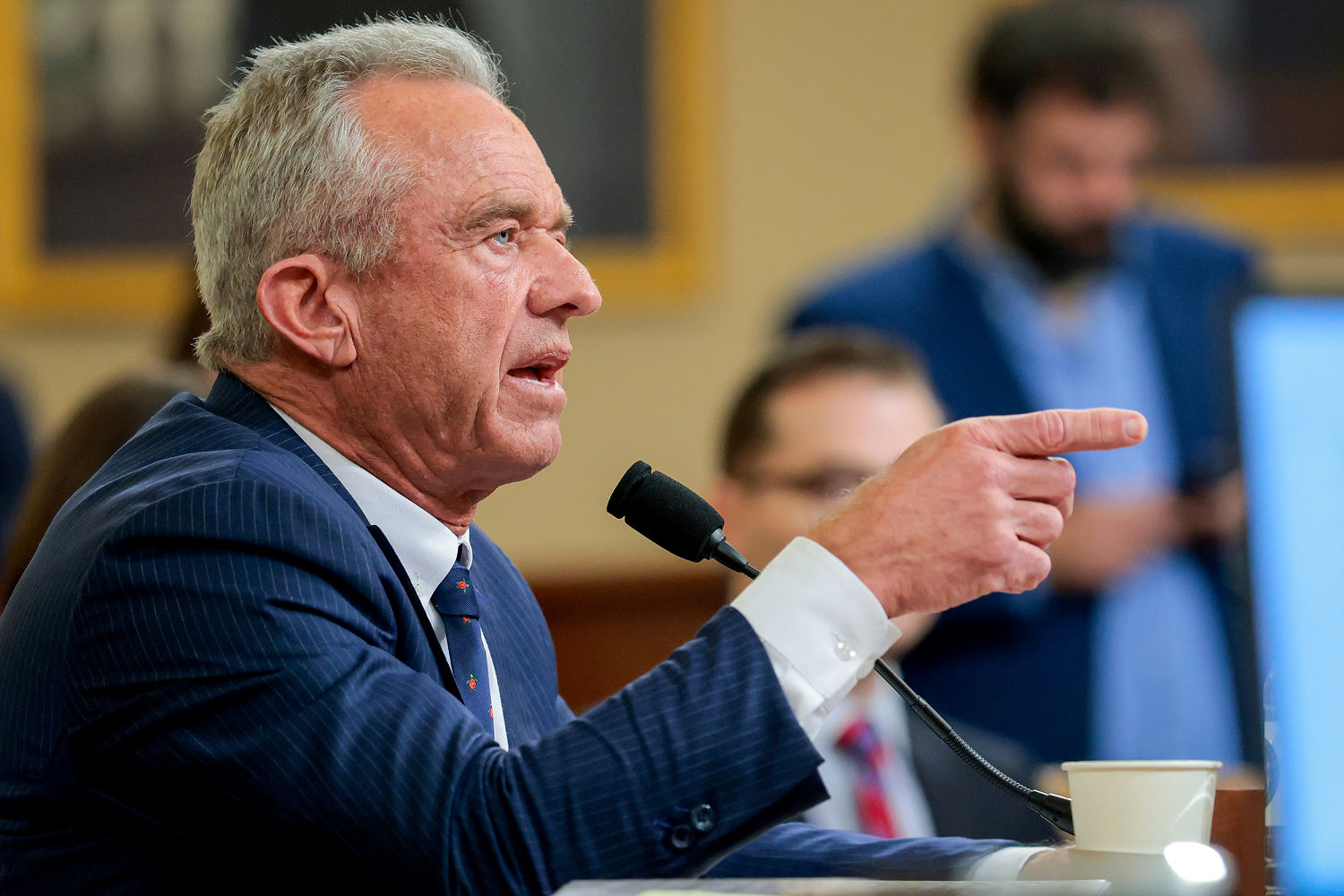
The era of bureaucratic inertia at the Department of Health and Human Services is over, replaced by a volatile blend of populist zeal and scorched-earth restructuring. Robert F. Kennedy Jr. spent hours this week under the fluorescent lights of House hearing rooms, defending a budget that seeks to dismantle the very foundations of American public health. His primary objective is a 12.5 percent reduction in discretionary spending—roughly $16 billion—to fund a pivot toward the "Make America Healthy Again" (MAHA) agenda. This is not a mere trimming of the hedges. It is a fundamental uprooting of how the federal government regulates what you eat, how you medicate, and how your children are immunized.
Kennedy’s testimony before the House Ways and Means and Appropriations committees revealed a Secretary unbowed by judicial setbacks or legislative friction. While he speaks of "saving a generation" of sick children, the mechanics of his plan involve a high-stakes gamble on deregulation and administrative consolidation. The friction between his vision of "captured agencies" and the reality of specialized federal oversight has reached a breaking point.
The Administration for a Healthy America
The centerpiece of this upheaval is the proposed Administration for a Healthy America (AHA). This new entity is designed to absorb the functions of the Health Resources and Services Administration (HRSA), the Substance Abuse and Mental Health Services Administration (SAMHSA), and specific wings of the CDC. Kennedy views the current structure as a fragmented mess of redundant programs. By centralizing these into the AHA, he intends to create a single funnel for health block grants to states.
Critics in the House argued that this consolidation is a Trojan horse for reducing federal accountability. When you collapse five specialized agencies into one, the nuance of specific health crises—like the opioid epidemic or maternal mortality in rural areas—can easily be buried under general administrative goals. Kennedy countered by pointing to a $50 billion Rural Health Transformation Fund, a massive carrot dangled to secure the support of hesitant lawmakers who fear the impact of his broader Medicaid cuts.
The War on Food Additives and the GRAS Loophole
Kennedy’s most popular front remains the food supply. He is targeting the Generally Recognized as Safe (GRAS) designation, a regulatory shortcut that allows companies to self-certify chemicals as safe without formal FDA pre-market approval. For decades, this has been the "black hole" of food safety. Kennedy wants to mandate that every new substance undergo rigorous federal review before hitting supermarket shelves.
The FDA’s Human Foods Program is already feeling the heat. Under Kennedy’s direction, the agency is prioritizing a phase-out of petroleum-based food dyes and synthetic chemicals like BHA and BHT. During the hearings, he sparred with Democrats over his support for raw milk—a product the FDA has long labeled a public health risk due to bacterial contamination. Kennedy framed this as a matter of consumer sovereignty, a recurring theme in his testimony. He argued that the agency’s "aggressive suppression" of natural products has done more harm than the products themselves.
Targeting the Childhood Immunization Schedule
The most explosive moments of the hearing centered on vaccines. Kennedy has already attempted to freeze the childhood immunization schedule and overhaul the Advisory Committee on Immunization Practices (ACIP). While a federal judge recently blocked these moves, Kennedy remains undeterred. He is currently pushing the CDC to rescind the recommendation for the hepatitis B vaccine for newborns, a staple of pediatric care since the early 1990s.
Public health experts are sounding alarms. The concern is that by questioning the necessity of these shots on a national stage, Kennedy is eroding the "herd immunity" that prevents outbreaks of polio, measles, and pertussis. Kennedy’s response to these charges was characteristically blunt. He blamed declining vaccination rates on "government mismanagement" during the pandemic rather than his own rhetoric. He is betting that a significant portion of the electorate views the medical establishment with enough suspicion to ignore the warnings of traditional epidemiologists.
Remaking the NIH and the War on Chronic Disease
The National Institutes of Health (NIH) is also in the crosshairs. The budget proposes a $3.7 billion cut, which is actually a moderation from the even deeper slashes suggested last year. Kennedy’s goal is to shift the NIH away from infectious disease research and toward the study of environmental toxins and chronic illness. He believes the agency has spent too long chasing pharmaceutical solutions for symptoms while ignoring the root causes of the "chronic disease epidemic."
This shift would involve merging several institutes, such as combining those focused on alcohol and drug abuse into a single "National Institute of Substance Use and Addiction." While streamlining sounds efficient on paper, it often results in a "brain drain" as top-tier researchers flee to the private sector or academia rather than navigate a politicized restructuring. Kennedy, however, sees this as a necessary purging of what he calls "profit-driven systems."
The Financial Reality of the MAHA Agenda
Beyond the ideology, there is the cold math of the federal deficit. Kennedy repeatedly justified his cuts by citing the nation’s debt, telling Representative Gwen Moore that "nobody wants to make the cuts," but that fiscal survival requires them. This creates a glaring contradiction. He wants to "Make America Healthy Again," which requires massive investment in nutrition and preventive care, but he is operating within an administration that demands a 10% across-the-board reduction in non-defense spending.
The struggle is evident in his handling of Medicare Advantage. Kennedy acknowledged the rampant "upcoding"—a practice where insurers exaggerate the sickness of patients to get higher government payouts—but he stopped short of proposing a hard crackdown. Instead, he suggested a new model that rewards plans for making members "healthier," a vague metric that is notoriously difficult to audit.
The hearings established a clear pattern for the year ahead. Kennedy will continue to use the bully pulpit to attack "corporate capture," while simultaneously overseeing a reduction in the regulatory teeth of the agencies he leads. The result is a paradox. He is a Secretary who wants more power to change the rules, but less money to enforce them.
The next few months will determine if Kennedy’s vision is a viable path toward national wellness or a systematic dismantling of the guardrails that keep the American public safe. Lawmakers are currently bracing for a second wave of testimony in the Senate, where the questioning is expected to be even more forensic. For now, the Department of Health and Human Services is a house divided, caught between the established science of the past and the disruptive populism of the present.
The move to dismantle the CDC’s vaccine advisory infrastructure and the FDA’s food safety protocols is no longer a fringe theory. It is the official policy of the executive branch.