The Pentagon’s recent briefing to Congress—insisting there was "no sign" Iran intended to strike first—is a masterclass in semantic gymnastics. It is the kind of sanitized, risk-averse data scrubbing that keeps defense contractors in business and politicians in the clear. If you believe the narrative that Tehran was just sitting on its hands before the latest escalation, you aren't reading the room. You’re reading a press release designed to mask a massive failure of predictive intelligence.
We are witnessing the "Imminent Threat" trap. Washington defines an attack as something with a countdown clock and a visible launchpad. This is a 1940s mindset applied to a 2026 reality. In the modern theater of gray-zone warfare, the attack has already started long before the first missile leaves the tube.
The Myth of the Smoking Gun
The "lazy consensus" among beltway analysts is that unless we have a captured memo signed by the Supreme Leader with a date and time, the threat isn't real. This is a dangerous, linear way of thinking. Iran’s military doctrine does not rely on Western-style "Pearl Harbor" moments. It relies on a perpetual state of low-boil kinetic activity that can be dialed up in minutes.
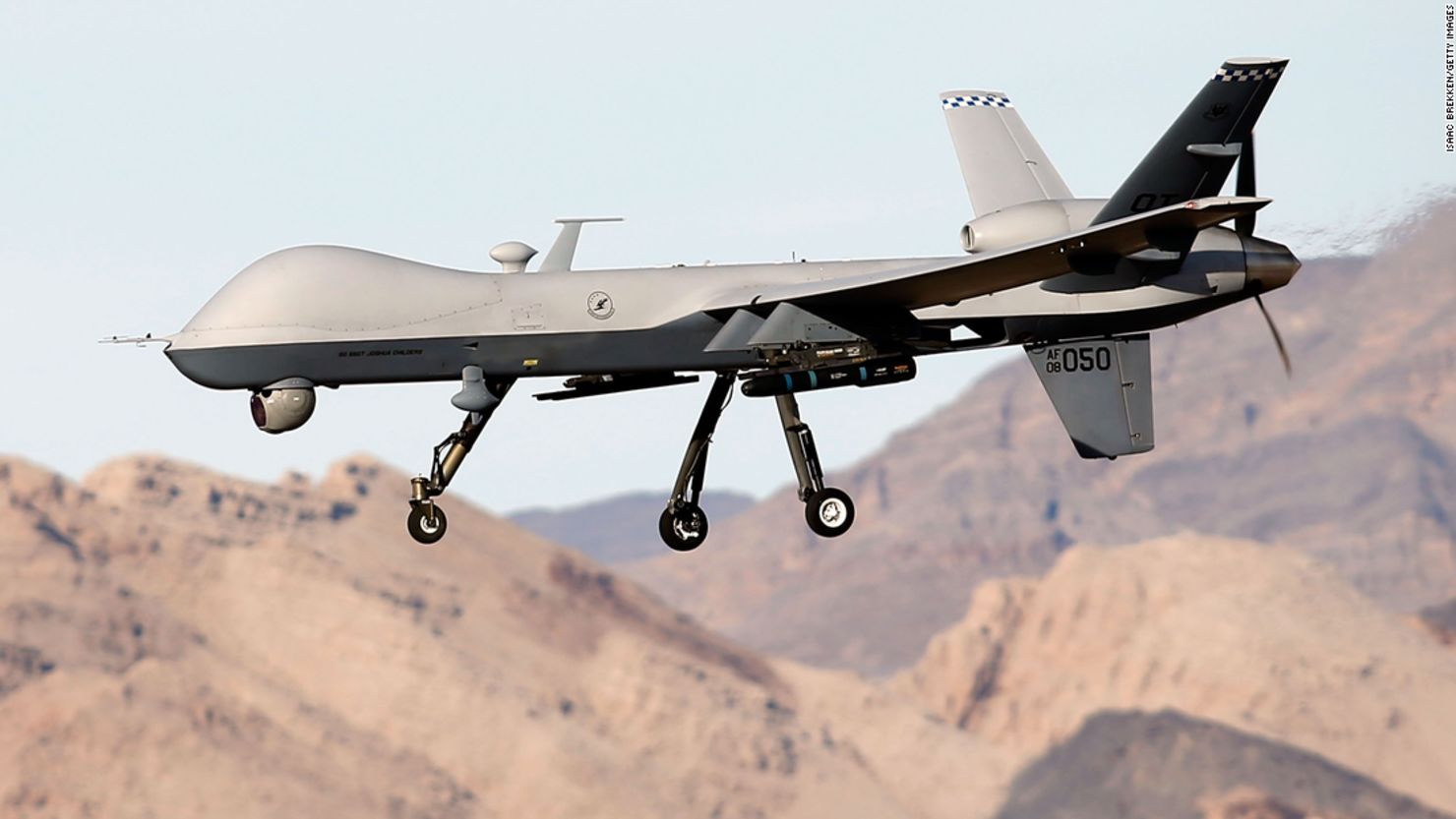
When sources tell Congress there was "no sign" of an attack, they are talking about tactical signals—radio silence, movement of hardware, fueling of birds. They are ignoring the strategic reality.
- Asymmetric Pacing: Iran operates through proxies that are effectively extensions of its own sovereign will.
- Infrastructure Seeding: The "attack" is the positioning of assets over a decade, not a sudden surge in February.
- The Reactionary Loop: Our intelligence community is currently obsessed with intent when they should be obsessed with capability.
Intent can change over a cup of coffee. Capability takes years to build. If the capability is there, the intent is a rounding error. By telling Congress there was no sign of an impending strike, the Pentagon is effectively saying, "We didn't see them pick up the gun," while ignoring the fact that the gun was already pressed against our temple.
Why the Pentagon Launders Information
I have spent years watching the internal machinery of the Department of Defense. Here is a trade secret: "No sign of an attack" is often code for "We don't want to be blamed for the fallout of a preemptive strike."
If the Pentagon admits they saw it coming, they have to explain why they didn't stop it. If they admit they didn't see it coming, they look incompetent. The middle ground? Claiming the enemy wasn't going to move anyway. It’s a clean, quiet way to keep the budget flowing without having to answer for a shift in the regional power balance.
The Cost of Being Wrong
Imagine a scenario where a corporate CEO tells the board there is "no sign" of a competitor moving into their primary market, despite that competitor building three warehouses next door. That CEO would be fired for negligence. Yet, in geopolitics, we reward this kind of "wait and see" passivity.
- Market Volatility: The uncertainty created by this "maybe they will, maybe they won't" rhetoric drives oil prices into a tailspin, hurting global trade.
- Resource Misallocation: We keep carrier groups idling in the Mediterranean based on flawed "intent" assessments while the real threats move elsewhere.
- Deterrence Decay: When we signal that we only react to "imminent" threats, we give our adversaries a free pass to do everything short of a full-scale invasion.
The Proxy Shell Game
The competitor article ignores the most basic tenet of Iranian strategy: the use of "Plausible Deniability."
Tehran doesn't need to attack US assets directly to achieve its goals. It uses the "Axis of Resistance." When a drone hits a base in Jordan or Iraq, the Pentagon can technically tell Congress "Iran didn't attack us," because the drone didn't have an Iranian flag painted on it. This is a legalistic distinction that has no place in a serious security discussion.
In the private sector, if a subsidiary of a parent company commits fraud, the parent company is liable. In the Pentagon’s world, the parent company gets a pass because the subsidiary didn't send an email first. It’s a joke.
Breaking the Intelligence Cycle
The current method of intelligence gathering is broken because it prioritizes data points over patterns.
$P(\text{Attack}) = \text{Capability} \times \text{Opportunity} \times \text{Intent}$
The Pentagon is focusing 90% of its energy on Intent, which is the only variable in that equation that is invisible. They are ignoring Capability and Opportunity, both of which are currently at an all-time high.
Stop Asking if They Were Going to Strike
The question "Was Iran going to attack first?" is the wrong question. It’s a distraction.
The real question is: "Why have we allowed the environment to reach a point where an attack is a constant, viable option?"
Focusing on the "first strike" narrative allows the US government to play the victim or the "restrained superpower." It avoids the uncomfortable conversation about our own failing deterrence. We are so busy trying to figure out what the other guy is thinking that we’ve forgotten how to make him think twice.
The Insider’s Reality
I have sat in rooms where "intelligence" was massaged to fit a specific policy goal. It happens every day. If the administration wants to de-escalate, the intelligence suddenly shows "no sign of aggression." If they want to ramp up, the same data is interpreted as "preparations for a major offensive."
The truth is rarely in the briefing. The truth is in the troop movements, the supply lines, and the quiet movement of gold and oil.
The Strategic Failure of "Wait and See"
Waiting for a "sign" is a luxury we can no longer afford. The speed of modern warfare—hypersonic missiles, cyber-attacks, and swarm drones—means that by the time you see a "sign," the war is already over.
We are currently operating on a 24-hour news cycle intelligence model. We want a "breaking news" alert to tell us when to worry. But the real threats are the ones that don't break. They are the ones that erode our position over months and years, right under the nose of a Congress that is satisfied with "no sign of an attack."
The downside of my perspective? It’s uncomfortable. It requires a more aggressive, proactive stance that carries the risk of escalation. But the alternative is what we have now: a slow, controlled retreat masked by optimistic intelligence reports.
Dismantling the "People Also Ask" Nonsense
When people ask "Is Iran a threat to the US?", they are looking for a yes or no answer. The honest, brutal answer is: Iran is a threat to the current world order that the US maintains. Whether they hit a specific base tomorrow morning is irrelevant. They are currently dismantling the regional stability that keeps the global economy functioning.
When people ask "Will there be a war?", they fail to realize we are already in one. It’s just not the kind of war they saw in movies. It’s a war of attrition, of signals, and of "no signs."
Stop looking for the "imminent" trigger. It’s a ghost. The threat is the system itself.
If you’re waiting for the Pentagon to tell you the truth about Iranian intent, you’ll be waiting until the missiles are mid-flight. They don't have a crystal ball; they have a political filter.
Burn the filter. Look at the map. The attack isn't coming; it’s happening.
Stop listening to the "sources say" crowd and start watching the ships. The intelligence community isn't failing to see the signs—they are failing to admit what they mean.
The next time a report claims "no sign of aggression," ask yourself who benefits from that silence. It’s usually not the people in the line of fire. It’s the people in the briefing rooms who want to go home at 5:00 PM without having to explain a shift in the status quo.
The signal is the silence. And the silence is deafening.