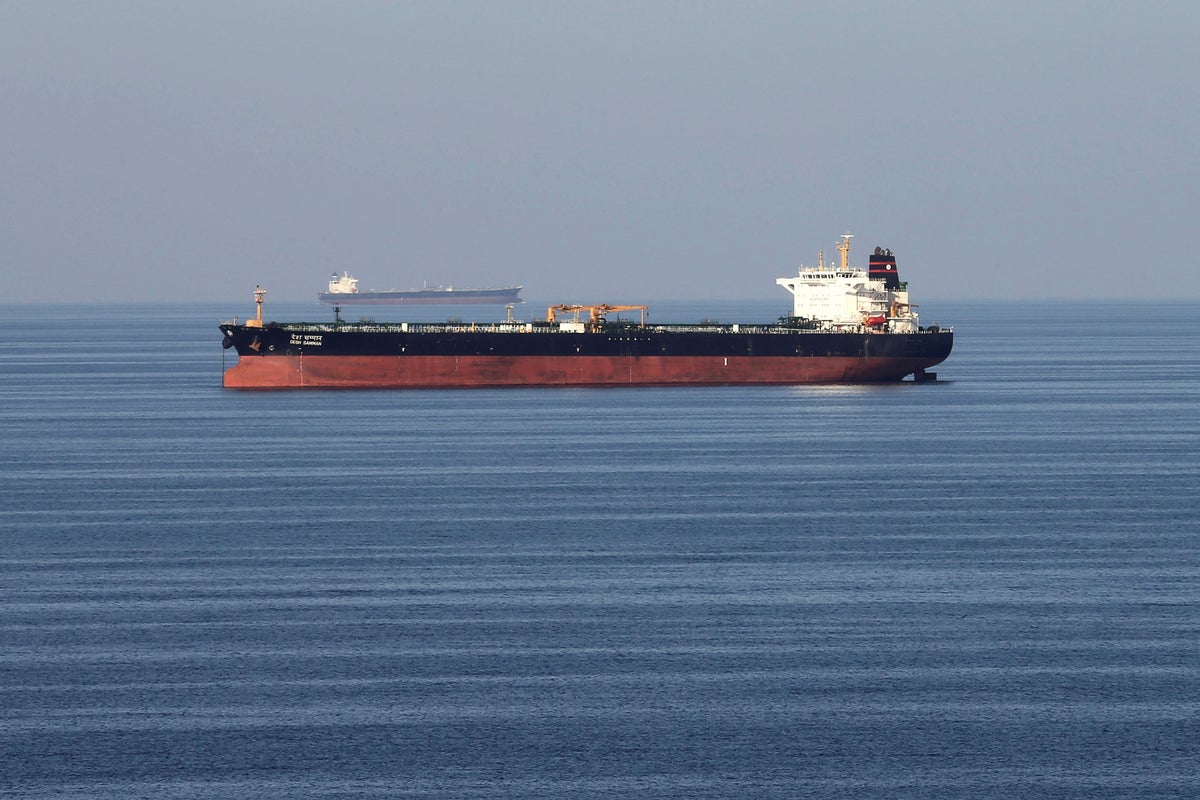
The Strait of Hormuz is a narrow strip of water that dictates the price of your commute, the cost of your groceries, and the stability of your retirement fund. It is not just a shipping lane. It is the jugular vein of the global economy. At its narrowest point, the shipping channels are only two miles wide in either direction. Through this tiny gap passes more than 20 million barrels of oil every day, representing roughly one-fifth of the world’s total consumption. If this door slams shut, the world enters a dark age of energy scarcity within seventy-two hours.
The current tension is often framed as a simple spat between Washington and Tehran. That view is dangerously narrow. The reality is a complex web of aging infrastructure, shifting naval doctrines, and a desperate race for energy independence that most nations are losing. When we talk about a "global oil and gas crisis" stemming from this region, we are talking about a systemic failure to find a viable alternative to a single, vulnerable geographic point.
The Geometry of a Global Crisis
To understand why this specific patch of water matters more than the Suez Canal or the Strait of Malacca, you have to look at the math of dependency. Unlike other maritime shortcuts, there is no easy way around Hormuz. While Saudi Arabia and the United Arab Emirates have invested billions in pipelines to bypass the strait, these alternatives can only handle a fraction of the total volume. The East-West Pipeline in Saudi Arabia, for instance, terminates at the Red Sea, but its capacity is limited.
The world remains shackled to the Persian Gulf.
Japan imports nearly 80 percent of its oil through this passage. China, despite its massive investments in Siberian pipelines and green energy, still relies on the strait for a massive portion of its crude. If the flow stops, the economic shockwave does not start in the Middle East; it starts in the manufacturing hubs of Asia and ends in the gas stations of Ohio and the heating bills of Berlin.
The mechanism of the crisis is the Insurance Premium. Even before a single shot is fired, the mere threat of conflict sends maritime insurance rates into the stratosphere. Ship owners pass these costs to the refineries, who pass them to the consumers. This is why prices at the pump often spike when a tanker is shadowed by a patrol boat, even if the oil keeps flowing.
The Myth of American Energy Independence
A common refrain in political circles is that the United States no longer needs the Middle East because of the shale revolution. This is a half-truth that ignores how global markets actually function. Crude oil is a fungible commodity. Even if the U.S. produced every drop of oil it consumed, a supply shock in the Strait of Hormuz would still send domestic prices soaring.
Refineries are often configured for specific grades of crude. Many U.S. facilities are optimized for the "heavy" crude that comes from the Gulf, while domestic shale produces "light" sweet crude. We export what we have and import what we need. This interdependency means that a naval blockade in the Middle East is just as much an American problem as it was in the 1970s.
Furthermore, the U.S. Navy’s Fifth Fleet is the de facto guarantor of the strait’s openness. This creates a bizarre paradox where the American taxpayer subsidizes the security of energy routes that primarily benefit China and India. If the U.S. decides the cost of this "global police" role is too high, the vacuum would not stay empty for long.
Asymmetric Warfare and the New Naval Reality
The era of massive carrier groups dominating every inch of the sea is facing a brutal reality check. Iran has spent decades refining asymmetric maritime tactics. They do not need a fleet that can go toe-to-toe with a U.S. destroyer. Instead, they utilize thousands of fast-attack boats, sea mines, and shore-based anti-ship missiles.
The geography of the strait favors the underdog. The shallow, cluttered waters make it difficult for large sonar systems to track small, fiberglass boats. A coordinated "swarm" attack could overwhelm the defensive systems of even the most advanced warships.
The Silent Threat of Sea Mines
Perhaps the most overlooked factor in this crisis is the sea mine. They are cheap, low-tech, and incredibly effective. If Iran were to seed the strait with mines, the channel would be effectively closed for weeks, if not months.
Clearing a minefield is a slow, agonizing process. The U.S. and its allies maintain minesweeping capabilities in the region, but the technology has not kept pace with the sheer volume of ordinance a determined adversary could deploy. During the "Tanker War" of the 1980s, a single mine nearly sank the USS Samuel B. Roberts. Today, the mines are smarter, harder to detect, and capable of being triggered by specific acoustic signatures.
The Liquefied Natural Gas Factor
While oil grabs the headlines, the Strait of Hormuz is also the primary exit point for Liquefied Natural Gas (LNG). Qatar is one of the world’s largest exporters of LNG, and almost all of its shipments must pass through the strait.
In a world increasingly moving away from coal, LNG has become the "bridge fuel" for the global energy transition. Europe, in particular, has become heavily reliant on Middle Eastern LNG to replace Russian gas. A closure of the strait would not just stop cars; it would stop power plants. The result would be a literal blackout for major industrial sectors across the globe.
Beyond the Tankers: The Human and Environmental Cost
Every analysis of this region focuses on barrels and dollars, but the environmental stakes are staggering. The Persian Gulf is a semi-enclosed body of water with a fragile ecosystem. A major conflict involving the destruction of several supertankers would result in an environmental catastrophe that could dwarf the Deepwater Horizon spill.
Desalination plants provide the vast majority of fresh water for the populations of Kuwait, Saudi Arabia, and the UAE. An oil spill of that magnitude would clog the intake valves of these plants, turning an energy crisis into a humanitarian disaster of thirst and disease within days. This is the "poison pill" of the Strait of Hormuz. Any actor that successfully closes the strait also risks destroying the very life support systems of the region.
The Fragility of the Shadow War
For years, the conflict in the strait has been a series of "gray zone" actions. Seizing a tanker here, a drone strike there, or a mysterious "limpet mine" attachment under the cover of darkness. Both sides have historically known exactly how far they can push without triggering a full-scale war.
However, the margin for error is shrinking. As domestic pressures mount in both Washington and Tehran, the incentive to "escalate to de-escalate" becomes more tempting. Miscalculation is the greatest risk. A nervous radar operator or a misinterpreted naval maneuver could ignite a chain reaction that no diplomat can stop.
The Infrastructure Trap
The fundamental problem is that we have built a modern civilization on a 19th-century geographic bottleneck. The world’s primary energy infrastructure is centralized, rigid, and exposed. While there is much talk about "diversifying supply chains," the physical reality of pipelines and ports takes decades to change.
We are currently living in a period of "stored risk." Every day that the tankers pass through the strait without incident is a day that the world ignores the underlying vulnerability. We have traded long-term security for short-term efficiency.
Why the Pipelines Aren't Enough
The pipelines that exist today—such as the Habshan–Fujairah line—are impressive engineering feats, but they are not a solution. They currently handle less than 20 percent of the oil that moves through the strait. Expanding this capacity would require tens of billions of dollars and years of construction through some of the most difficult and politically unstable terrain on earth.
Furthermore, pipelines are static targets. They are easily sabotaged by non-state actors or targeted by long-range missiles. In many ways, they simply move the point of vulnerability from the water to the desert.
The China Question
China's role in the Strait of Hormuz is the great wildcard of the 21st century. As the world’s largest importer of oil, Beijing is the most vulnerable to a Hormuz shutdown. Yet, they have historically stayed on the sidelines, letting the U.S. handle the security costs while they build economic ties with both Iran and the Arab states.
That era of "free-riding" is ending. China is establishing its own naval presence in the Indian Ocean, with its first overseas base in Djibouti and growing influence in the Pakistani port of Gwadar. If the U.S. ever uses its control of the seas as a lever in a trade war, the Strait of Hormuz becomes the primary theater of a new Cold War.
The Permanent Volatility
The idea that we can "solve" the Strait of Hormuz crisis is a fallacy. As long as the world requires liquid hydrocarbons and as long as those hydrocarbons are concentrated in the Persian Gulf, the strait will remain a flashpoint.
The crisis is not a temporary event caused by a specific war or a specific administration. It is a permanent feature of our global energy architecture. We have built a world where the survival of the global economy depends on the restraint of two or three governments and the steady hands of naval officers in a two-mile-wide channel.
This is the brutal truth of energy security: we are all hostages to geography.
Move your capital into decentralized energy production or accept that your economic future is tied to a narrow strip of water halfway across the globe.