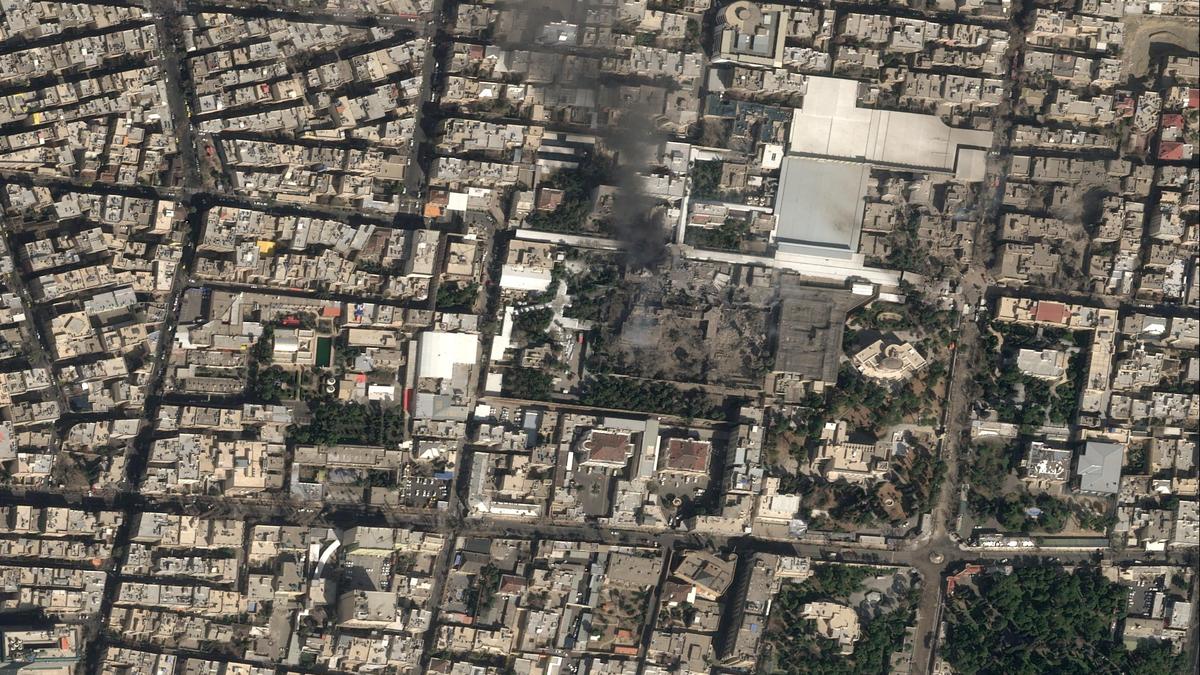
The decision by the Central Board of Secondary Education (CBSE) to postpone Class 10 and 12 examinations across its West Asia centers is not merely a logistical hiccup. It is a loud admission that the geopolitical volatility between Iran and Israel has reached a threshold where the safety of students can no longer be guaranteed by standard administrative protocols. For thousands of Indian expatriates living in the Gulf and surrounding regions, the academic calendar has been hijacked by regional brinkmanship. This move affects centers in countries like the UAE, Kuwait, Oman, and Qatar—hubs that have long been considered safe harbors for Indian quality education abroad.
When a missile battery moves in one country, a teenager in a classroom 1,000 miles away loses their shot at a university deadline. That is the new reality of international schooling in a fragmented world. The CBSE operates over 250 schools in the Middle East, catering to the massive Indian diaspora. These students follow the same curriculum and sit for the same high-stakes tests as their counterparts in Delhi or Mumbai. However, unlike their domestic peers, these students are now facing an indefinite period of academic limbo because the flight paths used to transport question papers and the digital infrastructure required for secure evaluation are vulnerable to regional escalations.
The Logistics of a War Zone Academic Calendar
Most people assume that "postponing an exam" just means changing a date on a website. It is far more invasive. The CBSE exam cycle is a massive machine of secure logistics. Question papers are often stored in high-security vaults, sometimes within local banks or diplomatic missions. When airspace closes or "precautionary measures" are triggered by local governments, the entire chain of custody for these documents breaks.
In the current standoff, the risk isn't just a physical strike on a school building. The risk is the total collapse of the environment required for a fair and standardized test. If students in Riyadh are sitting for a physics paper while their counterparts in Dubai are under a localized lockdown or facing internet blackouts, the integrity of the "All India" ranking system dissolves. The Board had no choice but to hit the pause button to maintain a level playing field, even if that field is currently covered in the dust of geopolitical posturing.
The Expat Panic and the University Deadline Domino
For a Grade 12 student, time is the only currency that matters. The spring months are a frantic dash to secure predicted grades and final marks for university applications in the UK, USA, Canada, and India. By shifting the goalposts now, the CBSE has inadvertently triggered a domino effect.
- University Admissions: Many international universities require final mark sheets by July. If exams are pushed into May or June, the evaluation process drags into August.
- Visa Processing: Student visas depend on confirmed admission, which depends on these results. A two-week delay in an exam can result in a six-month delay in a student’s life.
- Psychological Burnout: Students have been peaked for weeks. Maintaining that level of mental intensity during an indefinite delay, while living in a region where news cycles are dominated by talk of drone strikes and retaliatory measures, is an impossible ask for a 17-year-old.
Parents are currently flooding school administrative offices with questions that have no answers. The "West Asia" region is not a monolith, but for the sake of the CBSE, it is treated as one administrative block. This means a student in a relatively calm part of the region is being penalized for the instability elsewhere, simply because the Board cannot manage fifty different schedules for fifty different cities.
Security Beyond the Classroom
We have to look at why this specific conflict triggered a shutdown when others didn't. In previous years, localized unrest in individual countries rarely stopped the entire regional machine. The Iran-Israel dynamic is different because it involves the potential for widespread airspace closures. The CBSE relies on commercial aviation for the transit of its officials and, in some cases, the physical return of answer scripts. If the planes don't fly, the exams don't happen.
Furthermore, the digital infrastructure is a silent casualty. Many regional schools have moved toward digital encrypted delivery for certain segments of the testing process. In a high-tension scenario, cyber-warfare or "signal jamming" becomes a legitimate concern. No board wants to risk a leak or a technical failure that could invalidate the hard work of thousands of students.
The Broken Promise of "Business as Usual"
For decades, the Indian school system in the Middle East was the gold standard of stability. It was the reason why many families stayed in the region; they could get a world-class Indian education without the chaos of the domestic Indian system. That illusion of a protected bubble has burst.
The Board's official statements are predictably dry, citing "unforeseen circumstances" and "student safety." But read between the lines. They are signaling that they do not have a contingency plan for a multi-front regional conflict. They are reactive, not proactive. While schools in India might deal with heatwaves or local strikes, the West Asia centers are now dealing with the raw realities of 21st-century warfare.
Re-evaluating the Single-Point Failure Model
This crisis exposes a fundamental flaw in how the CBSE manages its international footprint. It is a centralized system trying to operate in a decentralized, volatile world.
- The Paper Problem: Why are we still so dependent on the physical movement of secure materials across borders that can close in an hour?
- The Regional Hub Weakness: Why is there no "Plan B" that allows certain countries to proceed if others are stalled?
- The Lack of Digital Proctored Alternatives: The pandemic taught us how to test remotely, yet those lessons seem to have been binned in favor of returning to a vulnerable physical model.
The administrative burden of rescheduling is a nightmare. You have to re-book venues, re-verify invigilators, and ensure that the new set of question papers—which must be different from the postponed ones to prevent leaks—are distributed with the same level of secrecy. It is a multi-million dollar mistake every time a date moves.
The Silent Toll on the Ground
Walk into any Indian household in Sharjah or Muscat right now and you won't hear talk of geopolitics in the abstract. You will hear about the chemistry syllabus. You will hear about the missed coaching classes. The "investigative" truth here isn't found in a war room; it’s found in the notebooks of students who are being told their future is on hold because of a conflict they didn't start and cannot influence.
Educational experts are already calling for a "Dual Track" system for international centers. This would involve a separate, localized question bank and an independent evaluation timeline that isn't tethered to the Indian domestic cycle. Until the CBSE decouples its foreign operations from its rigid home-base schedule, the education of the diaspora will remain a hostage to the next headline.
The Board needs to stop issuing "updates" and start building a resilient infrastructure that acknowledges the Middle East is no longer a low-risk environment. If they can't guarantee a stable exam cycle, they risk losing their dominance to international boards like the IB or Cambridge, which have more sophisticated, decentralized contingency plans.
Every day of delay is a day of lost momentum. The books stay open, the stress levels stay high, and the window for university enrollment slowly closes. This isn't just an "exam postponement." It is a systemic failure to protect the academic interests of the global Indian citizen. The Board must move toward an "Emergency Testing Protocol" that uses encrypted local printing and decentralized scheduling to ensure that no matter what happens in the skies, the pens keep moving on the paper.
Demand a timeline that accounts for the reality of the region, not just the convenience of the head office in Delhi.