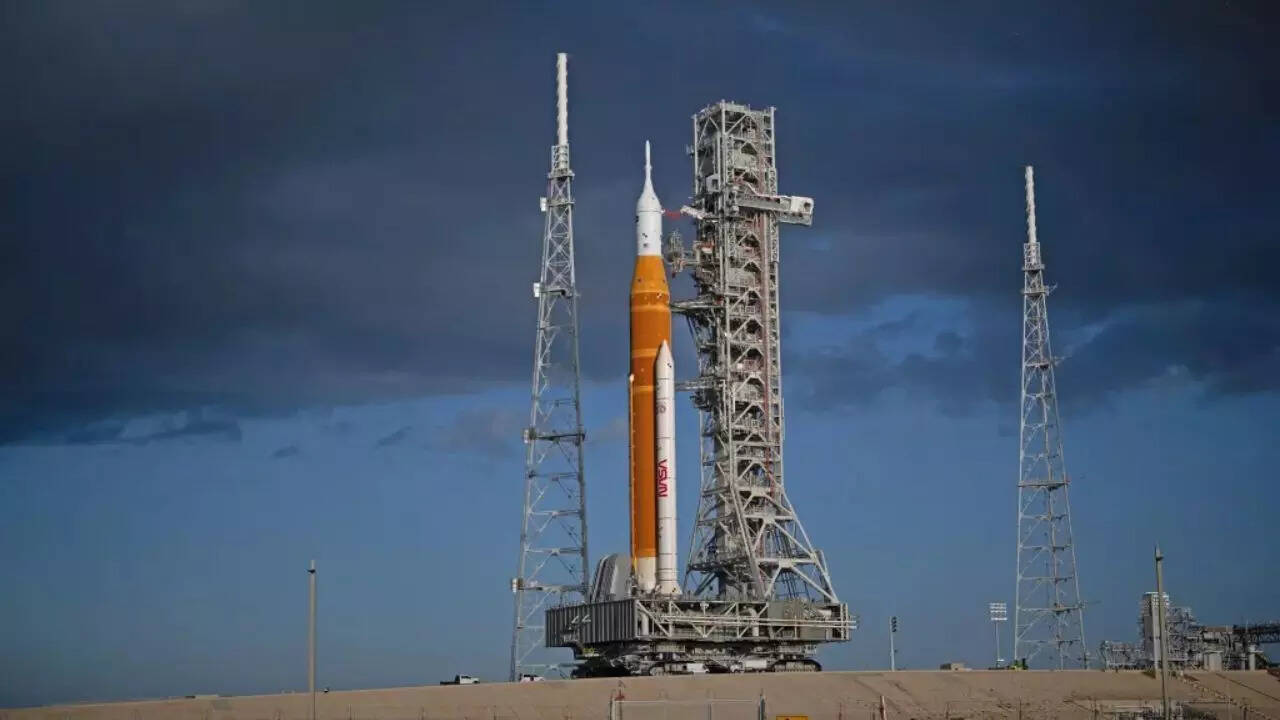
NASA is currently fixated on a massive, roiling ball of plasma 93 million miles away because, without constant vigilance, the Artemis II mission ends before it even begins. The agency is not just watching the Sun for scientific curiosity; it is hunting for Solar Particle Events (SPEs) that can shred human DNA and fry the avionics of the Orion spacecraft. As we prepare to send four astronauts around the Moon for the first time in over fifty years, the margin for error has vanished. The transit through deep space exposes the crew to radiation levels far beyond the protection of Earth’s magnetic field, turning a solar flare from a celestial light show into a lethal ballistic threat.
The Shield We Leave Behind
Low Earth Orbit (LEO), where the International Space Station resides, is a relatively safe backyard. It sits snugly within the Van Allen radiation belts, a magnetic cocoon that deflects the vast majority of high-energy particles screaming off the Sun. When astronauts head for the Moon, they step outside this umbrella.
The danger is twofold. First, there is the constant "background noise" of Galactic Cosmic Rays (GCRs). These are heavy ions from outside our solar system moving at relativistic speeds. They are relentless, but predictable. The second threat, and the reason for the 24/7 watch, is the Solar Particle Event. These are sudden, violent bursts of protons ejected during solar flares or coronal mass ejections (CMEs). Think of GCRs as a steady drizzle and an SPE as a localized flash flood. You can build a house to withstand drizzle, but a flood requires an entirely different level of engineering and warning.
The Solar Maximum Gamble
Timing is everything in orbital mechanics, but nature rarely coordinates with federal budget cycles. Artemis II is scheduled to launch during a period known as the Solar Maximum. This is the peak of the Sun's 11-year cycle, characterized by an increase in sunspots and a significantly higher frequency of solar storms.
Critics often point out that we went to the Moon during the Apollo era without the sophisticated "Space Weather" infrastructure we have now. That is true, but it was largely a matter of luck. In August 1972, between the Apollo 16 and Apollo 17 missions, the Sun unleashed one of the most powerful storms ever recorded. Had a crew been in transit or on the lunar surface during that window, they would have likely suffered from acute radiation syndrome—vomiting, internal bleeding, and potentially death within days. NASA is no longer willing to play those odds.
How the Watch is Kept
The "watch" isn't just a person looking through a telescope. It is a distributed network of deep-space assets. Satellites like the Solar Dynamics Observatory (SDO) and the Deep Space Climate Observatory (DSCOVR) act as our early warning buoys. They sit at the L1 Lagrange point, a gravitational sweet spot between the Earth and the Sun.
When a flare occurs, light reaches these sensors in eight minutes. However, the physical particles—the protons that actually cause the damage—travel slower, often taking anywhere from thirty minutes to several hours to arrive. This narrow window is the "golden hour" for mission control. If the data shows a significant SPE, the directive to the Artemis II crew is simple: Get in the shelter.
The Orion Storm Cellar
The Orion capsule is not a lead-lined bunker. Weight is the enemy of spaceflight, and lead is heavy. Instead, NASA utilizes the concept of "temporary shielding." The spacecraft is designed so that the crew can retreat to the center of the cabin and surround themselves with the mission’s own mass.
They use bags of water, food supplies, and even their own waste containers to create a dense perimeter. Water is an excellent radiation shield because it is rich in hydrogen, which is effective at stopping high-velocity protons. In a high-radiation event, the four astronauts will huddle in this cramped "storm cellar" for hours or even days until the primary wave passes.
Secondary Radiation and the Lead Paradox
Using heavy metals like lead can actually make the problem worse in deep space. When a high-energy cosmic ray hits a heavy nucleus like lead, it shatters the atom, creating a shower of secondary particles—neutrons and pions—that can be more damaging than the original ray. This is why Orion relies on low-atomic-weight materials like polyethylene and water. The engineering goal is to stop the particle without creating a secondary explosion of subatomic debris inside the cabin.
The Fragility of Modern Electronics
The humans are not the only things at risk. Modern microprocessors are significantly more powerful than the computers used in 1969, but they are also more delicate. The smaller the transistors on a chip, the less energy it takes for a single wandering proton to flip a bit from a 0 to a 1.
This is known as a Single Event Upset (SEU). If a solar storm flips a bit in the navigation system during a critical engine burn, the spacecraft could find itself on a trajectory that misses the Earth entirely on the return trip. NASA counters this through "radiation hardening" and triple-redundant voting systems. Two computers run the same calculation; if they disagree, a third breaks the tie. But even the best software can be overwhelmed by a sustained bombardment of solar radiation.
Deciphering the Solar Wind
One of the least understood variables in this mission is the interaction between the solar wind and the Moon's own crustal magnetic fields. Unlike Earth, the Moon doesn't have a global magnetic field, but it has "magnetic anomalies"—small pockets of magnetism scattered across the surface.
As Artemis II swings around the far side of the Moon, the crew will be momentarily cut off from direct communication with Earth. During this period, they are entirely dependent on the onboard automated systems to monitor space weather. If a CME strikes while they are behind the Moon, they are essentially blind to the severity of the event until they re-emerge.
The Biological Cost
Even with the best shielding, the astronauts on Artemis II will receive a radiation dose equivalent to several hundred chest X-rays in a single week. The long-term effects of this exposure are still being debated in the medical community. We know it increases the lifetime risk of cancer and can accelerate the development of cataracts.
What we don't know is how deep-space radiation affects the central nervous system over time. Some studies on rodents suggest that heavy ion exposure can lead to cognitive decline or "space brain." While the Artemis II mission is short—roughly ten days—it serves as the ultimate stress test for the much longer missions to Mars that are planned for the 2030s.
The Infrastructure of Vigilance
To manage this, NASA’s Space Radiation Analysis Group (SRAG) at the Johnson Space Center works in tandem with the National Oceanic and Atmospheric Administration (NOAA). They are looking for more than just flares; they are monitoring the "connectivity" of the magnetic field lines.
Magnetic lines of force spiral out from the Sun like water from a rotating sprinkler. If Orion happens to be on a field line that is "connected" to a solar active region, the protons will follow that line directly to the spacecraft like a highway. If the spacecraft is "disconnected," the risk drops significantly. Predicting these connections is the current frontier of solar physics, and it is far from an exact science.
The Reality of the New Space Race
There is a political dimension to this surveillance as well. The United States is not the only nation with lunar ambitions. China is moving aggressively toward its own crewed lunar landings. The ability to accurately predict and weather solar storms is becoming a strategic advantage. If you can't guarantee the safety of your crew against the Sun, you cannot maintain a permanent presence on the lunar surface.
NASA’s 24/7 watch is an admission that we are no longer in the era of "flags and footprints" where risks were taken for the sake of the Cold War theater. This is about building a sustainable pipeline to the Moon. Every solar flare recorded, every proton flux measured, and every "storm cellar" drill conducted on Artemis II is data that will be used to shield the first permanent lunar base.
The High Cost of the Unknown
Despite the billions spent on satellites and shielding, space remains an inherently hostile environment. We are attempting to move a biological organism evolved for a pressurized, magnetically shielded 1G environment into a vacuum filled with high-energy radiation.
The Sun is a variable star. It can remain quiet for weeks and then explode with a ferocity that defies our current models. The constant monitoring is not a guarantee of safety; it is a mitigation strategy for an environment where "safe" doesn't exist. When the Artemis II crew enters the Orion capsule, they are trusting that the eyes on the Sun will see the invisible danger before it reaches them.
Check the live solar activity levels at NOAA's Space Weather Prediction Center to see the current conditions the Artemis teams are tracking.