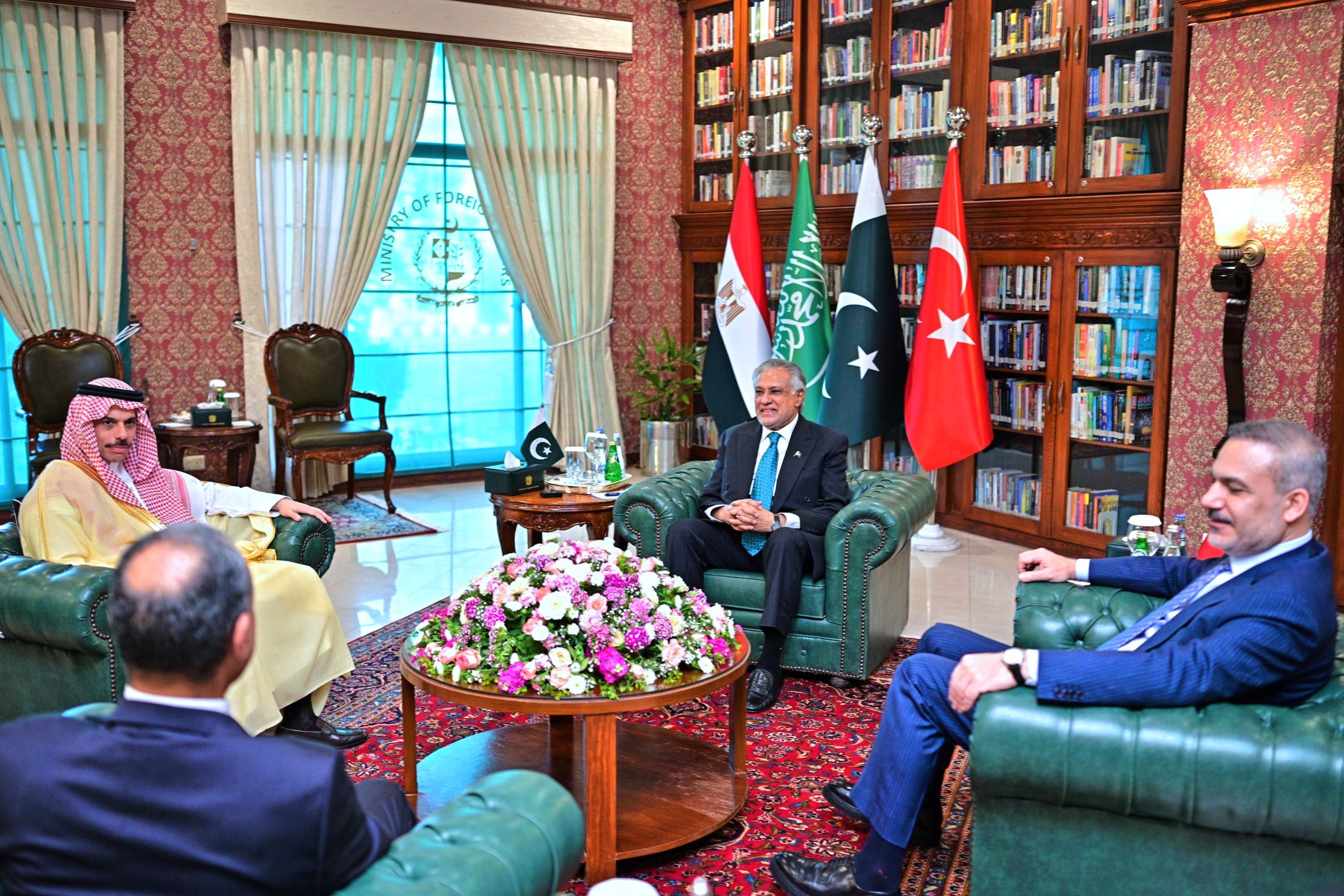
The Middle East is teetering on a knife-edge that makes previous decades look stable. Right now, as diplomats from Saudi Arabia, Turkey, and Egypt huddle in Islamabad trying to find an off-ramp, the rhetoric coming out of Tehran has shifted from standard bluster to something much darker. Mohammad Bagher Qalibaf, Iran’s parliament speaker, isn't just making threats; he’s promising to set American troops "on fire" if they cross the border.
This isn't just about tough talk. It’s a reaction to the arrival of 2,500 U.S. Marines and reports that the Pentagon is eyeing "limited" ground operations on Kharg Island and coastal sites near the Strait of Hormuz. If you think a limited strike stays limited in this part of the world, you haven't been paying attention to the last thirty years of history.
The Mirage of a Limited Ground War
The idea that the U.S. can just "pop in" to Kharg Island, disable some oil infrastructure, and leave is a dangerous fantasy. Strategists in Washington might call it a surgical strike, but to Tehran, it’s a total violation of sovereignty that justifies an unlimited response. We’ve seen this movie before.
Iran’s military strategy isn't built to win a conventional tank battle in the desert. It's built for asymmetric chaos. They've spent forty years preparing for this exact scenario—an American ground incursion. Their plan isn't to stop the U.S. at the beach; it’s to pull them into a meat grinder of urban insurgency and mountain warfare.
What Tehran is actually planning
- The "Fire" Doctrine: Qalibaf’s comments about setting troops on fire refer to Iran’s massive stockpile of short-range missiles and "suicide" drones. They don't need a high-tech air force when they can saturate a small landing zone with thousands of cheap, effective explosives.
- Proxy Ignition: The moment a boot hits Iranian soil, every proxy from the Houthis in Yemen to militias in Iraq will receive the order to go all-in. We’re already seeing the Houthis target global shipping; imagine that multiplied by ten.
- Targeting Academia: In a chilling escalation, the Revolutionary Guard just threatened American and Israeli university branches in the region. They’re no longer drawing a line between military and civilian "influence" centers.
The Diplomatic Hail Mary in Pakistan
While the drums of war beat louder, there's a desperate push for peace happening in Islamabad. Pakistan is playing the role of the middleman, passing a 15-point "action list" from the Trump administration to the Iranian leadership.
The disconnect is massive. The U.S. wants what basically amounts to a total Iranian climbdown. Iran, meanwhile, has its own five-point counterproposal. They want an end to the targeted killing of their officials, reparations for infrastructure damage, and—most importantly—recognized sovereignty over the Strait of Hormuz.
If the U.S. won't budge on the Strait, these talks are dead on arrival. The Strait of Hormuz is the world’s most important oil chokepoint. Iran knows that holding the world’s energy supply hostage is the only leverage they have left. They aren't going to give that up for a vague promise of "constructive dialogue."
Why the Domestic Math Doesn't Add Up
You have to look at the internal politics on both sides to understand why we're at this dead end. In the U.S., Secretary of State Marco Rubio says we can achieve our goals without ground troops. He’s reading the room; the American public has zero appetite for another trillion-dollar occupation in the Middle East.
But military planners often have a way of making "limited" options look like the only options when airstrikes fail to produce a surrender. If the goal is to stop Iran’s nuclear program or topple the regime, history shows that bombs alone rarely do the trick. That’s the trap. You start with "special ops raids" and end up with a decade-long counter-insurgency.
The Human and Economic Cost
The death toll is already staggering for a month-long conflict. Over 3,000 people are dead across the region. In Iran, the numbers exceed 1,900, while Israel and Lebanon are seeing hundreds of casualties daily as Benjamin Netanyahu expands the "security strip" in southern Lebanon.
If a ground invasion starts, the price of oil won't just "rise"—it will teleport. We’re talking about a global economic shock that could trigger a recession overnight. For the average person, this isn't just a foreign policy debate; it’s the price of their groceries and gas for the next five years.
How to Track the Escalation
If you want to know if we're actually heading for a ground war, stop listening to the official press releases and watch these three markers instead.
- Marine Deployment Logistics: Watch for the movement of the USS Tripoli and accompanying assault ships. If they move closer to the Iranian coast rather than staying in international waters, the "raid" scenario becomes much more likely.
- The Monday Deadline: The Revolutionary Guard gave the U.S. until midday Monday, March 30, to condemn strikes on Iranian universities. If that deadline passes with a shrug from Washington and a subsequent "retaliatory" strike from Iran, the window for diplomacy effectively slams shut.
- Pakistan’s Body Language: If the foreign ministers from Saudi Arabia and Turkey leave Islamabad early or without a joint statement, it means the 15-point plan was rejected out of hand.
The situation is incredibly volatile. We're past the point of "tensions" and well into the territory of an active regional war that is one bad decision away from becoming a global catastrophe. Don't fall for the "limited operation" branding. In the Middle East, there’s no such thing as a small ground war.
Keep a close eye on the shipping insurance rates in the Persian Gulf over the next 48 hours. They're often a better indicator of the real risk than anything a politician says at a podium. If the insurers start pulling out, the big players know the ground invasion isn't just a threat—it's a plan.