American politicians are currently reading from a script that is as predictable as it is fraudulent. On one side, the hawks are busy measuring the drapes in a post-regime Tehran; on the other, the "constitutionalists" are dust-filing War Powers Resolutions that they know will never see a floor vote.
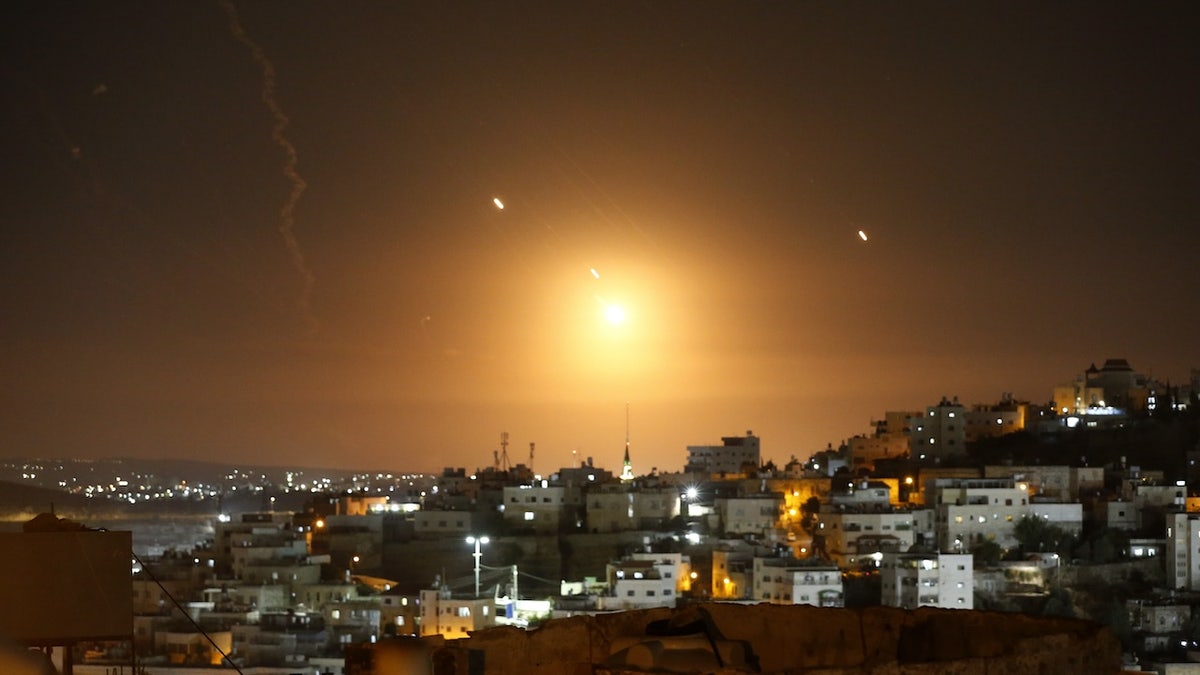
The "lazy consensus" of the recent coverage—from the October 2024 Israeli strikes to the joint U.S.-Israeli "Operation Epic Fury" in 2026—is that Washington is a house divided, paralyzed by a high-stakes debate over the future of the Middle East.
That is a lie.
Washington isn’t divided. It’s synchronized. The noise you’re hearing isn't a debate; it’s a choreographed distribution of political labor designed to maintain a status quo of "permanent escalation" without ever reaching the "total war" they all claim to fear.
The Myth of the Reluctant President
The most pervasive delusion in the current media cycle is the idea of the "reluctant" U.S. executive. Whether it was the Biden-Harris administration in late 2024 "urging restraint" while providing the bunker-busters, or the subsequent Trump administration "reluctantly" ordering strikes on Iranian nuclear sites in 2025 and 2026, the narrative is always the same: We didn't want to do this, but the Mullahs forced our hand.
I’ve spent enough time in the orbit of the Beltway’s defense contractors to know that "reluctance" is just the marketing department's term for "logistical preparation."
When President Trump announced the destruction of the Natanz, Fordow, and Isfahan sites, the immediate outcry from the Left focused on "unauthorized acts of war." But look at the math. If the U.S. were truly concerned about the Constitution, the funding for the carrier strike groups—the USS Abraham Lincoln and USS Gerald R. Ford—would have been pulled months ago. Instead, Congress continues to pass "emergency" supplemental packages with bipartisan margins that make the "divisions" look like a rounding error.
The Constitution as a Comfort Blanket
The "War Powers" argument is the favorite toy of the modern American politician. It allows them to signal to their base without actually changing a single outcome.
Representative Ro Khanna and Senator Bernie Sanders can introduce all the "No War with Iran" acts they want. They know these bills are dead on arrival. Why? Because the modern presidency has effectively outsourced "war" to "counter-proliferation operations."
- Logic Check: If you call it a "strike on a nuclear facility" rather than an "invasion," the legal requirements for a formal declaration of war evaporate into the ether of executive privilege.
- The Reality: We are currently witnessing the total "Israelification" of U.S. foreign policy. This isn't a slur; it’s a technical description. The U.S. has adopted the Israeli doctrine of Amimut (opacity) and "mowing the grass."
We aren't trying to win a war against Iran. We are trying to maintain a permanent state of high-tension equilibrium that justifies a $900 billion defense budget while ensuring no one actually has to occupy Tehran.
The Technological Mirage: Why "Precision" is a Political Tool
Politicians on both sides are obsessed with the "cleanliness" of the recent strikes. They point to the 90% failure rate of Iranian ballistic missiles and the "surgical" nature of the U.S.-Israeli F-35 sorties.
This tech-worship is a dangerous distraction. By focusing on the "seamless" integration of USCENTCOM and Israeli missile defense, politicians avoid the messy reality of what happens when a threshold state is backed into a corner.
The "success" of the defense systems in 2024 and 2025 has given D.C. a false sense of invulnerability. They believe that because they can stop a drone swarm, they can control the political fallout of a decapitated Iranian leadership. They are mistaking tactical superiority for strategic victory.
The Bipartisan Betrayal of the "Maximum Pressure" Narrative
Republicans claim "Maximum Pressure" works. Democrats claim "Diplomacy" is the only path. Both are wrong because they are both ignoring the same fact: Iran is already a nuclear-capable state.
The strikes in early 2026 on Isfahan didn't "stop" a nuclear program; they merely remodeled the basement. According to the IAEA and most serious intelligence assessments, the "breakout time" has been less than two weeks for years. You cannot bomb knowledge out of a physicist’s head.
The political theater in the U.S. treats the Iranian nuclear program like a physical "thing" you can break and throw away. It’s not. It’s a capability. By telling the American public that a few air strikes solved the problem, politicians are setting the stage for a massive intelligence failure when the next "unforeseen" escalation occurs.
The Missing Link: The Death of the Proxy War
The status quo has been "disrupted," but not in the way the talking heads think. For decades, the "lazy consensus" was that the U.S. and Iran would only fight through proxies—Hezbollah, Hamas, and the Houthis.
The 2024-2026 conflict cycle has proven that the "Ring of Fire" strategy is dead. Israel and the U.S. have shown they are willing to bypass the proxies and hit the head of the snake. But here is the nuance the industry insiders won't tell you: The U.S. is terrified of actually winning.
Imagine a scenario where the Iranian regime actually collapses tomorrow.
- Vacuum: Who controls the 10-15 "dirty bombs" worth of material spread across the country?
- Refugees: Europe is already at a breaking point; an Iranian collapse makes the Syrian crisis look like a weekend getaway.
- Oil: Even the threat of a closed Strait of Hormuz sends the global economy into a tailspin that no "armada" can fix.
The "hawks" in D.C. don't actually want a democratic Iran. They want a weakened, pariah Iran that serves as the perfect "Boogeyman" for fundraising and military expansion.
The Actionable Truth
Stop looking at what politicians say about the Iran strikes and start looking at what they fund.
If you want to understand the true American position, ignore the press releases from the White House or the angry tweets from the "Squad." Look at the "Emergency Security Assistance" bills. Look at the deployment schedules of the 5th Fleet.
The U.S. political class has reached a silent, bipartisan agreement: We will provide the hardware for the strikes, we will offer the "ironclad" diplomatic cover, and we will perform a loud, public argument about "authority" to keep the voters entertained.
The "attack on Iran" isn't a foreign policy event. It's a domestic product.
Would you like me to analyze the specific financial ties between the latest Middle East defense supplementals and the top-tier donors of the House Armed Services Committee?


