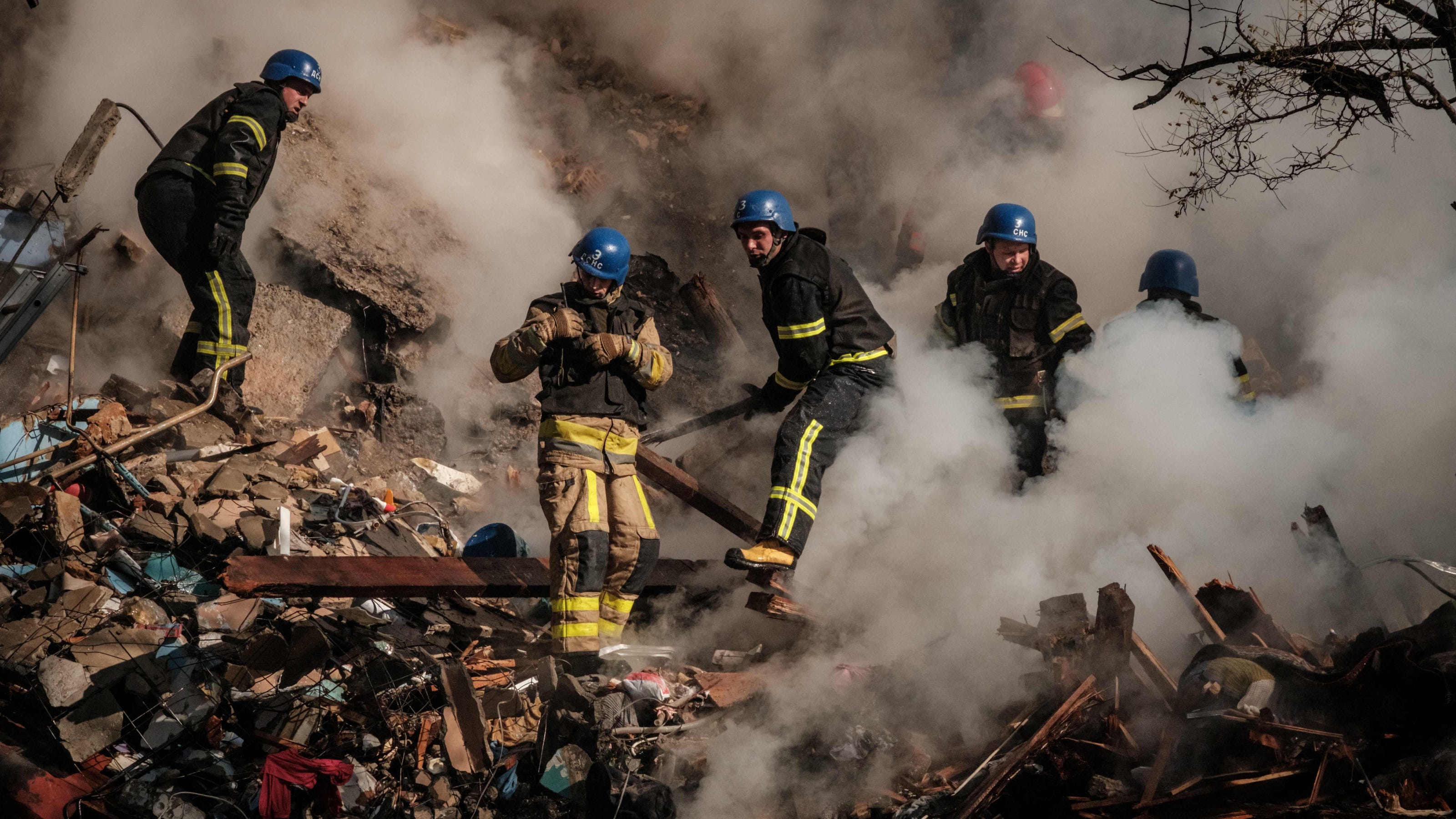
Don't let the Truth Social posts fool you. When Donald Trump claims the war in Iran is "Militarily WON," he’s looking at a map of smoking craters, not the reality of a global energy crisis. We’re three weeks into a conflict that was supposed to be a "short excursion"—a quick surgical strike to decapitate a regime and walk away. Instead, we’re watching a textbook example of how easy it is to start a war and how impossible it is to control one.
The mission has shifted. What began as an operation to prevent a nuclear breakout has spiraled into a regional brawl that's choking the world's economy. While the U.S. and Israel have successfully taken out the Supreme Leader and hammered Iran’s missile sites, the "win" feels hollow when gas prices are vertical and the Strait of Hormuz is a no-go zone.
The Decapitation Trap
The strategy was simple: kill the leadership and the system collapses. On February 28, 2026, U.S. and Israeli missiles did exactly that, taking out Ayatollah Ali Khamenei and a huge chunk of his inner circle. But the expected popular uprising never came. Instead of Iranians dancing in the streets, we got Mojtaba Khamenei—the son—stepping into the vacuum with a vendetta and a scorched-earth policy.
The regime didn't break; it just got more desperate. They know they can't win a dogfight with the U.S. Air Force, so they're hitting us where it hurts: the wallet. By mining the Strait of Hormuz and targeting refineries in Kuwait and Saudi Arabia, Tehran has turned a military defeat into an economic siege. If you've looked at the price of a gallon of gas lately, you know exactly who's winning that round.
Why Trump is Losing the Messaging War
Trump is currently caught between two versions of himself. On one hand, he’s the guy who hates "stupid" foreign wars and wants the troops home yesterday. On the other, he’s the commander-in-chief who won’t back down from a fight. This has led to a week of dizzying whiplash in Washington.
One day, he’s calling NATO allies "cowards" and "paper tigers" for not helping clear mines in the Gulf. The next, he’s posting that he’s "winding down" operations. Meanwhile, the Pentagon is quietly diverting thousands of Marines from the Pacific and sending three more amphibious assault ships to the region. You don't send the USS Boxer and a Marine Expeditionary Unit to "wind down." You send them because you’re preparing for a messy ground operation on Kharg Island.
The Israel Divergence
The biggest problem for the White House isn't just Iran—it’s the growing gap between U.S. and Israeli objectives. Benjamin Netanyahu sees a once-in-a-century chance to permanently dismantle the Islamic Republic. He’s not looking for a ceasefire; he’s looking for a total regime reset.
When Israel bombed the South Pars gas field, they didn't just hit a military target. They hit the global energy market. That move reportedly blindsided Washington and forced Trump’s hand. The U.S. is now in the awkward position of trying to restrain its closest ally while simultaneously preparing to bail them out if the regional retaliation gets even uglier.
The Kharg Island Gamble
The talk in D.C. has turned to seizing Kharg Island—the terminal that handles nearly all of Iran’s crude exports. The logic is that if we control the oil, we control the outcome. But this is exactly how "limited" wars become decades-long occupations.
- The Risk: Putting boots on the ground in Iranian territory is a massive escalation.
- The Reality: Iran has already warned that recreational sites and tourist destinations worldwide are fair game.
- The Cost: The first week alone cost the U.S. over $11 billion. Congress is now looking at a $200 billion request just to keep the lights on.
Where We Actually Stand
Honestly, there’s no clean exit. The U.S. Navy hasn't prioritized mine-sweeping in thirty years, which is why we’re struggling to reopen the Strait despite having the most powerful fleet on Earth. We’re great at blowing things up, but we’re terrible at the "boring" stuff like clearing shipping lanes and stabilizing broken governments.
If you’re waiting for a peace treaty, don't hold your breath. The Iranian regime is in survival mode, and Trump is in an election year. Neither side can afford to look weak, which means the "winding down" is likely just a regrouping phase for a much longer, more expensive conflict.
If you want to understand what's coming next, watch the shipping insurance rates and the movement of the 11th Marine Expeditionary Unit. Those tell a much more honest story than a social media post.
Prepare for a long summer of high energy costs. If the administration moves on Kharg Island, expect the "excursion" to officially become a war that no one knows how to end. Keep an eye on the upcoming NATO summit; if the U.S. can't bully its allies into the Gulf, Trump might find himself more isolated than the regime he’s trying to topple.