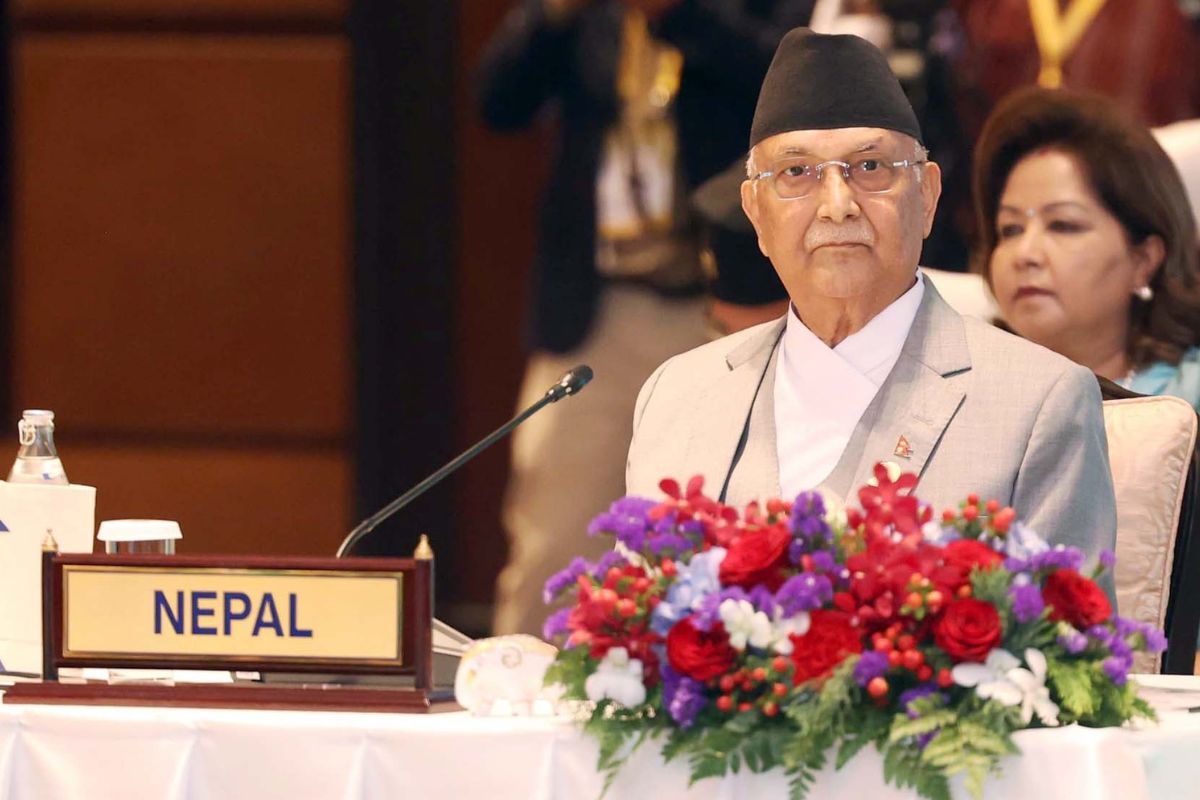
The arrest of Nepal’s former Prime Minister marks a violent collision between a fading political dynasty and a generation that no longer fears the state. Following months of investigation into the state-sponsored violence that defined last year's youth-led uprisings, authorities finally moved to detain the former leader. He now faces charges tied to the deaths of dozens of young protesters who were gunned down during what has been termed the Gen Z Revolution. This is not merely a legal proceeding. It is a desperate attempt by the current coalition government to distance itself from a legacy of blood and corruption before the next election cycle swallows them whole.
The Anatomy of a Rebellion
The protests did not start with a grand political manifesto. They began with a price hike on basic commodities and a viral video of a student being struck by a police baton in central Kathmandu. Within forty-eight hours, the "Tik-Tok Intifada," as some local analysts called it, had mobilized tens of thousands of people under the age of twenty-five. Unlike the structured civil wars or the royalist coups of Nepal’s past, these demonstrations were leaderless and chaotic.
The former Prime Minister underestimated this lack of hierarchy. He relied on the old playbook of arresting party leaders to decapitate the movement. But there were no leaders to arrest. Instead, the administration deployed paramilitary units with orders to clear the streets at any cost. By the time the dust settled, the morgues were full of teenagers, and the government's legitimacy had evaporated.
Institutional Failure and the Paper Trail
What makes this arrest possible today is a series of leaked internal memos from the Home Ministry. These documents suggest that the order to use lethal force came directly from the top, bypassing the standard rules of engagement that require non-lethal dispersal methods like water cannons or tear gas. Investigators have spent months cross-referencing these memos with radio logs from the nights of the heaviest fighting in districts like Lalitpur and Bhaktapur.
The evidence points toward a systemic failure. The police were not merely "overwhelmed" by the crowds; they were incentivized to use maximum force to send a message of absolute control. This strategy backfired. Every casualty became a digital martyr, shared across encrypted messaging apps that the government’s aging intelligence apparatus could neither track nor block.
The Economic Fuse
Nepal’s youth are not just angry about police brutality. They are angry about a stagnant economy that forces nearly 2,000 young people to leave the country every single day for low-wage labor in the Gulf states. The protesters saw the former Prime Minister as the architect of a system that exports its best talent to keep the domestic remittance economy afloat.
Economic frustration acted as the accelerant for the political fire. When the former PM dismissed the protesters as "children who do not understand the complexities of governance," he effectively signed his own political death warrant. He failed to realize that these "children" are the ones bearing the brunt of 15% inflation and a job market that offers nothing but patronage-based appointments.
A Precarious Legal Precedent
The judiciary in Nepal has historically been an extension of the executive branch. This arrest suggests a shift, but it is a fragile one. Critics argue that the current government is using the "justice for the martyrs" narrative to distract from its own inability to pass meaningful reform. If the trial is perceived as a sham or a political hit job, it could trigger a second wave of unrest from the former PM’s remaining loyalists.
There is also the question of the security forces. If high-ranking politicians are held accountable, the police officers who pulled the triggers may be next. This has created a palpable tension within the ranks of the Nepal Police. They feel they are being made scapegoats for following orders, a sentiment that could lead to a refusal to protect the current administration if the streets boil over again.
The Geopolitical Shadow
Nepal sits in a delicate position between India and China. Both regional powers have watched the internal instability with growing concern. Stable governance in Kathmandu is a priority for New Delhi and Beijing, albeit for different reasons. The former Prime Minister was often seen as playing both sides, leveraging infrastructure projects against security cooperation.
His arrest sends a signal to foreign diplomats that the old ways of "big man" politics are under siege. Investors are hesitant. They see a country where the rule of law is being tested in real-time, and where the next generation of leaders remains an unknown quantity. The risk is that the pursuit of justice leads to a power vacuum that neither the traditional parties nor the new youth movements are ready to fill.
Shattering the Culture of Impunity
For decades, the political elite in Nepal operated under a blanket of "gentleman’s agreements." No matter how many scandals broke, or how many protesters died, the leaders of the major parties rarely faced the inside of a prison cell. They would simply rotate through the Prime Minister’s office in an endless cycle of power-sharing deals.
This arrest shatters that cycle. It tells the ruling class that the digital footprint of their actions is permanent and that the public’s memory is longer than a single news cycle. The prosecution must now prove that the former leader didn't just preside over the violence, but actively orchestrated it. This requires proving intent in a system where verbal orders are the norm and written records are often "lost" during transitions of power.
The Digital Battlefield
The Gen Z protesters utilized decentralized networks to bypass state media. They used VPNs to stay online when the government throttled the internet. They used drone footage to document police movements. This was the first time the Nepali state faced a technologically superior civilian population.
The former PM’s defense team is expected to argue that the digital evidence—video clips and social media posts—is manipulated or lacks the context of the provocations faced by the police. However, the sheer volume of synchronized footage makes that a difficult needle to thread. The court of public opinion has already reached its verdict; now the Supreme Court must decide if it has the stomach to follow suit.
The Burden of Proof
The legal team representing the victims' families has gathered over 400 eyewitness accounts. They are focusing on specific incidents where unarmed individuals were shot in the back or at close range. These are not the hallmarks of a police force defending itself against a riot. They are the hallmarks of an execution.
The prosecution’s biggest challenge will be the "chain of command" defense. In previous cases of political violence in Nepal, the blame was successfully shifted down to low-level officers who were then quietly pardoned or given light sentences. To convict a former Prime Minister, the state must produce a smoking gun that links the Prime Minister’s Office to the specific tactical decisions made on the ground.
The streets of Kathmandu are quiet for now, but it is an uneasy silence. People are watching the courthouse, not the parliament. They are waiting to see if the system is capable of correcting itself or if it will simply protect its own as it has done for the last thirty years. This trial is the ultimate test of Nepal’s young democracy. If it fails to deliver a transparent and fair result, the next uprising will not be fought with hashtags and slogans, but with the focused rage of a generation that has nothing left to lose.
The former Prime Minister sits in a cell, but the system he built remains largely intact. Removing the head of a corrupt structure does not automatically fix the foundation. The young people who stood in the path of the bullets are not looking for a single arrest; they are looking for a wholesale reimagining of how their country is governed. Anything less than that will be seen as a betrayal of the lives lost during those bloody weeks last year.
Monitor the upcoming preliminary hearings for signs of witness intimidation or sudden changes in the prosecution's lead counsel.