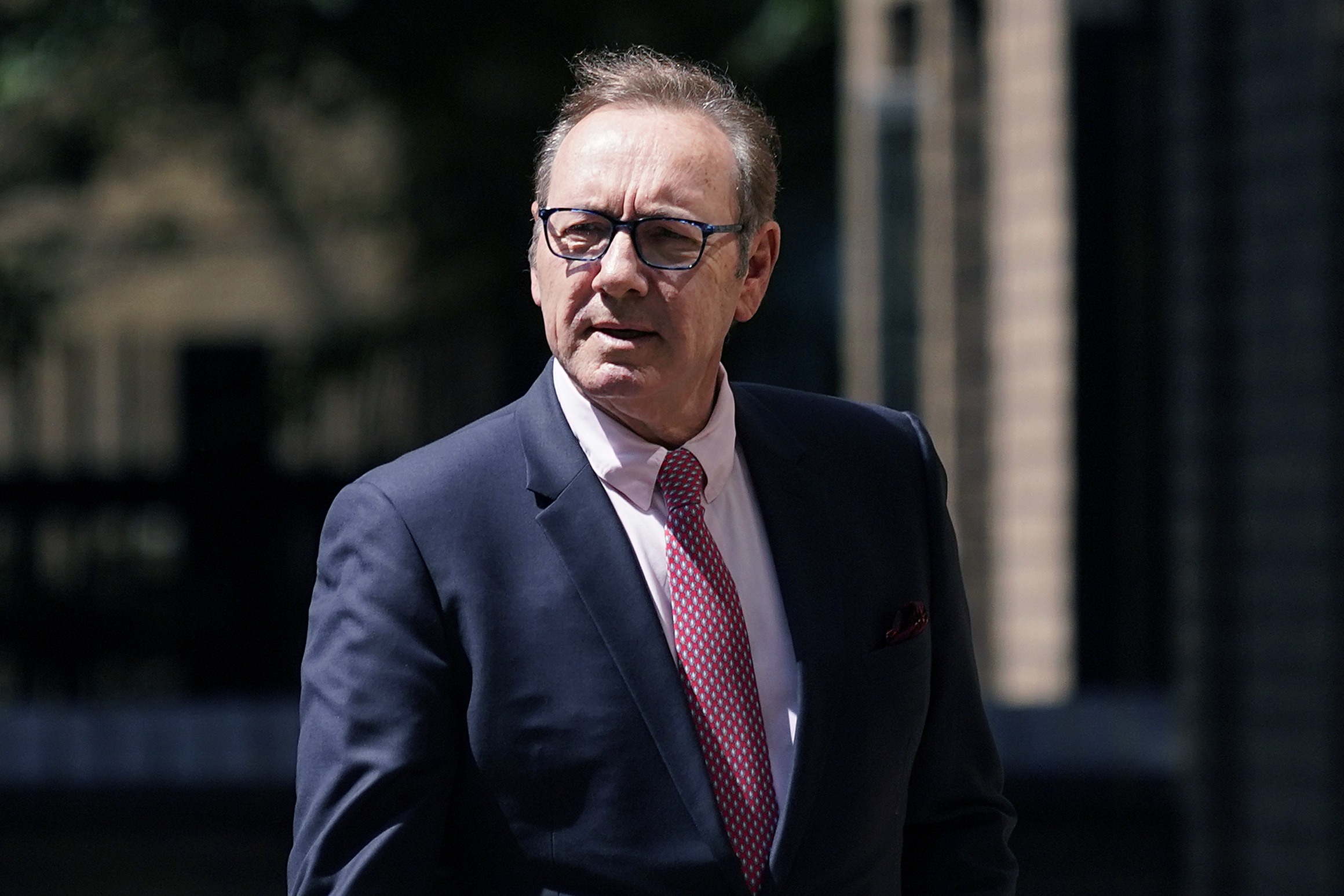
Kevin Spacey has effectively closed the book on his legal battles in the United Kingdom, reaching a confidential settlement with three men who accused him of sexual assault. The deal, finalized in March 2026, halts a high-stakes civil trial that was scheduled to begin at London’s High Court this autumn. By choosing to settle, Spacey avoids a public re-examination of allegations spanning from 2000 to 2013, a period during which he reigned as the artistic director of the Old Vic theatre. While the financial terms remain locked behind a confidential court order, the move signals a definitive shift in strategy for an actor who previously insisted on total vindication through the jury system.
The settlement ends years of litigation involving three specific claimants, including actor Ruari Cannon, who was the only one to waive his right to anonymity. The other two men, identified in court documents only by their legal pseudonyms, were among those who testified during Spacey’s 2023 criminal trial. In that proceeding, a jury acquitted Spacey of all nine charges of sexual offense. However, the civil arena operates on a different threshold of proof. Whereas a criminal conviction requires proof beyond a reasonable doubt, a civil win only requires a "balance of probabilities." This lower bar likely played a role in the sudden pivot toward a private resolution.
The Calculus of a Civil Exit
Settling out of court is rarely an admission of guilt, yet in the world of high-profile litigation, it is always a calculation of risk. Spacey has consistently denied all wrongdoing, maintaining that any encounters were either consensual or entirely fabricated. Yet, a civil trial would have opened him up to intense discovery and a grueling cross-examination without the protection of the "beyond reasonable doubt" standard.
For a man who has already seen his career decimated and his personal wealth drained by legal fees, the prospect of another month-long media circus was perhaps the final straw. Justice Christina Lambert, the High Court judge overseeing the case, stayed the proceedings on March 13 after receiving word that an agreement had been reached. No order was made regarding legal costs, which usually implies that both sides reached a compromise that allowed them to walk away without further bleeding.
The timing is particularly notable. Spacey is now 66. Since the first allegations surfaced in 2017, he has been largely exiled from major Hollywood productions, losing his starring role in House of Cards and being scrubbed from completed films. Recent interviews suggested he was facing financial ruin, claiming in 2024 that his home in Baltimore had been foreclosed upon. A settlement allows him to put a ceiling on his liabilities and perhaps begin a more quiet attempt at a late-career comeback in European or independent cinema.
The Old Vic Connection
The shadow of the Old Vic theatre looms large over these settlements. Spacey spent over a decade at the helm of the prestigious London institution, and it was during this tenure that the majority of the alleged incidents occurred. Ruari Cannon’s claim specifically targeted Spacey’s conduct during a production of Sweet Bird of Youth in 2013.
Significantly, Cannon also reached a separate settlement with the Old Vic itself earlier this month. This suggests a broader effort by the institution to distance itself from the "Spacey era" and the accusations of a "cult of personality" that allowed alleged misconduct to go unchecked. When the allegations first broke years ago, the Old Vic conducted an internal investigation that yielded 20 personal testimonies of inappropriate behavior. By settling, both Spacey and the theatre have managed to prevent those witnesses from taking the stand in a public court of law.
The MeToo Fatigue and the Court of Public Opinion
We are nearly a decade into the post-Weinstein era, and the public appetite for these protracted legal sagas has shifted. Spacey’s previous victories—the 2022 dismissal of Anthony Rapp’s $40 million lawsuit in New York and the 2023 London acquittal—provided him with a narrative of being a victim of "cancel culture." He leaned into this, participating in documentaries and interviews where he portrayed himself as a man unfairly maligned.
However, a settlement complicates that narrative. It is a pragmatic ending rather than a triumphant one. For the accusers, a settlement offers a guaranteed, if undisclosed, sum and an end to the trauma of litigation. For the public, it leaves a lingering ambiguity. There will be no definitive "guilty" or "not liable" verdict to point to this time.
The legal machinery in the UK is notoriously expensive. By freezing these cases, Spacey has stopped the clock on a trial that was expected to involve seven additional witnesses who were prepared to testify about similar alleged experiences. These "propensity witnesses" are often the most damaging element of a civil case, as they can establish a pattern of behavior that a jury finds hard to ignore.
A Career in Limbo
Spacey’s future remains a question mark. He has picked up sporadic roles in smaller international films, such as the Italian production L'uomo che disegnò Dio and the voice role in Control. He has even made appearances at film festivals in Italy, attempting to test the waters of his own "un-canceling." But the major studios in Los Angeles and the powerful talent agencies in London remain wary.
The settlement of these civil claims removes the immediate threat of a new courtroom defeat, but it doesn't necessarily restore the trust required for a leading man to carry a $100 million blockbuster. In the industry, the "Spacey problem" has evolved from a legal crisis into a brand management issue. He is no longer a defendant, but he is still a risk.
The High Court order effectively silences the specific allegations of these three men, but it does not erase the record of the last nine years. The actor’s legacy is now a split screen: the brilliant, two-time Oscar winner on one side, and the man whose name became synonymous with the industry's reckoning on the other.
With the London cases stayed, Spacey is legally "clear" for the first time in years. Whether that clarity leads to a path back to the stage or screen is something the market, not a judge, will decide. If you want to understand how the industry really views him now, watch the casting calls for 2027.