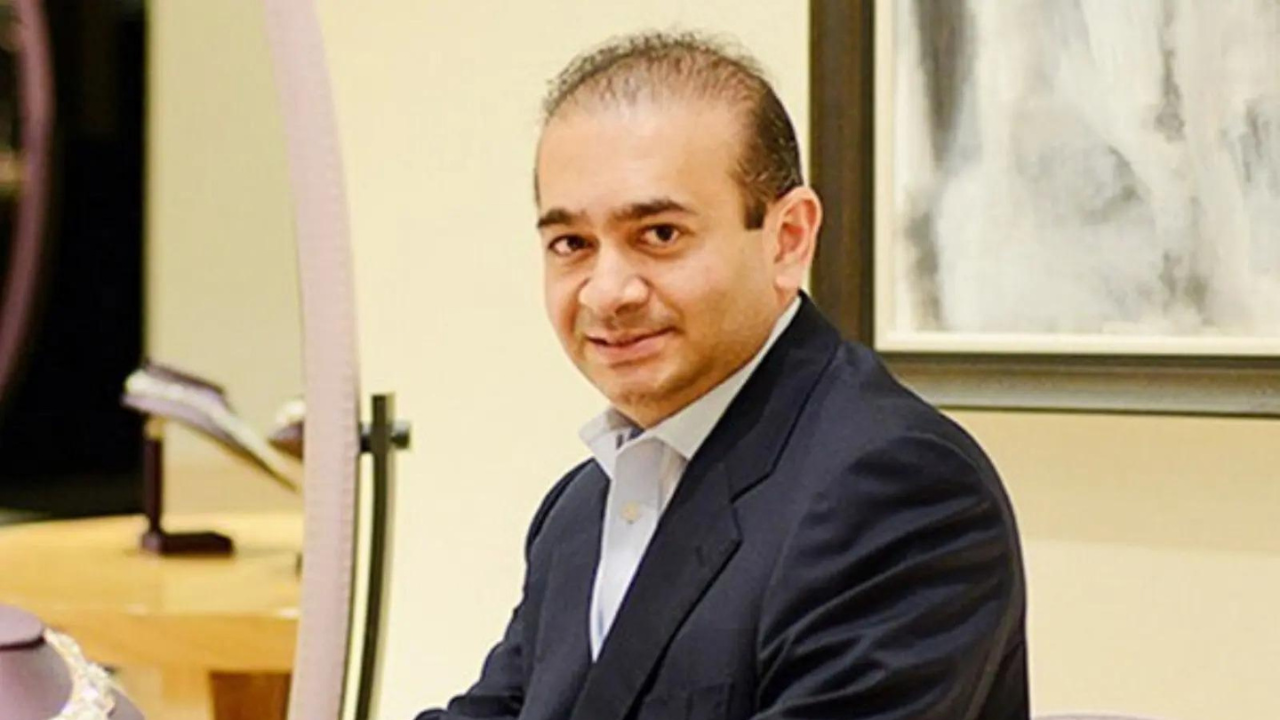
The steel door of a cell in Wandsworth Prison does not just close; it thuds with a finality that echoes through the Victorian masonry. For Nirav Modi, once the jeweler to the stars, the man whose diamonds caught the flashbulbs of Hollywood and Bollywood alike, this sound has become the metronome of his existence. It is a stark departure from the plush carpets of Mayfair or the glittering showrooms of New York. Now, his world is measured in square footage and the legal minutes ticking toward a departure he is desperate to avoid.
The latest chapter in this saga isn't being written in a boardroom or a bank vault. It is being etched in the hallowed, often opaque chambers of the European Court of Human Rights (ECHR) in Strasbourg. By lodging an application under Rule 39, Modi is pulling the emergency brake on a legal machinery that has been grinding toward his extradition for years. This isn't just about a businessman fighting fraud charges; it is a high-stakes collision between international treaty obligations and the fundamental right to a fair trial.
Consider the optics of a fallen mogul. It is easy to view this through the lens of a simple financial crime—the alleged $2 billion fraud against Punjab National Bank. But look closer. The move to the ECHR shifts the narrative from "Did he do it?" to "What happens if we send him back?" This is where the human element bleeds into the dry ink of international law.
The Architecture of an Escape Act
To understand why a billionaire would pin his last hopes on a court in France, you have to understand the sheer weight of the UK legal system. Modi has exhausted every traditional avenue in the British courts. His appeals were denied. His permission to move to the Supreme Court was blocked. The Home Office has already signed the order. In the eyes of Westminster, the case is closed.
But the ECHR exists as a ghost in the machine. It is the "court of last resort," a place where the technicalities of a banking scam are stripped away to reveal the raw nerves of human rights. Modi’s legal team is betting everything on the argument that his mental health and the conditions of Indian prisons constitute a breach of Article 3 of the European Convention on Human Rights—the prohibition of torture or inhuman and degrading treatment.
Imagine, for a moment, a person—not necessarily a diamond merchant, but any individual—facing a transfer to a facility where the infrastructure is crumbling and the medical oversight is a question mark. For Modi’s defense, this isn't a hypothetical fear. They point to his documented depression and the risk of suicide, arguing that the Indian judicial system cannot provide the specialized care required to keep him safe. The stakes are no longer about balance sheets. They are about a life in the balance.
The Ghost of Arthur Road Jail
Across the ocean, in Mumbai, a cell waits. Barrack 12 at Arthur Road Jail has been prepared with the kind of scrutiny usually reserved for a visiting dignitary. The Indian government has provided "assurances"—a word that carries immense weight in extradition law. They have promised adequate light, ventilation, personal space, and medical access. They have filmed the cell to prove its habitability.
But assurances are only as strong as the trust between the nations that trade them.
The tug-of-war here is between the UK’s desire to fulfill its role as a partner in global justice and its commitment to the human rights of anyone on its soil. If the ECHR grants an interim measure, it effectively tells the British government: "Wait. We aren't convinced he will be safe." This would be a massive diplomatic friction point. It suggests that even with high-level promises, the sovereign word of a democracy like India might not be enough to satisfy the rigorous standards of European human rights law.
It is a delicate dance. On one side, you have the victims of the alleged fraud—small business owners and taxpayers in India who saw a massive hole blown in their national economy. On the other, you have a man whose mental state has become his primary shield against a plane ride home.
Why the Rule 39 Matters
In the legal world, Rule 39 is the "interim measure." It is rare. It is urgent. It is usually reserved for cases involving imminent deportation to a war zone or the threat of the death penalty. For it to be applied to a financial accused is a testament to the complexity of the mental health arguments being leveled.
The ECHR does not look at the evidence of the PNB fraud. They don't care about the letters of undertaking or the shadow companies in Hong Kong. They look at the man. They look at the risk. They look at whether the British courts missed a crucial heartbeat in their rush to satisfy an extradition treaty.
The process is agonizingly slow for the public but terrifyingly fast for the accused. While the court deliberates, everything stops. The extradition is frozen. This "stay of execution" is the thin line between the grey walls of Wandsworth and the crowded barracks of Mumbai.
The Weight of the Crown
There is a certain irony in the fact that the very system Modi is accused of gaming—the global financial network—is now replaced by the very system designed to protect the most vulnerable. Critics argue that this is a cynical use of human rights law, a way for the wealthy to buy time that a common refugee could never afford. Supporters of the process, however, argue that human rights are not a buffet. You cannot pick and choose who gets them based on the size of their bank account or the nature of their alleged crimes.
If the ECHR sides with Modi, it sets a precedent that could complicate every future extradition between the West and the Global South. It signals a deep skepticism of "diplomatic assurances." It suggests that no matter how many videos of a clean cell you provide, the reputation of a prison system can outweigh the promises of a government.
The Loneliness of the Long Shot
Walking through the corridors of a high-security prison, one realizes that status is a garment easily stripped away. In Wandsworth, Nirav Modi is just another number in a system designed to process humans like cargo. His diamonds are gone. His shops are shuttered. His name, once a symbol of aspiration, is now a case file.
The invisible walls of the ECHR are his final barricade. He sits in a cell, waiting for a group of judges in Strasbourg to decide if his fear is legally valid. It is a quiet, sterile end to a loud, flamboyant career. Whether he is a victim of a system stacked against him or a master of delay is a question that depends entirely on which side of the bars you stand on.
The clock in Wandsworth continues to tick. Outside, the world moves on, trading in the very stones he once polished. Inside, the only thing left to polish is a legal argument, honed to a sharp edge, aimed at the heart of a treaty.
Justice, in this case, isn't just about the money lost. It is about the definition of mercy in a globalized world. As the sun sets over the Thames, the diamond merchant waits for a letter from France that will determine if his next sunrise is in London or Mumbai.
The silence in the cell is the heaviest thing he has ever had to carry.