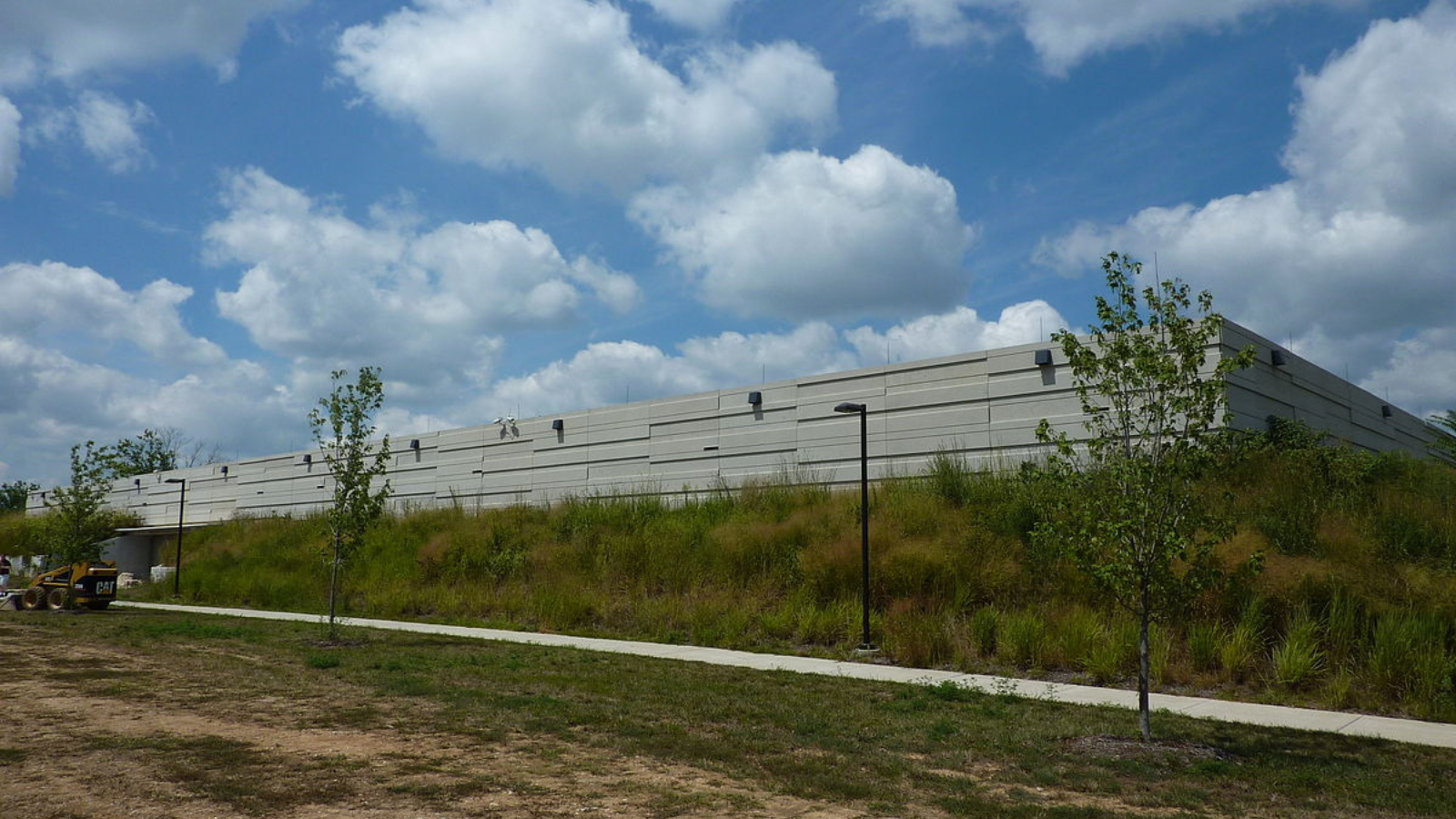
Maine’s move to implement a formal ban on new large-scale data center developments represents a fundamental shift in how state governments manage the intersection of digital infrastructure and utility stability. This is not merely a localized regulatory hurdle; it is a calculated response to the thermal and electrical load realities of a 19th-century grid facing 21st-century compute demands. The legislation targets the inherent tension between aggressive decarbonization goals and the massive, inelastic demand profiles of modern hyperscale facilities.
The Tri-Factor Constraint Model
The push for a moratorium is driven by three distinct systemic pressures that traditional utility planning failed to account for in the previous decade.
Grid Capacity and Baseload Elasticity
Maine’s electrical infrastructure is optimized for historical industrial patterns—primarily pulp, paper, and manufacturing. These industries often operated with predictable, cyclical loads. Data centers, conversely, maintain a high load factor, often exceeding 90%. This "always-on" demand strips the grid of its traditional recovery periods, forcing ISO New England to rethink reserve margins. When a single facility can demand 100MW to 500MW, it occupies a significant percentage of the state's total peak load, which hovers around 2,000MW.The Decarbonization Paradox
Maine has committed to some of the most aggressive renewable energy targets in the United States, aiming for 80% renewable energy by 2030. Data centers are often marketed as "green" via Power Purchase Agreements (PPAs), but the physical reality is different. A PPA for a wind farm in Aroostook County does not solve the local congestion at a substation in the southern part of the state where a data center might sit. The state recognizes that allowing massive new loads could force the continued operation of "peaker" plants—oil or gas units—thereby nullifying carbon reduction progress.Ratepayer Equity and Infrastructure Costs
The Capital Expenditure (CAPEX) required to upgrade transmission lines and substations for a new data center is immense. Under current regulatory frameworks, these costs are frequently socialized across the entire ratepayer base. Legislators are responding to the risk that residential and small business consumers will subsidize the infrastructure necessary for global tech conglomerates, without seeing proportional local economic benefits like high-volume job creation.
Quantifying the Economic Disconnect
The primary friction point in the Maine data center debate is the low "Job-to-Megawatt" ratio. In traditional manufacturing, 50MW of power might support 500 to 1,000 jobs. In a modern, highly automated data center, that same 50MW might support only 30 to 50 permanent staff.
Revenue vs. Resource Consumption
State analysts are evaluating the "Compute Value Added" (CVA) to the local economy. While data centers provide significant property tax revenue, the operational phase contributes little to the local velocity of money.
- Tax Revenue: Concentrated and predictable, but often offset by initial tax abatements used to attract the project.
- Resource Intensity: High water usage for evaporative cooling (in non-closed loop systems) and high electrical draw.
- Employment: High-intensity during the construction phase (18–24 months), followed by a steep drop-off to a skeleton crew of site reliability engineers and security.
This imbalance suggests that a ban is a tactical pause to rewrite the "Economic Impact Formula" used by state planners. The goal is to ensure that future developments are not just consumers of resources, but net contributors to the grid’s resilience.
Technical Bottlenecks and Transmission Reality
The physical geography of Maine complicates the data center value proposition. The state is at the "tail end" of the New England energy pipe.
The Northern-Southern Split
Much of the state’s renewable generation potential is in the north, while the load centers and fiber backbones are in the south. The Maine Power Reliability Program (MPRP) and subsequent projects have increased north-to-south transfer limits, but these are already nearing saturation. Introducing a massive point-load (a data center) requires "Line-Side" upgrades that can take 7 to 10 years to permit and build.
The moratorium functions as a circuit breaker for the permitting office. It prevents a "land grab" where developers lock up interconnection queue positions for projects that may never be built, effectively blocking more diverse or smaller-scale industrial developments that offer better employment metrics.
Legislative Precedent and National Implications
Maine is the first to move toward a statewide ban, but it follows localized precedents seen in Loudoun County, Virginia, and parts of the Netherlands and Ireland. These regions experienced "Data Center Density Crisis" where the sheer volume of compute power began to threaten residential reliability.
The Shift from Incentive to Restriction
For the last twenty years, states competed to offer the best tax breaks for data centers. The Maine ban signals the end of this era. We are entering a phase of "Sovereign Resource Management" where electricity is treated as a finite strategic asset rather than a commodity to be sold to the highest bidder.
The legal framework being developed in Maine focuses on:
- Mandatory Heat Re-use: Forcing facilities to pipe waste heat into local district heating systems or industrial processes.
- On-site Generation Requirements: Moving away from total grid reliance toward behind-the-meter microgrids, likely involving long-duration energy storage or small modular reactors in the future.
- Water Neutrality: Banning systems that rely on potable water for cooling in favor of closed-loop or air-cooled designs.
Strategic Forecast for Digital Infrastructure
The ban in Maine is not a permanent rejection of technology but a demand for a higher tier of engineering and social integration. Developers who wish to operate in resource-constrained environments must pivot their strategy from "Space and Power" to "Integration and Resilience."
The next generation of successful data center deployments in the Northeast will likely require a "Grid-First" architecture. This involves:
- Dynamic Load Shedding: The ability for the data center to drop 50% of its load within seconds to stabilize the grid during peak events, essentially acting as a massive, virtual battery.
- Infrastructure Pre-Funding: Moving away from socialized utility upgrades toward a model where the developer pays 100% of the transmission reinforcement costs upfront, with no ratepayer clawback.
- Brownfield Prioritization: Explicitly targeting former industrial sites that already possess high-voltage interconnections, reducing the need for new "Greenfield" transmission corridors.
Companies that fail to adapt to this "Resource-First" regulatory environment will find themselves locked out of the New England market entirely. The Maine ban is the first of many structural checkpoints designed to ensure that the digital economy does not cannibalize the physical stability of the regions it inhabits. Strategy must now focus on proving that a data center can be a grid-stabilizing asset rather than a systemic liability.