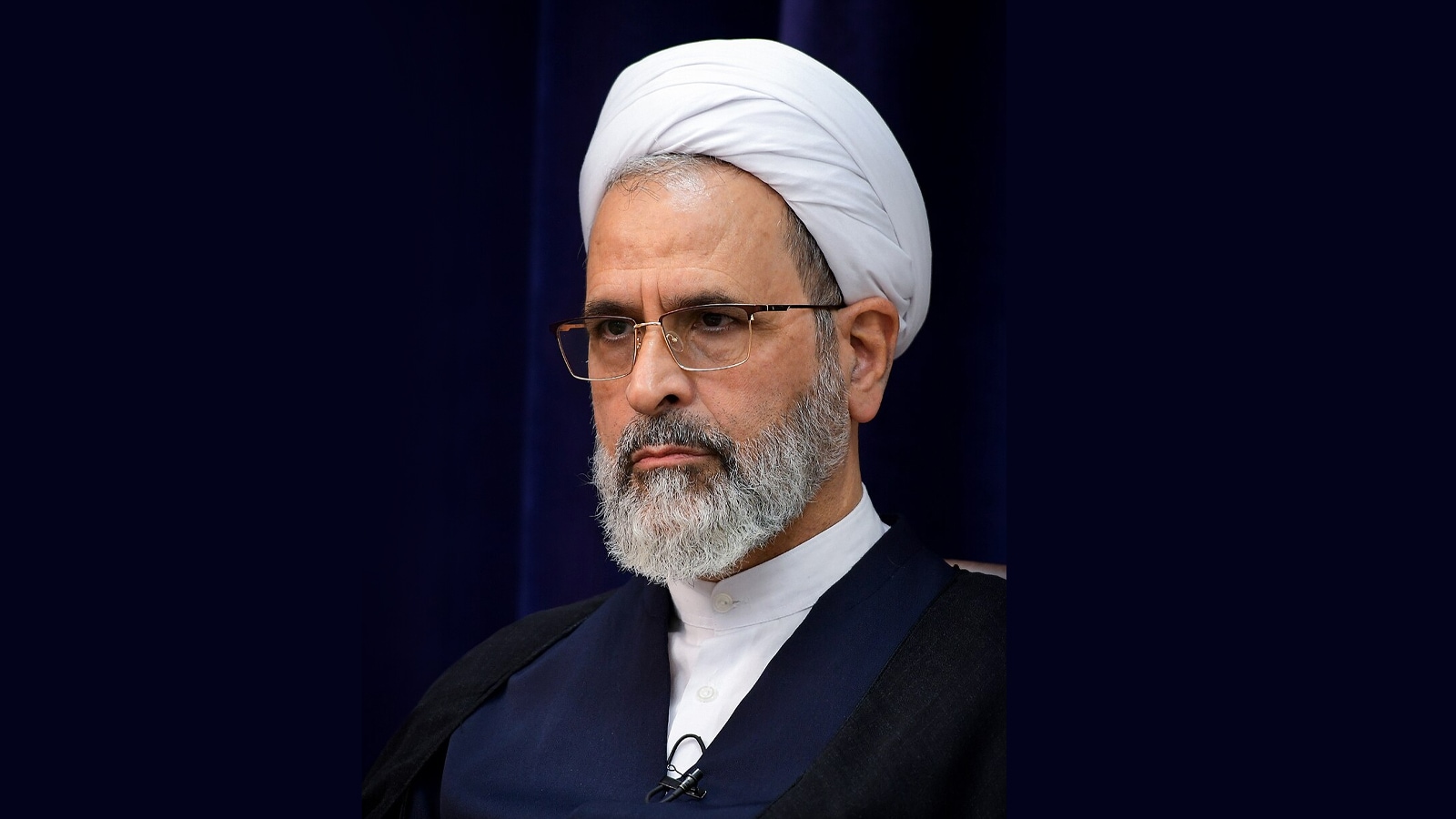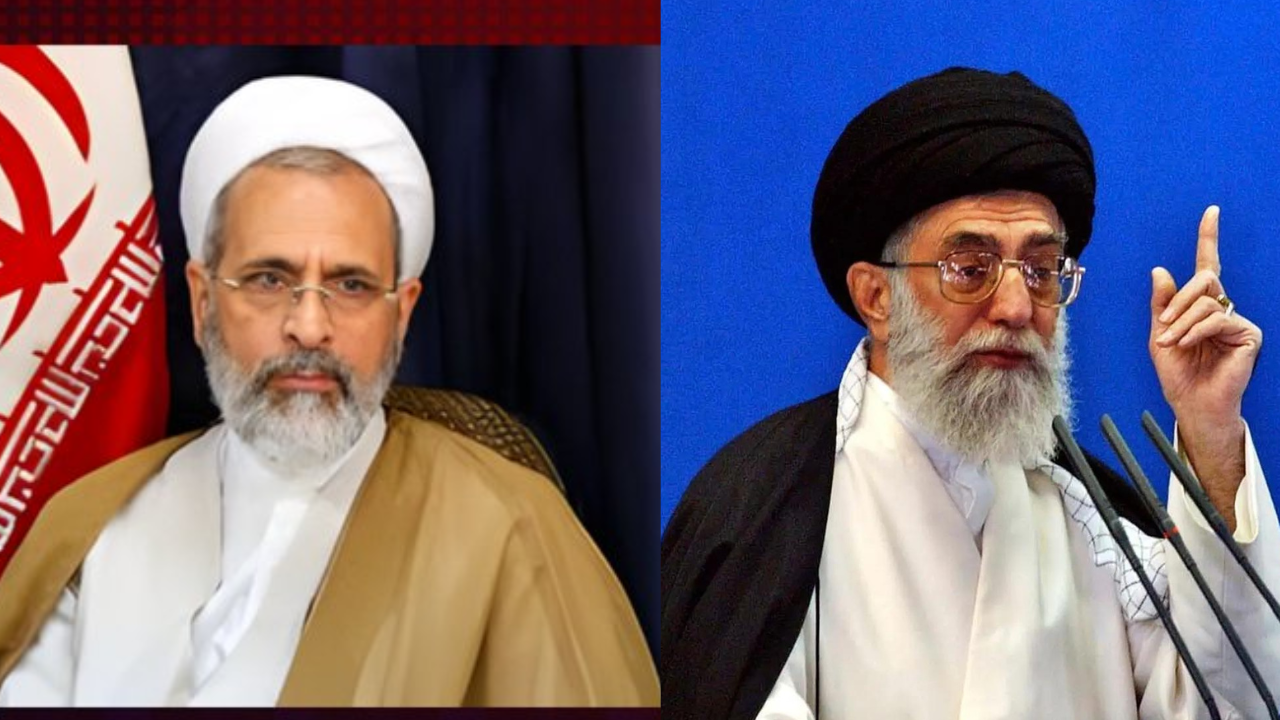
The air in Qom is thick with the scent of rosewater and the heavy, invisible weight of history. Here, in the labyrinthine heart of Iran’s theological nerve center, power doesn’t wear a crown or a tailored suit. It wears the dark cloak of the cleric and the quiet, unnerving patience of a man who has spent decades preparing for a moment he is forbidden to publicly crave.
When the news cycle breaks and the world begins to whisper about the "interim" future of the Islamic Republic, one name rises like heat shimmer off the desert floor. Alireza Arafi.
To the casual observer in the West, he is another face in a sea of black turbans. But to those who understand the intricate, lethal chess game of Iranian succession, Arafi is the queen on the board. He is the bridge between the old guard’s fading breath and the digital-age survival of a theocratic empire.
The Architect of Minds
Succession is rarely about who shouts the loudest. It is about who holds the keys to the library, the classroom, and the conscience of the next generation. Arafi has spent his life turning those keys.
As the head of the Al-Mustafa International University, he didn't just manage a school. He managed an export. Imagine an institution that functions as a diplomatic mission, a seminary, and a cultural intelligence agency all rolled into one. Under Arafi’s watch, thousands of students from across the globe—from the suburbs of London to the villages of Nigeria—traveled to Iran to learn a specific, state-sanctioned brand of Islam.
He wasn't just teaching theology. He was building a global network of loyalty.
When we talk about "interim leaders," we often picture a placeholder, a gray man who keeps the seat warm while the real titans fight in the hallway. Arafi defies this trope. He is a master of the institutional long game. He has sat at the helm of the Friday Prayer Leaders, shaped the curriculum of every seminary in the country, and occupied a seat on the Guardian Council.
He doesn't just inhabit the system. He wrote the operating manual.
The Weight of the Ring
Consider the sheer psychological pressure of being the "backup." In the Iranian political structure, the Supreme Leader is not just a head of state; he is the Vali-e-Faqih, the temporal representative of the hidden Imam. To step into those shoes, even temporarily, is to claim a mandate that is supposedly divine.
The stakes are not merely political. They are existential.
The transition of power in Tehran is a period of profound vulnerability. It is the moment the armor chinks. For a man like Arafi, the "interim" tag is a misnomer. In a system where perception is reality, the person who manages the transition is the person who decides which way the wind blows. If the Supreme Leader passes, the Assembly of Experts—a body Arafi knows intimately—must move with surgical precision to prevent internal collapse or external meddling.
Arafi is the lubricant in these grinding gears. He is acceptable to the hardliners because his credentials are unimpeachable. He is useful to the pragmatists because he understands how to speak the language of institutional stability.
A Quiet Radicalism
There is a mistake many make when analyzing men like Arafi. We look for the "moderate" or the "hardliner" label, hoping to fit them into a neat box that makes sense to a democratic mind.
It’s a trap.
Arafi represents a third category: the Institutionalist. His loyalty is not necessarily to a specific person, but to the survival of the structure itself. He has seen the uprisings. He has felt the tremors of a youth population that is increasingly disconnected from the fervor of 1979. His response hasn't been to soften the message, but to modernize the delivery.
He has pushed for the integration of modern sciences into seminary studies. He has embraced the digital tools of the 21st century to spread 7th-century ideals. This is the "Arafi Method"—using the tools of the future to fortify the walls of the past. It is a sophisticated, quiet radicalism that is far more durable than the fiery rhetoric of his peers.
The Invisible Stakes of the Interim
Let’s step into a hypothetical scenario to understand the gravity of his potential role.
The day comes. The state media goes silent, replaced by the rhythmic chanting of the Quran. The streets of Tehran hold their breath. In this vacuum, the "interim" leader is the only thing standing between order and an unpredictable, spiraling chaos.
If Arafi takes the reins, he isn't just a caretaker. He is the gatekeeper. He controls the flow of information to the Assembly of Experts. He coordinates with the Islamic Revolutionary Guard Corps (IRGC) to ensure the streets remain quiet. He manages the delicate egos of the various factions vying for the permanent throne.
The "interim" period is when the real deals are struck. It is in these shadows that the next thirty years of Middle Eastern history are written. Arafi, with his deep ties to both the clerical establishment in Qom and the political elite in Tehran, is uniquely positioned to be the ultimate kingmaker. Or, perhaps, the king himself.
The Man Behind the Cloak
What does a man like Alireza Arafi think about when the cameras are off?
He was born in Meybod, a desert city known for its ancient clay architecture and its resilience against the elements. There is something of the desert in his public persona—stark, enduring, and difficult to read. He is not a man of public outbursts. He is a man of the committee. A man of the text.
This lack of "flash" is his greatest strength. In a world of loud demagogues, the man who speaks in the measured tones of a scholar is often the one people turn to when the ground starts to shake. He offers the illusion of continuity. He provides a sense of intellectual heft to a regime that is often accused of relying solely on brute force.
But make no mistake. The softness of his tone does not imply a softness of resolve.
To climb the ranks of the Iranian clerical establishment, one must possess a skin of leather and a mind like a razor. You do not get to lead the seminaries of Qom by being a bystander. You get there by navigating the most treacherous political waters on earth and coming out dry on the other side.
The Shadow Lengthens
The global community often focuses on the "who" of the next Supreme Leader. We want a name. We want a face to put on the dartboard or the pedestal.
But Arafi teaches us that the "how" is just as important.
He represents the machinery of the state. He is the personification of the bureaucracy that keeps the wheels turning even when the engine is smoking. Whether he eventually wears the ultimate ring or simply ensures it reaches the next finger, his influence is already baked into the soil.
He has spent decades molding the minds of the men who will eventually take his place. He has exported his vision to five continents. He has sat in the rooms where the most sensitive decisions of the Republic are made.
As the sun sets over the salt flats near Qom, the shadow of the man in the black turban grows long. It stretches across the halls of power in Tehran and reaches far beyond the borders of Iran.
We look for the fire. We look for the explosion. We look for the sudden shift. But the real story of power in Iran is often found in the quiet, the "interim," and the men who know exactly how to wait.
The man from Meybod is still waiting. And the world is finally starting to notice the silence.
The black ink of the scholar, it is said, is holier than the blood of the martyr. Arafi has spent a lifetime refining his ink, and as the old guard nears its end, he stands ready to write the next chapter—or at least to hold the pen while someone else tries.
The throne may be vacant one day soon, but the room will not be empty.