The stability of India’s energy security currently rests on the ability of state-run and private refiners to navigate a shrinking window of physical availability and escalating freight risk. While market observers often focus on the geopolitical optics of Indian oil purchases, the structural reality is driven by a tactical shift from long-term contract reliance to prompt-market spot acquisitions. The intersection of the Iranian-Israeli escalation and the resulting insecurity of Persian Gulf transit has forced a re-evaluation of the "discount" narrative. Indian refiners are no longer just seeking cheap oil; they are solving for temporal delivery certainty in a market where traditional "safe" routes are now under active threat.
The Dual-Constraint Model of Indian Refining
To understand why Indian refiners have pivoted back toward Russian Urals and Sokol grades despite tightening G7 enforcement, one must look at the two primary constraints governing their procurement desks:
- The Delivery Lead-Time Constraint: Refiners operate on rigid processing schedules. When Middle Eastern supplies are threatened by potential Strait of Hormuz closures or kinetic strikes on Iranian infrastructure, the risk of a "dry-run" (refinery idling) outweighs the political cost of secondary sanctions.
- The Yield Optimization Variable: Indian refineries, particularly those on the west coast like Jamnagar or Vadinar, are sophisticated "deep conversion" facilities. They are engineered to crack specific sulfur-heavy grades. If Iranian Light or Heavy supplies are removed from the shadow market or the legal spot market, Russian Urals—which shares a similar chemical profile (Medium Sour)—is the only functionally identical substitute available at scale.
The Geography of Risk and the Suez-Bypass Premium
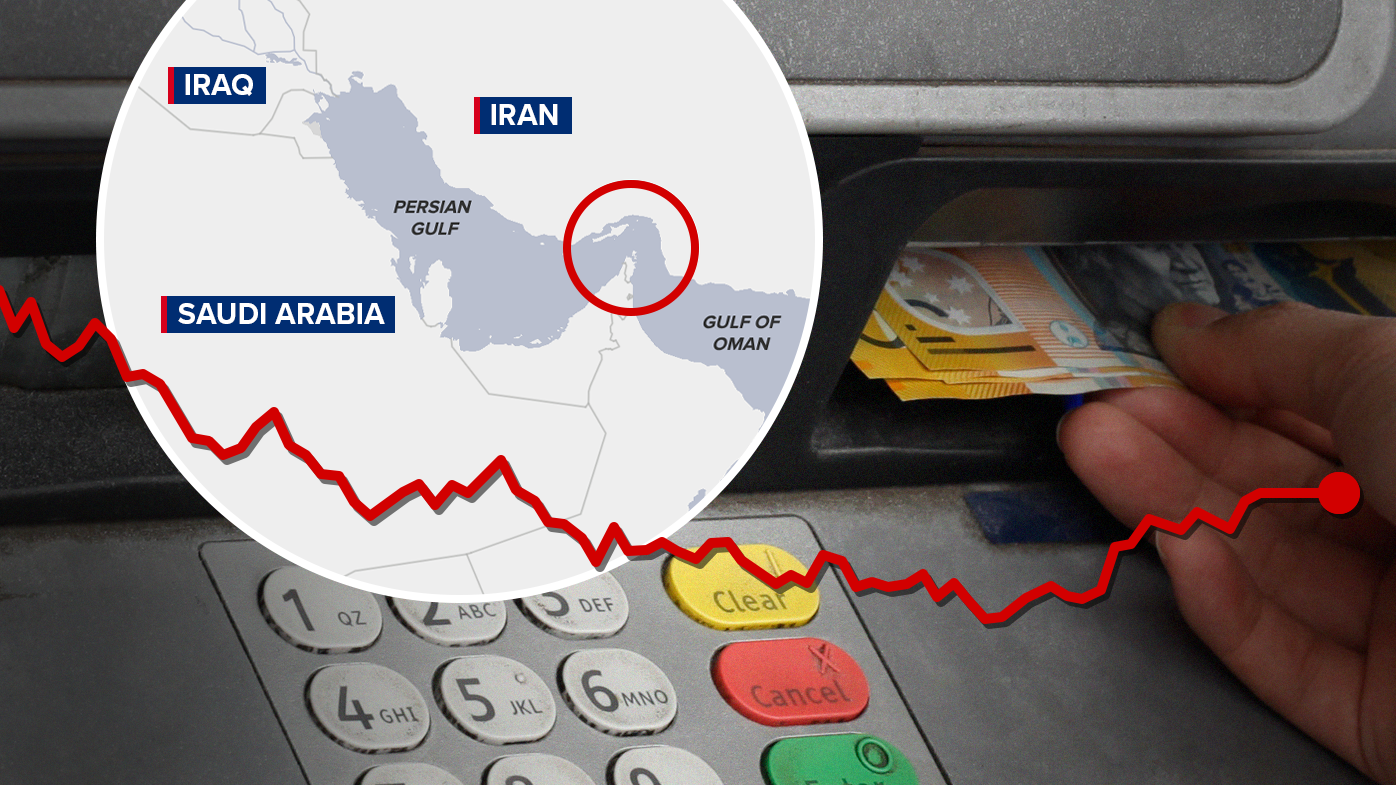
The logistics of global oil transit are currently split into two distinct risk zones. The first is the Red Sea/Suez Canal corridor, plagued by Houthi-led disruptions. The second is the Persian Gulf, now shadowed by the risk of Iranian retaliatory measures.
Indian procurement strategy has responded by bifurcating their supply chain:
- West-to-East Flow (Russian Arctic/Baltic): By purchasing Russian oil shipped from Baltic ports (Primorsk/Ust-Luga) or Arctic ports (Murmansk), Indian refiners are utilizing the "shadow fleet." While these vessels must often circumnavigate Africa via the Cape of Good Hope, the voyage avoids the immediate missile threats of the Bab el-Mandeb.
- The Prompt-Market Premium: Refiners are paying for "prompt" cargoes—oil that is already on water or available for immediate loading. This reduces the Exposure Duration, the time between the financial transaction and the physical receipt of the molecules. In a high-volatility environment, a 45-day lead time is an unacceptable risk; a 15-day prompt window is a manageable one.
Quantifying the Substitution Effect
When Iranian supply is sidelined due to war footing, the global "Soured Crude" balance tightens. Iran produces roughly 3.2 million barrels per day (bpd). Even a partial disruption of their 1.5 million bpd export capacity creates a vacuum.
The substitution effect follows a predictable economic path. As Iranian barrels become "blocked" due to insurance hikes or physical risk, Indian buyers compete for Russian Urals. This increased demand structurally narrows the discount of Urals against the Dated Brent benchmark. We are moving from a period of "Ideological Discounts" (where Russia sold cheaply because it had no other buyers) to a period of "Risk-Adjusted Parity" (where Russia sells at a price just below Middle Eastern grades to compensate for the higher freight and insurance costs of the long-haul voyage).
The Three Pillars of the Current Procurement Pivot
- Logistical Redundancy: Indian Oil Corp (IOC) and Bharat Petroleum (BPCL) are increasingly favoring CIF (Cost, Insurance, and Freight) contracts over FOB (Free on Board). By shifting the delivery risk to the seller, Indian firms insulate their balance sheets from the skyrocketing costs of tanker insurance in conflict zones.
- Payment Rail Diversification: The move to prompt Russian oil is facilitated by non-dollar clearing mechanisms. The use of UAE Dirhams (AED) and, sporadically, Indian Rupees (INR) for settle-up allows for faster transaction closing in the prompt market, bypassing the friction of Western banking compliance checks that delay "term" contract payments.
- Refinery Configuration Alignment: Most Indian public sector undertaking (PSU) refineries are optimized for the gravity ($29^\circ$ to $33^\circ$ API) and sulfur content (1.3% to 2.2%) of Urals and Iranian Heavy. The "prompt" buy is a technical necessity to maintain the Complexity Index efficiency of these plants. Switching to US WTI (West Texas Intermediate) would require significant adjustments to the catalyst configurations and would result in an overproduction of light distillates (naphtha) at the expense of high-demand middle distillates (diesel).
The Hidden Cost of the Shadow Fleet
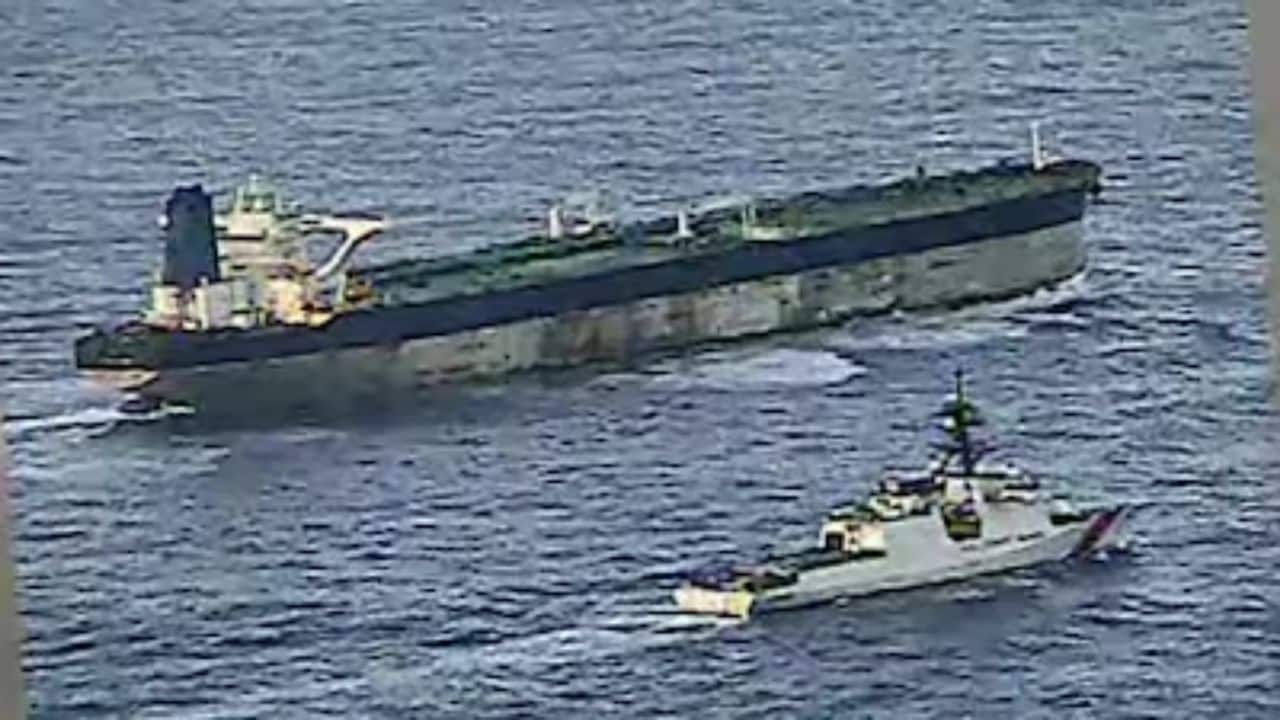
While the acquisition of Russian oil solves the supply gap, it introduces a "Mechanical Risk" variable. The vessels transporting prompt Russian cargoes are frequently older, part of the "gray" or "shadow" fleet that operates outside the standard Western P&I (Protection and Indemnity) clubs.
The cost function of this strategy is not found in the price of the barrel, but in the Systemic Liability Pool. If a shadow-fleet tanker were to suffer a mechanical failure or spill in Indian territorial waters, the recovery of damages is statistically improbable. Indian refiners are essentially self-insuring against a catastrophic environmental event in exchange for maintaining the refinery throughput required to keep domestic fuel prices stable.
The Structural Breakdown of the "War Discount"
It is a fallacy to assume that war in the Middle East automatically makes Russian oil "cheaper." In reality, the conflict creates a Floor Price for Inefficiency.
$$P_{delivered} = P_{benchmark} - D_{geopolitical} + C_{freight} + C_{risk}$$
In this equation, $P_{delivered}$ is the final cost to the Indian refinery. While the $D_{geopolitical}$ (the Russian discount) might be $10, the $C_{freight}$ and $C_{risk}$ (the cost of shipping and the risk premium) have expanded. When Iran-Israel tensions spike, $C_{risk}$ for any vessel entering the Arabian Sea increases. Therefore, the net benefit to the Indian economy is shrinking even as the volume of Russian oil imports remains high.
The Disruption of Term Contracts
Traditionally, Indian refiners preferred "Term Contracts"—year-long agreements that provide a steady flow of crude. The current instability has rendered these contracts secondary to the spot market.
Term contracts with Middle Eastern suppliers usually include a "Force Majeure" clause that allows the supplier to cancel deliveries in the event of war. Because the probability of Force Majeure in the Persian Gulf has moved from a tail-risk to a primary-risk, Indian strategy has shifted toward Agile Spot Accumulation. This involves keeping high levels of "Dry Powder" (liquid cash) to snap up distressed or prompt cargoes that become available when other buyers (perhaps in Europe or East Asia) retreat due to sudden risk spikes.
Strategic Realignment of the Indian Energy Desk
The immediate requirement for Indian energy planners is the expansion of the Strategic Petroleum Reserve (SPR). Current SPR levels are insufficient to cover a prolonged total closure of the Strait of Hormuz. Consequently, the "prompt buying" of Russian oil should be viewed as a private-sector-led attempt to build an "on-water" reserve. By filling every available storage tank with Russian molecules now, India creates a 30 to 60-day buffer against a total Middle Eastern supply shock.
The bottleneck in this strategy is not the availability of oil, but the availability of compliant tonnage. As the US Treasury Department increases the frequency of sanctions on specific vessels in the Russian trade, the pool of available tankers for prompt delivery shrinks. This creates a "Tanker Tightness" that could eventually decouple the price of oil at the wellhead from the price of oil at the refinery gate.
The move toward prompt Russian oil is a rational response to a multi-theater logistics crisis. To maintain this position, Indian refiners must now secure long-term maritime insurance alternatives and finalize the "Rupee-Rouble-Dirham" settlement loop to eliminate dependency on the SWIFT network, which remains the primary kill-switch for Western regulators. The goal is a "Sanction-Resistant Supply Chain" that treats crude oil as a physical commodity first and a financial instrument second.
Refiners should prioritize the acquisition of Ice-Class Tankers or enter into joint ventures with Russian shipping entities like Sovcomflot to secure dedicated transit corridors that do not rely on the volatile spot-charter market. This transition from "Opportunistic Buyer" to "Integrated Logistics Partner" is the only way to insulate the Indian economy from the inevitable volatility of the 2026-2027 Persian Gulf security cycle.