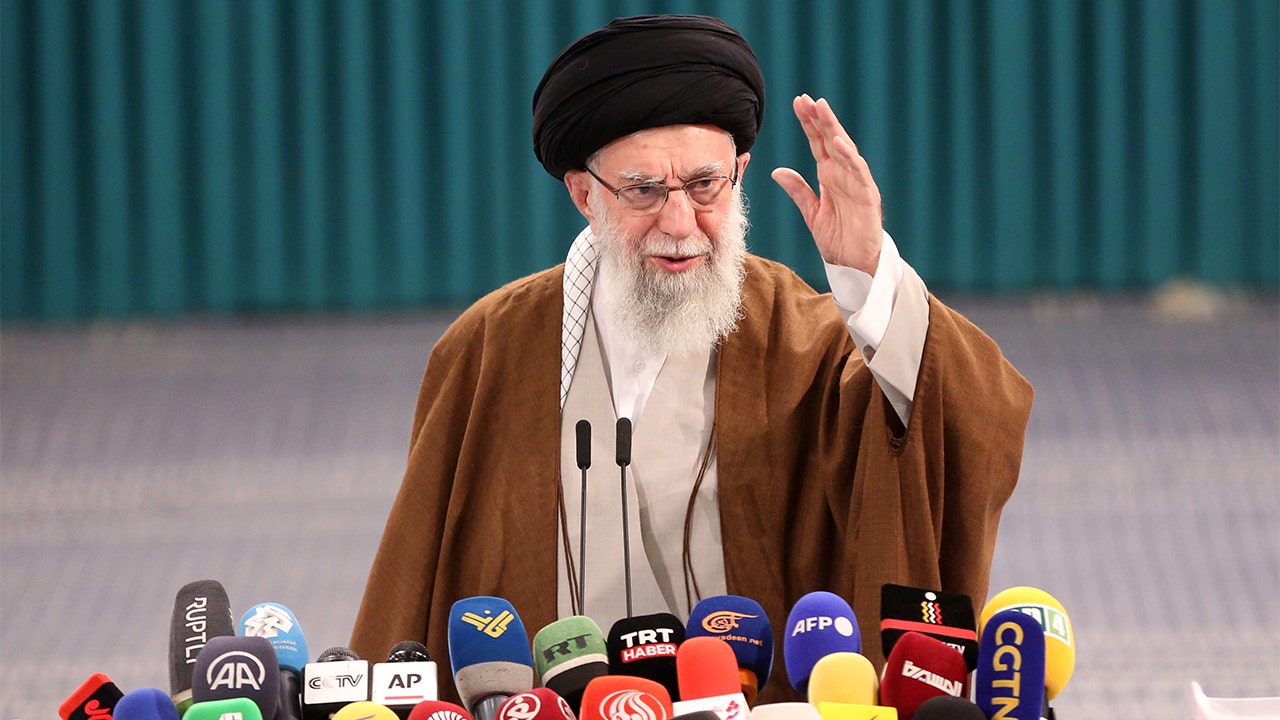
The recent escalation in rhetoric from the Islamic Revolutionary Guard Corps (IRGC) regarding potential strikes on U.S.-affiliated universities in West Asia represents more than a localized threat; it is a calculated shift in the Iranian Asymmetric Deterrence Function. By targeting soft-power infrastructure rather than traditional military hardpoints, Tehran is attempting to re-index the cost of American presence in the region. This strategy relies on three specific operational pillars: the weaponization of proximity, the exploitation of institutional vulnerability, and the disruption of the "Knowledge-Diplomacy" corridor.
The Strategic Logic of Institutional Targeting
Traditional military doctrine categorizes targets by their kinetic or command-value. Iran’s shift toward academic institutions suggests a move toward Cognitive-Kinetic Overlap. These universities—specifically branches of major American institutions in Qatar, the UAE, and Kuwait—serve as the primary engines of Western cultural hegemony in the Gulf.
The IRGC identifies these sites as "intelligence-gathering nodes" or "cultural infiltration centers." From a strategic standpoint, targeting a university creates a unique political dilemma for Washington. A strike on a military base triggers a standard Article 5-style kinetic response. A strike on a civilian-populated academic campus, however, complicates the escalation ladder. It forces the host nation (e.g., Qatar) to choose between its security partnership with the U.S. and its domestic stability.
The Three Pillars of the IRGC Threat Vector
- Geographic Overreach: Many U.S. satellite campuses sit within the "10-minute flight envelope" of Iranian short-range ballistic missiles (SRBMs) and loitering munitions. This proximity renders standard missile defense systems like the MIM-104 Patriot less effective due to reduced reaction times and the high cost-per-interceptor relative to the low cost of the incoming drone.
- Information Warfare Leverage: Threats against students and faculty generate a disproportionate psychological impact compared to threats against soldiers. This creates domestic political pressure within the U.S. to withdraw non-essential personnel, achieving Iran’s goal of "regional clearing" without firing a single shot.
- The "Host-Nation" Wedge: By threatening assets located on the soil of U.S. allies, Iran tests the durability of the Abraham Accords and other regional security frameworks. If the U.S. cannot guarantee the safety of a university, the host nation's leadership begins to view the U.S. presence as a liability rather than a security asset.
Quantifying the Kinetic Risk Profile
Analyzing the threat requires a breakdown of the Iranian Strike Package Capabilities. The IRGC does not rely on high-yield explosives for these types of threats. Instead, they utilize high-precision, low-signature assets.
Loitering Munitions and UAS Integration
The Shahed-136 and its derivatives represent the primary tool for this specific threat. These systems offer:
- Low Radar Cross-Section (RCS): Difficult for traditional radar to track in dense urban environments.
- Swarm Capability: Overwhelming the Point Defense (PD) systems of a specific campus.
- Optically Guided Precision: Allowing for "surgical" strikes on specific wings of a building to maximize media impact while managing the scale of mass casualties to avoid a full-scale U.S. invasion.
Ballistic Trajectory Constraints
While Iran possesses medium-range ballistic missiles (MRBMs) like the Fattah-1, using them against a university would be an inefficient use of high-value inventory. The more likely kinetic path involves 122mm rocket artillery or small-scale sabotage via local proxies. This maintains Plausible Deniability, a core component of Iranian foreign policy.
The Economic and Diplomatic Cost Function
The presence of U.S. universities in West Asia is an $18 billion-plus ecosystem. This includes research grants, tuition flows, and long-term bilateral trade agreements facilitated by alumni networks. The IRGC threat targets the Risk Premium of these operations.
If the perceived risk of operating a campus in Doha or Abu Dhabi rises above a certain threshold, the following systemic failures occur:
- Insurance Spikes: Marine and war-risk insurance for personnel becomes untenable.
- Faculty Attrition: The "Brain Drain" effect where top-tier Western academics refuse placements in high-threat zones.
- Capital Flight: Regional investors pivot away from Western-linked educational projects toward Chinese or domestic alternatives.
Structural Vulnerabilities in "Soft" Security
Unlike the Al-Udeid Air Base, which features hardened hangars and integrated multi-layer air defenses, university campuses are designed for openness. This creates a Security-Accessibility Paradox.
The second limitation of these institutions is their reliance on local security contractors. These forces are often equipped for low-level civil unrest but are entirely unprepared for state-sponsored kinetic incursions or sophisticated cyber-physical attacks (e.g., hacking building management systems to disable fire suppression before a strike).
The IRGC's rhetoric exploits this gap. By labeling these campuses as "spy nests"—a term deeply rooted in the 1979 Tehran Embassy crisis—they provide a "moral" justification to their internal base for attacking what are technically civilian targets. This categorization shifts the target from "Educational Facility" to "Military Auxiliary," a distinction that attempts to bypass international norms regarding the laws of armed conflict.
Proxy Dynamics and the Chain of Command
The threat is rarely direct. The "Axis of Resistance" provides Iran with a modular strike capability.
- Kata'ib Hezbollah (Iraq): Can provide the ground-based launch platforms for short-range incursions.
- The Houthis (Yemen): Can utilize long-range UAS to target the southern perimeter of the Arabian Peninsula.
- Local Sleeper Cells: Can conduct the reconnaissance necessary to map the daily patterns of high-value U.S. administrators.
This decentralized command structure creates a Attribution Delay. By the time forensic evidence links a drone fragment to an Iranian factory, the political damage—the closing of a campus or the evacuation of staff—is already complete.
The Strategic Play: Hardening the Soft Target
The response to Iranian institutional threats cannot be purely military. It requires a Total Asset Protection framework that integrates kinetic defense with economic resilience.
The first step involves the deployment of Counter-UAS (C-UAS) technology specifically tailored for civilian environments. High-energy lasers or electronic warfare (EW) "domes" must be established around these campuses. However, EW carries the risk of disrupting local civilian communications, creating a secondary friction point with the host nation.
The second step is the decoupling of the "Intelligence Hub" narrative. The U.S. State Department and the involved universities must increase transparency regarding their research and funding to negate the "spy nest" propaganda that fuels the IRGC’s recruitment and justification cycles.
The third and most critical move is the establishment of a Red Line for Non-Military Assets. The U.S. must signal that a kinetic strike on a university carries the same retaliatory weight as an attack on a carrier strike group. Without this parity in deterrence, Iran will continue to use these "soft" targets as low-cost bargaining chips in broader nuclear and regional hegemony negotiations.
The regional security architecture is shifting from a state-on-state military balance to a state-on-institution pressure test. Failure to secure these academic and cultural assets will result in a voluntary Western retreat from the intellectual landscape of West Asia, handing a strategic victory to Tehran without a single conventional battle being fought. The objective for the U.S. and its allies is now to prove that the cost of attacking a classroom is higher than the benefit of harassing a superpower.